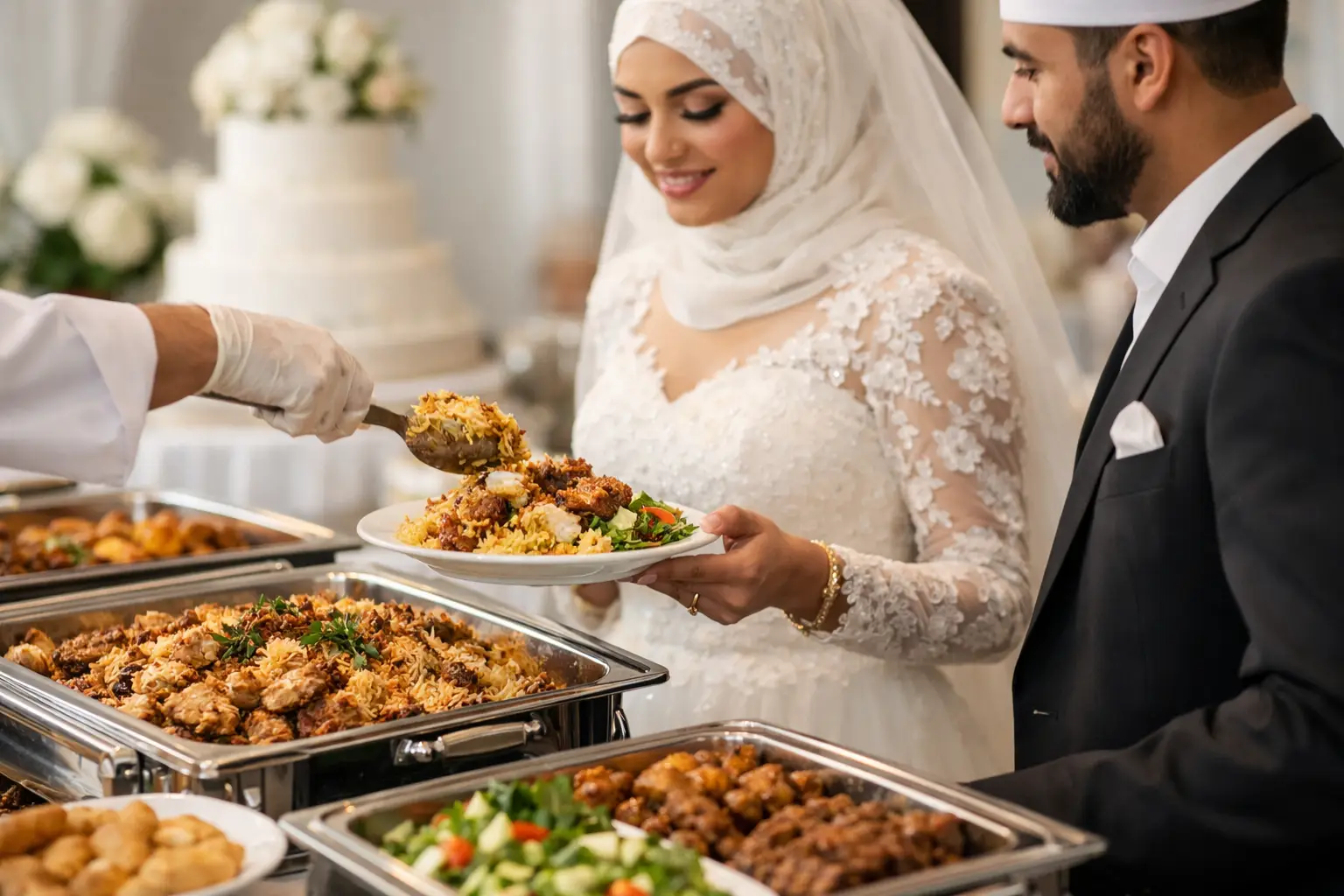
A beautiful wedding meal is never just about feeding guests. In Muslim wedding catering, every detail carries weight – the halal integrity of the menu, the generosity of service, the timing of courses, and the confidence families feel when they know traditions are being handled with care.
For many couples, catering is where excitement and pressure meet. It is one of the most visible parts of the day, one of the biggest investments, and one of the easiest places for standards to slip if your venue or suppliers do not fully understand the occasion. When the guest list is large, expectations are high, and several generations are involved in decision-making, the right catering partner does far more than prepare food. They help create a celebration that feels polished, warm and completely in tune with your values.
What Muslim wedding catering really needs to deliver
At its best, Muslim wedding catering balances three things at once – faith, hospitality and excellence. Guests should feel the abundance of the occasion, but the couple and their families should also feel reassured that nothing has been treated as an afterthought.
That starts with halal standards. A menu may sound suitable on paper, yet confidence often comes from the practical details behind it. Families will want to know where meat is sourced, how food is handled, whether preparation areas are properly managed, and how clearly the caterer understands halal requirements rather than simply claiming to offer them. This is especially important when couples are comparing venues that cater for many types of events. The distinction between genuinely experienced halal wedding catering and a generic events kitchen becomes very clear once you begin asking specific questions.
Beyond halal compliance, there is the matter of expectation. Muslim weddings are known for hospitality. Guests do not simply expect a meal – they expect generosity, flavour, and service that feels attentive from arrival through to the final tea or dessert. A sparse reception or inconsistent service can change the mood of an otherwise stunning event very quickly.
Why menu authenticity matters
Many Muslim weddings across London and Essex reflect rich cultural traditions from Pakistani, Bangladeshi, Indian, Arab, African and mixed-heritage backgrounds. That means the food often carries family memory as much as it does celebration. A biryani that lacks depth, a curry that feels adapted for convenience, or starters that arrive without freshness and balance will be noticed immediately.
Authenticity matters because wedding guests know the difference. They understand when a dish has been prepared by a team that genuinely specialises in the cuisine and when it has been simplified to suit a standard banqueting operation. For couples, this is not a minor point. The meal should feel worthy of the day, not like a compromise hidden behind elegant presentation.
This is where experience becomes invaluable. Specialist caterers and culturally fluent venues understand that classic dishes need to be executed properly at scale. Cooking for 300 or 500 guests is very different from producing restaurant portions, and not every team can maintain quality, consistency and timing under that level of pressure. A premium setting should never mean sacrificing flavour for presentation. The strongest wedding teams know you need both.
The role of service in a halal wedding reception
Food quality is only one half of the experience. Service shapes how guests remember the event.
A luxury wedding meal should feel smooth and well-paced, particularly when the day includes a nikah, speeches, stage photos, family greetings, prayer considerations and a carefully planned running order. If service is too slow, the room loses energy. If it is rushed, the celebration can feel transactional. Good Muslim wedding catering supports the rhythm of the event rather than interrupting it.
There is also a practical side to this. Large family weddings often include elders, young children and guests travelling considerable distances. They need clear seating, efficient service and staff who remain calm and courteous throughout. When hospitality is strong, the room feels looked after. When it is weak, even beautiful décor cannot compensate.
Experienced venues understand that catering and operations must work together. Kitchen timing, table service, room turnover, staging and guest flow should be coordinated as one. That is often the difference between a wedding that feels stressful behind the scenes and one that feels effortlessly elegant from start to finish.
Choosing between set menus and a tailored approach
There is no single correct format for every Muslim wedding. Some couples want a classic plated meal with a refined, formal feel. Others prefer generous buffet service that encourages variety and suits larger guest numbers. In some cases, a mixed format works best – perhaps canapés or starters on arrival, a main service that reflects the family’s preferred cuisine, and a dessert station for a more celebratory finish.
The right choice depends on your guest profile, budget, schedule and priorities. A set menu can give you control and consistency. A tailored menu can better reflect family heritage and personal taste. Neither is automatically better. What matters is whether the catering team can execute your chosen format to a genuinely high standard.
This is also where flexibility becomes important. Some families want a trusted venue partner to handle every element, from food and décor to staffing and timeline management. Others prefer dry hire or self-catering options so they can bring in a family-favourite chef or a specialist caterer. A venue with the confidence to offer both usually understands that luxury is not about forcing one model. It is about giving couples the right support for the celebration they actually want.
Questions families should ask before booking
When comparing options for Muslim wedding catering, polished brochures and sample menus only tell part of the story. The stronger questions are usually operational.
Ask how halal sourcing is managed and whether the team regularly caters for Muslim weddings at scale. Ask who will oversee service on the day and how the kitchen coordinates with the wider event schedule. Ask whether the menu can reflect specific cultural dishes without losing consistency for large numbers. If you are expecting guests with dietary needs, ask how those meals are prepared and served discreetly.
It is also sensible to ask about logistics that directly affect the meal. Is there sufficient kitchen capacity for your guest count? Can the venue manage staggered service if the event runs across several hours? Is parking straightforward for a large family audience? Are there spaces that allow guests to move comfortably between reception moments without crowding the dining experience?
These details may seem secondary during the early stages of planning, yet they often determine whether the day feels calm or chaotic.
Why venue and catering should work as one team
A wedding menu never exists in isolation. It sits within a wider experience that includes room layout, décor, timetable, staffing, access and guest comfort. That is why many couples prefer a venue that can coordinate catering as part of a complete service rather than leaving each supplier to work independently.
When venue and catering teams already understand each other’s standards, the process becomes far simpler. Tastings are clearer, timings are more realistic, and responsibilities are easier to manage. Families do not need to spend months relaying the same information between separate suppliers. Instead, they can focus on the decisions that actually shape the personality of the day.
At a venue such as The Grove Banqueting, this joined-up approach is especially valuable for large, culturally detailed weddings. Couples can benefit from authentic halal catering, elegant presentation and planning support without losing the option of flexibility where it matters most. That balance – convenience without compromise – is often exactly what busy families are looking for.
The standard your guests will remember
Guests may compliment the stage, the lighting or the bridal entrance, but they often talk about the food long after the last dance. They remember whether they were welcomed properly, whether the meal felt generous, and whether the day carried the care and excellence the occasion deserved.
That is why Muslim wedding catering should never be treated as a simple box to tick. It is part of the emotional heart of the celebration. Done properly, it reflects faith with integrity, honours culture with confidence, and gives every guest the feeling that they have been invited to something truly special.
If you are planning a wedding that deserves both grandeur and genuine understanding, choose a catering and venue team that can deliver more than a menu. Choose one that understands what the meal means.