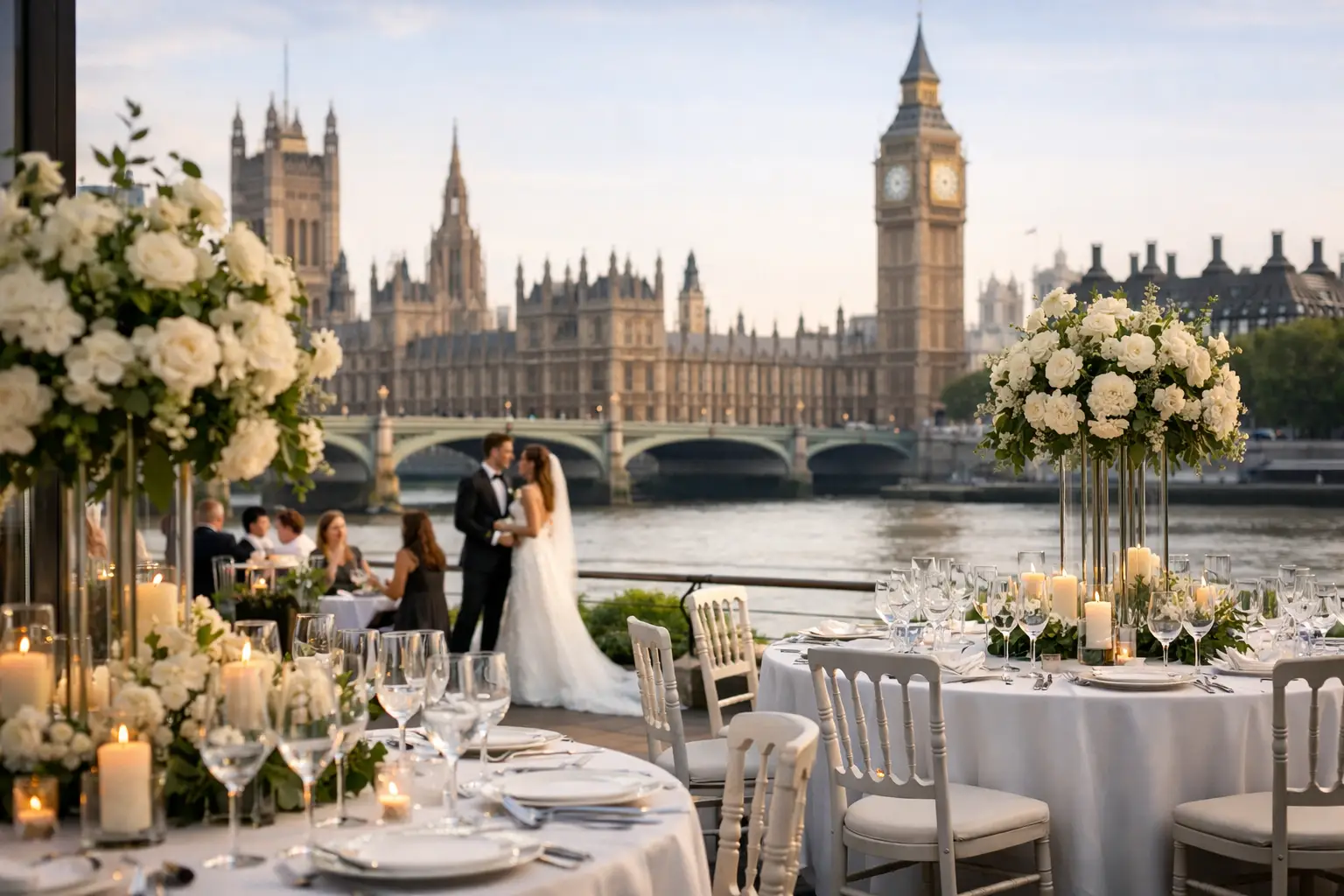
When your guest list moves past 200, choosing from the best venues for large weddings stops being a simple style decision. It becomes a question of flow, comfort, timing and trust. A beautiful room matters, of course, but so does whether your guests can arrive easily, dine well, pray comfortably, celebrate fully and leave feeling they have been part of something extraordinary.
Large weddings carry a different kind of pressure. Families are often more involved, traditions matter more, and every planning decision affects more people. For couples planning Asian, Muslim, British or Afro-Caribbean celebrations, the venue is not just a backdrop. It is the setting that holds the atmosphere, the hospitality and the standard of the entire day together.
What makes the best venues for large weddings?
Capacity is the first filter, but it should never be the only one. A venue may advertise impressive numbers, yet still feel cramped once you add a stage, dance floor, catering stations, photo area and guest seating. The best venues for large weddings are designed to feel generous, not merely sufficient.
That sense of space changes the experience immediately. Guests are not squeezed between tables, service can move efficiently, and key moments such as the entrance, speeches and first dance have room to breathe. If you are planning a vibrant reception with live entertainment, multiple outfit changes or traditional ceremonial elements, spatial layout matters just as much as the headline capacity.
There is also a difference between a venue that can host a large wedding and one that understands how to run it well. Large-scale celebrations need disciplined coordination behind the scenes. Timings must be protected, suppliers must know where to go, and the transition from one part of the event to the next should feel effortless rather than hurried.
Space should work for your celebration, not against it
A grand guest count deserves a venue that still feels intimate in the right places. This is where layout becomes more important than many couples first realise. A large hall with poor sightlines can leave half the room disconnected from the couple. Equally, a room that looks impressive when empty may lose its elegance once every practical element has been added.
Look closely at how the space handles a full wedding setup. Can guests see the main stage clearly? Is there enough room for a wide aisle and a statement entrance? Will elderly relatives be seated comfortably without being too far from the action? If children are attending, is there enough room for movement without disrupting service?
The strongest venues think beyond square footage. They consider guest experience from the moment people step inside. Arrival areas, cloakroom space, washrooms, prayer facilities, and convenient access all shape how polished the day feels. Luxury is not only what appears in photographs. It is also the ease your guests feel throughout the event.
Catering is often the true test of a large venue
For bigger weddings, food is one of the clearest markers of quality. It is also where operational weaknesses show quickly. Serving a few hundred guests at the right temperature, with the right pacing, takes experience, kitchen capability and strong floor management. A venue may look exceptional, but if dining service is slow or inconsistent, guests remember that.
This matters even more for culturally specific weddings. Halal catering, regional South Asian menus, British wedding breakfasts or Afro-Caribbean dining each come with different expectations around flavour, service style and presentation. Families want authenticity as well as abundance. They do not want a generic banquet dressed up as something meaningful.
That is why many couples now favour venues with established catering partnerships or all-inclusive support. It reduces uncertainty and protects standards. If you are bringing in your own caterers, ask practical questions early. How familiar is the venue with external teams? Is the kitchen suitable? How is service coordinated? Flexibility is valuable, but it needs structure behind it.
Large guest lists need excellent logistics
A venue can be luxurious and still create avoidable stress if logistics have not been thought through. Parking is a prime example. For weddings in London and Essex, convenient parking can make a remarkable difference to guest comfort, especially for elderly relatives, families with children and those travelling in groups.
Accessibility matters in the same way. Consider whether guests can move around comfortably, whether entrances are straightforward, and whether the venue location is practical for those coming from different parts of the capital and beyond. A central postcode is not always the best answer if access is awkward or guest parking is limited.
Planning support is another area that separates polished venues from purely decorative ones. At larger weddings, couples are often managing multiple conversations at once – family expectations, décor decisions, menu approvals, ceremony timing and supplier coordination. A venue team that can guide, advise and anticipate problems is not a luxury. It is often what protects the experience from becoming overwhelming.
Style matters, but versatility matters more
Every couple wants a room that photographs beautifully, but the finest venue is rarely the one with the most dramatic empty-room image. It is the one that can be transformed into your version of elegance. Large weddings often bring layered styling – floral stages, statement seating, lighting design, custom table arrangements and cultural details that deserve space to shine.
Versatility is particularly important for multicultural celebrations. One wedding may need a formal nikah setup and a glamorous reception design. Another may blend a traditional ceremony with a contemporary evening party. The venue should support these shifts without feeling compromised.
Neutral luxury often works best because it gives decorators and planners a strong canvas. High ceilings, refined finishes, generous proportions and quality lighting allow every celebration to feel distinct. A space should elevate your vision, not force you to design around its limitations.
Why cultural understanding matters in large weddings
For many families, a wedding is not a single event but a meaningful expression of heritage, faith and hospitality. This is where venue experience becomes deeply important. A team that understands prayer requirements, halal standards, ceremonial timings and family dynamics can help create a celebration that feels respectful as well as spectacular.
That understanding also affects the planning process. Couples should not have to explain the basics of their traditions at every stage. Whether you are arranging separate spaces, planning around religious observance, or incorporating customs that require specific timing and layout, cultural fluency saves time and builds confidence.
For this reason, many of the strongest large wedding venues in and around East London and Essex are those that combine luxury presentation with genuine operational understanding. The Grove Banqueting is one example of how this balance can work well, especially for couples who want refined surroundings alongside halal catering, décor coordination and planning support that respects the scale and significance of the day.
Questions worth asking before you book
A viewing should tell you more than whether the chandeliers are impressive. Ask how the venue manages service for your expected numbers. Ask what happens if your guest count changes. Ask how long the room turnaround takes if your ceremony and reception are in the same space.
You should also ask who will be guiding your event on the day. Is there a dedicated coordinator? How are external suppliers managed? If you want dry hire or self-catering flexibility, what level of support remains in place? The right venue will answer these questions calmly and clearly, because large weddings demand certainty.
Price deserves careful thought too. All-inclusive packages can represent excellent value when they remove the need to source catering, décor and coordination separately. On the other hand, dry hire may suit couples who already have trusted suppliers or want very specific creative control. Neither option is universally better. It depends on whether your priority is customisation, convenience or a balance of both.
Choosing with confidence
The best large wedding venues do more than hold people. They hold energy, expectation and memory. They make a grand celebration feel polished rather than complicated, and they give families confidence that every guest will be welcomed with warmth and care.
If you are comparing venues, look past surface beauty and focus on how the whole day will actually feel. The right choice will offer scale without compromise, elegance without stiffness, and support without intrusion. When a venue gets those details right, your wedding does not simply run smoothly. It becomes the masterpiece you hoped it would be from the very beginning.
Choose the place that gives you space to celebrate fully, and the reassurance to enjoy every moment of it.