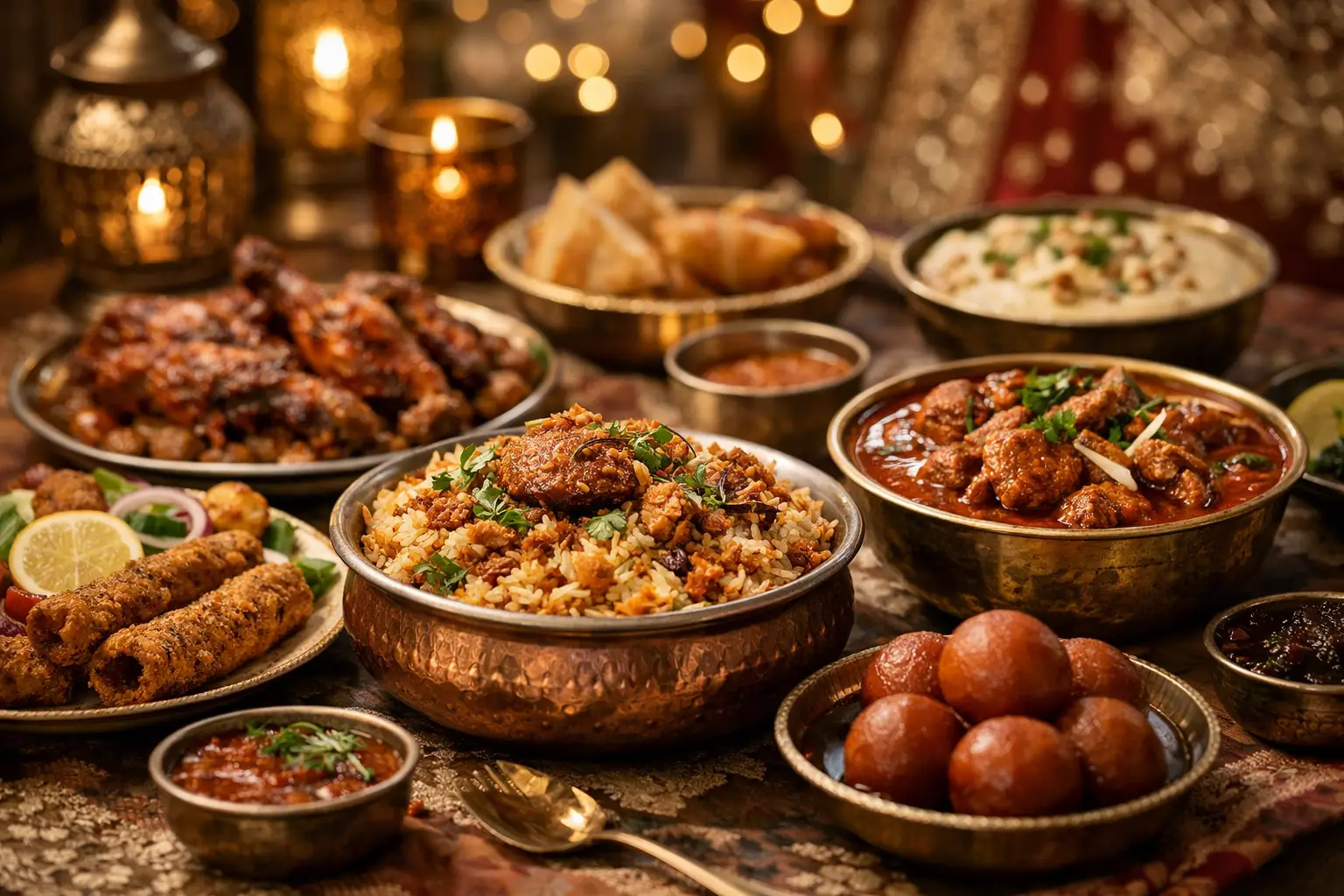
A Pakistani wedding meal is never simply a meal. It is a welcome, a family tradition and one of the clearest expressions of generosity a couple can offer their guests. The most successful Pakistani wedding menu ideas balance beloved flavours with thoughtful service, ensuring every generation at the table feels considered from the first canapé to the final cup of chai.
For large London and Essex celebrations, the right menu also has to work beautifully behind the scenes. It must arrive hot, look abundant, cater for varying spice preferences and keep the celebration moving at the right pace. With careful planning, your wedding feast can feel both deeply personal and effortlessly elegant.
Start With the Style of Celebration
Before selecting individual dishes, consider the atmosphere you want to create. A formal seated reception calls for a more structured sequence of starters, mains and desserts, often with plated presentation or carefully attended table service. A lavish buffet, meanwhile, suits larger guest lists and gives families the freedom to enjoy several regional dishes in one sitting.
A live-food station can bring theatre to the reception. The fragrance of freshly grilled kebabs, sizzling tawa dishes or warm naan being prepared in front of guests creates an immediate sense of occasion. This works particularly well for an evening walima or a reception with a contemporary, luxurious feel.
There is no single correct format. A buffet offers range and can be reassuring for guests with different tastes, while a plated meal feels more formal and can make service timings easier to manage. Many couples choose a refined combination: elegant canapés on arrival, a generous buffet for the main meal and a dessert station that invites guests to linger.
Pakistani Wedding Menu Ideas That Feel Generous
A memorable menu should have contrast. Rich, celebratory dishes need freshness alongside them, and spice needs to be balanced with milder options for children, older relatives and guests less familiar with South Asian cuisine.
Begin With an Impressive Welcome
The arrival course sets the tone before guests enter the dining space. Consider delicate chicken tikka bites, seekh kebabs, vegetable samosas and crisp fish pakoras served with mint yoghurt and tamarind chutney. These are familiar favourites, but their presentation can be elevated with elegant serving platters, attentive staff and carefully chosen garnishes.
For a more substantial reception opening, chaat stations are a wonderful choice. Pani puri, papri chaat and aloo tikki bring colour and interaction, although they are best suited to a venue with sufficient space and an experienced catering team. They should be prepared fresh and replenished regularly so the textures remain crisp rather than becoming soft during a busy arrival period.
Fresh fruit mocktails, rose milk, mango lassi or a sophisticated selection of non-alcoholic welcome drinks complement the food while respecting a halal celebration. The glassware and service matter here as much as the drink itself.
Build a Main Course With Depth
For many families, biryani is the centrepiece of the wedding table. A fragrant chicken or lamb biryani, layered with aromatic rice and warming spices, immediately signals celebration. It is wise to pair it with a second rice option, such as pulao or plain basmati rice, especially where guests include young children or those who prefer gentler flavours.
A traditional curry selection might include chicken karahi, lamb korma, butter chicken or a slow-cooked nihari. Chicken karahi offers bright, tomato-led spice and a sense of freshness, while lamb korma brings a milder, richer contrast. Nihari is wonderfully memorable for a winter wedding or a late-evening feast, but its depth and heat mean it is best balanced with lighter dishes elsewhere on the menu.
Do not treat vegetarian dishes as an afterthought. A beautifully prepared paneer dish, daal makhani, chana masala or mixed vegetable curry can become a favourite with every guest, not only those avoiding meat. Add seasonal salad, raita, pickles and a variety of naan or roti to create a table that looks abundant and allows each guest to build a plate they genuinely enjoy.
Honour Regional Flavours Without Overcrowding the Table
Pakistani cuisine carries distinct regional identities, and this can offer a meaningful way to personalise the menu. Families with Punjabi roots may favour karahi, saag and tandoori dishes. Those looking for bolder coastal notes may include a fish curry, while a menu inspired by Lahore street food could feature chaat, kebabs and rich grilled meats.
The key is restraint. A menu with too many heavy curries can feel repetitive, even if every dish is excellent. Select a few heroes, then give them room to shine. One signature family recipe, perhaps your mother’s preferred korma style or a cherished dish served at family Eid gatherings, can bring more emotional value than adding another six choices.
Taste preferences also vary between families. Some will expect a full traditional spread with deeply spiced dishes, while others may want a gentler menu that welcomes British and international guests with ease. A skilled halal caterer can retain authentic flavour without making every dish intensely hot. Heat can also be offered through chutneys, pickles and sauces, allowing guests to tailor their plate.
Make Space for Children and Mixed Guest Lists
A large wedding often brings together guests of all ages, backgrounds and dietary needs. This does not mean the menu needs to lose its identity. It means giving people a little more choice.
A mild chicken dish, plain rice, chips or a simple pasta option can make younger guests and less adventurous diners feel at ease. For vegetarian, vegan and gluten-sensitive guests, confirm ingredients and preparation methods well in advance. Shared service areas require particular care where allergens are concerned, so clear dish labels and knowledgeable staff are invaluable.
If your guest list includes family members travelling from abroad, consider the timing of the meal too. A late dinner may suit a lively evening reception, but elderly relatives and young children may appreciate more substantial food earlier in the programme. Canapés should be generous enough to bridge any gap between the ceremony and dinner, particularly if photographs or entrance celebrations run longer than expected.
Finish With a Dessert Worth Waiting For
Dessert is an opportunity to create a softer, more indulgent moment after a richly flavoured main course. Gulab jamun remains a wedding favourite for good reason: warm, syrupy and instantly recognisable. Pair it with kulfi, rasmalai or kheer for a dessert offering that feels rooted in tradition.
For a more contemporary finish, consider a dessert table combining Pakistani sweets with petite cakes, fruit tarts and chocolate treats. This works especially well when the wedding cake is displayed as part of the décor. Guests can enjoy a small traditional dessert after dinner, then return later for cake and coffee as the dancing continues.
A chai and coffee station is often one of the most appreciated details of the evening. Cardamom chai, doodh patti and quality coffee give guests a reason to pause, reconnect and savour the final part of the celebration. It is a simple addition, yet it carries the warmth and hospitality that make Pakistani weddings so special.
Plan the Service, Not Only the Dishes
The finest menu can be undermined by rushed queues, cooling food or unclear service. For a substantial guest list, ask how many buffet points will be provided and how the caterers will keep dishes at the correct temperature. Consider whether elderly guests will need table assistance, and whether children’s meals should be served separately before the main buffet opens.
Your table layout matters too. Keep food stations away from the busiest entrance routes, allow enough space for guests in formalwear to move comfortably, and position drinks where queues will not interrupt the flow of the room. At The Grove Banqueting, culturally informed planning and established halal catering partnerships help couples bring these practical details together without compromising the grandeur of the occasion.
A tasting is where the menu becomes real. Taste dishes together, discuss spice levels honestly and check portion sizes rather than choosing solely by description. It is also the moment to refine presentation, from the bread baskets and salad display to the serving bowls that will sit beneath your reception lighting.
The most beautiful wedding menus reflect the people at the heart of the day. Choose dishes that make your families smile, give every guest something delicious to enjoy and allow the generosity of your celebration to be felt in every carefully served plate.