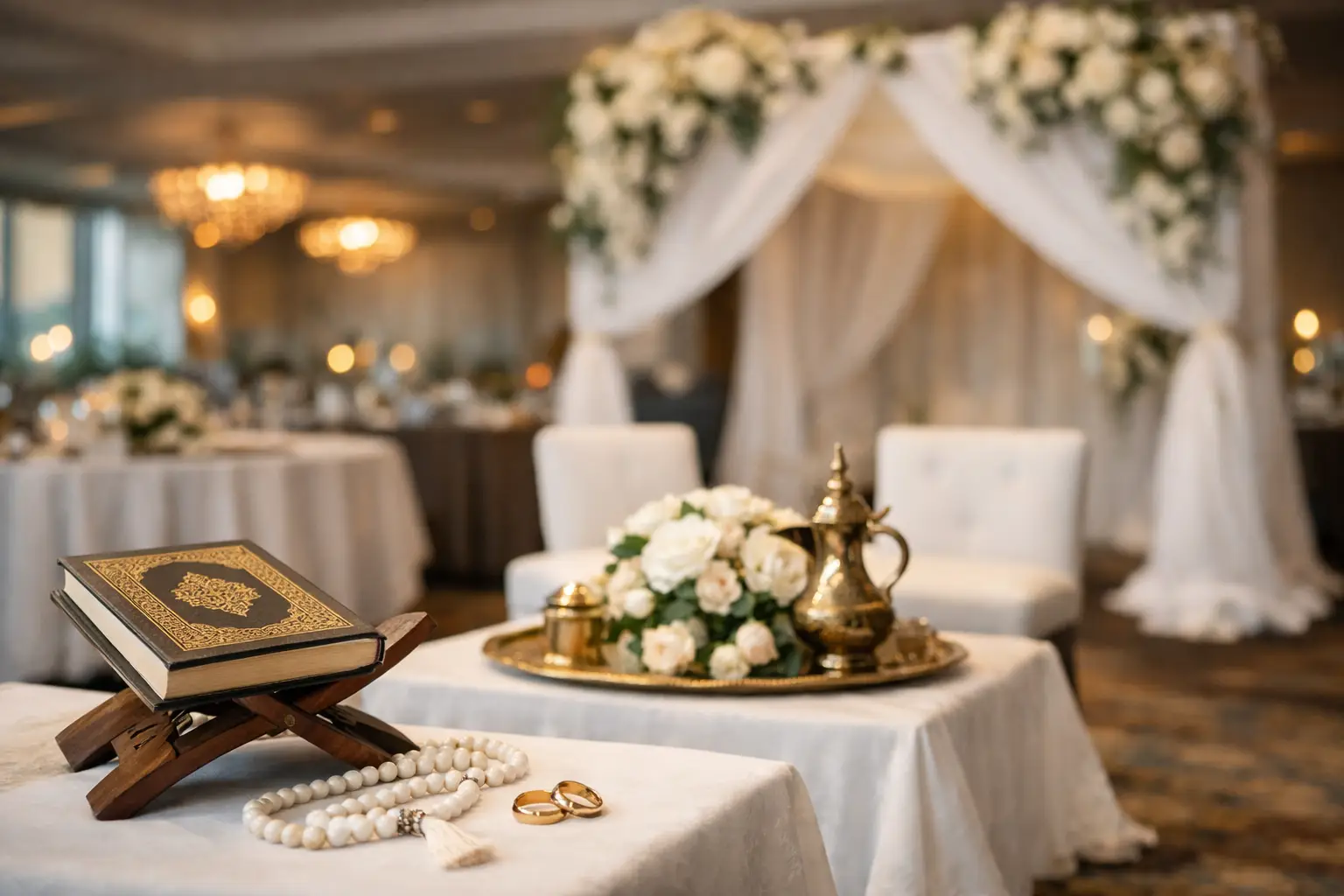
A nikah is often the most intimate and meaningful moment of a Muslim wedding day. Before the entrance, the photographs and the celebration, there is the marriage contract itself: a faith-centred commitment shared with family and witnesses. So, can venues accommodate nikah ceremonies well? Absolutely – but the difference lies in whether a venue understands that a nikah is not simply another item on the running order.
For couples and families planning a celebration in London or Essex, the right setting should make space for reverence as well as grandeur. It should support the practical requirements of the ceremony, respect personal preferences around modesty and tradition, and still create the polished, beautiful experience everyone has imagined.
Can venues accommodate nikah ceremonies with care?
Many reception venues can host a nikah, yet their level of suitability varies considerably. A grand room alone is not enough. The team must be comfortable arranging the space for the imam, couple, wali and witnesses; coordinating the timing of prayers, photography and guest arrival; and creating an atmosphere that feels calm rather than hurried.
A well-prepared venue will begin by asking thoughtful questions. Will the nikah take place before the main reception, during it, or as a separate gathering? How many guests should be seated for the ceremony? Is a more private arrangement preferred before the wider celebration begins? These details shape everything from room layout to catering timings.
The most successful nikah celebrations balance sacred moments with effortless hospitality. Guests should not be left unsure where to go, elderly relatives should be comfortably accommodated, and the family should be free to focus on the occasion rather than directing suppliers or rearranging chairs. This is where an experienced events team becomes invaluable.
What a nikah-friendly venue should provide
Every family has its own customs, but several considerations are central when choosing a venue for a nikah. Begin with a private and flexible ceremony space. Some couples prefer an intimate area with only immediate family and witnesses present, while others want every guest to witness the vows. A venue with adaptable suites or the capacity to section a larger ballroom gives you more control over that choice.
The setting should also allow for considered seating. Depending on your preferences, this may mean a traditional arrangement for the bride and groom, dedicated seats for the wali and witnesses, or seating that supports separate family groups. There should be room for an elegant signing table and any floral styling, Qur’an display or personal details you wish to include, without making the ceremony area feel crowded.
Prayer facilities matter too. A quiet, clean area for salah allows guests to observe prayers comfortably throughout a long wedding day. Ask whether the space is private, how it will be signposted and whether separate arrangements can be made where required. For some families, access to suitable washing facilities is equally important, particularly if guests will be at the venue for several hours.
Accessibility is a mark of genuine hospitality. Step-free access, convenient drop-off points, comfortable seating and ample parking can make an enormous difference for grandparents, young children and guests travelling from across London. A luxurious celebration should feel welcoming from the moment guests arrive, not only once they enter the ballroom.
Halal catering should feel like a celebration, not a compromise
Food is one of the clearest expressions of hospitality at a nikah reception. For many South Asian Muslim families, the meal carries memories, generosity and a sense of occasion. A venue should be able to offer halal catering with complete clarity around sourcing, preparation and service, rather than treating it as an afterthought.
Ask direct questions about the kitchen and menu. Is all meat halal? Can the caterer provide authentic Pakistani or Bangladeshi dishes alongside contemporary wedding favourites? Are vegetarian, vegan and allergy-aware options available without reducing the quality of the meal? If you are bringing your own specialist caterer, confirm the venue’s self-catering policy, kitchen access, service arrangements and any restrictions well before contracts are signed.
Drinks service also deserves an early conversation. Some couples want a fully alcohol-free wedding; others may have a more tailored approach for different parts of the day. There is no single format that suits every family. What matters is working with a venue that respects your decision and can deliver refined hospitality around it, whether that means welcome drinks, mocktails, tea service or a generous dessert display.
Décor and ceremony styling can honour your traditions
A nikah can be styled with exquisite restraint or rich celebratory colour. Soft ivory florals, gold detailing and a graceful backdrop may suit one couple, while another may picture jewel tones, floral arches, a statement stage and a dramatic entrance. The venue should enhance your vision, not dictate it.
Look closely at the room itself. Natural light, ceiling height, chandeliers, stage possibilities and the quality of the furnishings all influence how the ceremony photographs. Ask whether you can bring in your own florist, décor team, photographer and videographer, or whether the venue has trusted partners who understand the scale and cultural detail of a Muslim wedding.
Timing is particularly important for décor. If the nikah, meal and evening celebration all take place in one room, a skilled team can coordinate a transformation between key moments. A simple ceremony layout can become an opulent reception setting while guests enjoy refreshments elsewhere. That level of co-ordination protects the flow of the day and gives the final reveal the sense of occasion it deserves.
Separate the religious nikah from the legal arrangements
A faith ceremony and a legal marriage are not always the same thing in England and Wales. Couples should speak to their local register office or seek appropriate legal guidance early in their planning, especially if they want the civil marriage to take place on the same day and at the same venue.
A religious nikah may be held at a venue as part of your wedding celebration, but a legally binding civil ceremony has its own requirements. These can include an approved premises licence, notice periods and registrar availability. Do not assume that hosting a nikah in a beautiful venue automatically completes the legal marriage process.
For many couples, the simplest arrangement is to complete the civil registration separately, then hold the nikah and reception in the setting that best suits their family and celebration. Others prefer to co-ordinate both events on one day. Either option can be meaningful and elegant when the timetable is planned carefully and everyone understands their role.
Questions to ask before booking your nikah venue
A viewing is the ideal time to move beyond brochure images and discuss the day as it will actually unfold. Ask how the venue has supported Muslim weddings before, whether it can provide a private prayer space, and how it manages halal catering and alcohol-free celebrations. Discuss capacity for your ceremony and meal separately, as the guest count may change between the nikah and evening reception.
You should also clarify supplier access, set-up times, parking, finishing times and whether the venue has a dedicated co-ordinator present throughout the event. If you anticipate a large guest list, ask about arrival management and service speed. A room may be visually impressive, but guests will remember whether they were welcomed warmly and served thoughtfully.
At The Grove Banqueting, couples can explore an all-inclusive approach combining venue, halal cuisine, décor and planning support, or choose dry hire and self-catering flexibility where that better reflects their plans. The essential aim is the same: a wedding day designed around your family, faith and vision.
Your nikah deserves more than a space between the ceremony and the meal. Choose a venue that treats it as the heart of the day, then let every detail around it – from the first welcome to the final farewell – reflect the joy and dignity of your new beginning.