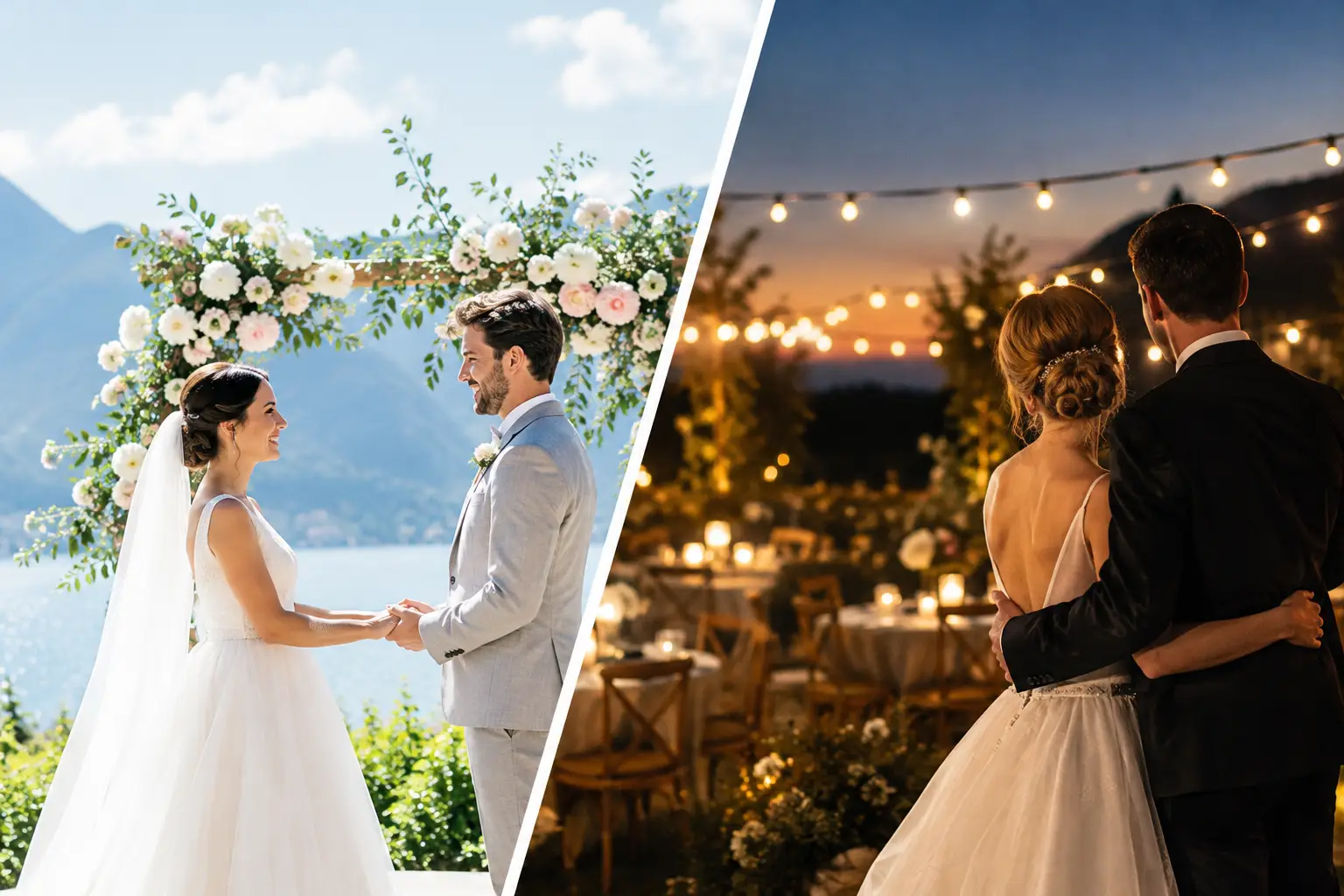
The first glimpse of your wedding should feel right: sunlight spilling across a floral Nikah stage, or candlelight catching the embroidery on a bride’s lengha as she makes her entrance. The choice between a daytime versus evening wedding is not simply about the clock. It shapes the atmosphere, photography, guest experience, catering rhythm and the way your family’s traditions take centre stage.
For many couples, the ideal answer is not strictly one or the other. A daytime ceremony followed by an evening reception can offer the best of both worlds. The right format depends on your guest list, cultural celebrations, season and the feeling you want people to carry home.
Daytime Versus Evening Wedding: The Atmosphere
A daytime wedding has a sense of freshness and occasion from the moment guests arrive. Natural light flatters soft florals, intricate décor and beautiful outfits, while an earlier start can make the celebration feel relaxed and family-focused. It is particularly well suited to a Nikah ceremony, civil ceremony, intimate wedding breakfast or elegant garden-inspired palette brought indoors.
Daytime celebrations are also a natural fit for families with young children and older relatives. Guests can travel in comfort, settle in without rushing and leave at a sensible hour if they need to. Where celebrations involve several generations, that ease can be a meaningful consideration rather than a minor practical detail.
An evening wedding feels more dramatic from the outset. Rich jewel tones, statement centrepieces, glowing lanterns and a grand stage become even more striking after dark. There is a natural sense of anticipation as guests arrive dressed for a formal celebration, music builds, and the room transforms for entrances, speeches and dancing.
For a Walima, a glamorous reception or an Afro-Caribbean celebration built around music and energy, an evening timetable often feels effortless. It gives the event a cinematic quality and allows every detail – from a mirrored aisle to a dramatic cake reveal – to have its moment.
What Daylight Changes for Your Wedding Photographs
Photography is often one of the strongest reasons couples choose an earlier ceremony. Daylight offers soft, true-to-life images of skin tones, embroidery, fresh flowers and tablescapes. It gives you more time for couple portraits, family photographs and those unplanned moments between relatives that become treasured afterwards.
That said, bright summer midday sun can be challenging. It may create harsh shadows and leave guests feeling warm, especially during arrival photographs. An experienced photography team can work around this, but a late-afternoon ceremony or a venue with generous indoor light can be more flattering than the height of the day.
Evening weddings create a different kind of beauty. Flash photography, ambient uplighting, candles and a carefully designed backdrop produce glamorous, editorial images. If your vision includes a sparkling entrance, a richly decorated mandap-style stage or a first dance beneath a canopy of light, darkness becomes part of the design.
The trade-off is time. In autumn and winter, daylight fades early, so photographs before the ceremony need careful scheduling. Couples who want both daylight portraits and evening drama may choose to complete their formal photographs before guests arrive, then reserve a short golden-hour window for private images together.
Timing Cultural and Faith-Sensitive Celebrations
A wedding timetable should support your traditions rather than ask your traditions to fit around a generic schedule. For Muslim couples, prayer times, the timing of the Nikah, family travel and the flow of a halal meal all deserve thoughtful planning. A daytime Nikah may allow the ceremony and meal to take place calmly before an evening reception, or it can stand beautifully as a complete daytime celebration in its own right.
Pakistani, Bangladeshi and Bengali weddings can also involve several events with distinct personalities. A colourful Mehndi often thrives in the afternoon or early evening, when vibrant décor, dance performances and family participation can unfold at an unhurried pace. A formal reception may then feel most fitting in the evening, with a grand entrance and an elevated dining experience.
British, African and Afro-Caribbean weddings bring their own rhythms too. Some couples prefer a traditional daytime ceremony followed by a long reception, while others want guests to arrive for a focused evening of dinner, speeches and dancing. Neither approach is more luxurious. Luxury comes from making the schedule feel considered, welcoming and true to you.
Guest Comfort Is Part of the Celebration
The guest experience often decides the daytime versus evening wedding question more clearly than mood boards do. Think about where people are travelling from, whether families will attend with children, and how long you genuinely want the event to last. A daytime wedding may require guests to leave home early, particularly for a weekend ceremony, but it can also make onward travel simpler.
An evening event gives guests more time to prepare, travel and arrive in their finest attire. It is especially convenient if many guests work during the day or are travelling from across East London, Essex or Greater London. However, an evening finish needs practical arrangements for older relatives, young children and anyone relying on public transport.
Parking is worth considering early, rather than treating it as a final detail. A venue with ample on-site parking can make a large family celebration feel significantly more relaxed, particularly when guests are arriving in formalwear, carrying gifts or travelling together. At The Grove Banqueting in Romford, approximately 280 free parking spaces offer that reassurance for celebrations welcoming guests from London and Essex.
Catering Feels Different at Different Times
A daytime meal can be graceful and generous without feeling overly formal. Think beautifully presented halal canapés on arrival, a refined buffet or plated meal after the ceremony, followed by chai, desserts and time for conversation. It allows guests to enjoy authentic Pakistani or Bangladeshi cuisine while still leaving room for the rest of the day’s programme.
For an evening reception, dinner becomes a central part of the occasion. Guests often expect a more substantial meal, a longer dining window and a later dessert or sweet-table reveal. This can be perfect for a lavish menu of halal starters, aromatic curries, grilled dishes and traditional sweets, especially when the catering is designed to suit the tastes of both elders and younger guests.
The key is not to assume that daytime means lighter or evening means better. If a particular family dish matters to you, build the timing around serving it properly. Good hospitality is felt in the details: hot food served at the right moment, enough time for guests to eat comfortably, and a menu that reflects the people at the heart of the wedding.
Costs, Availability and Planning Flexibility
Daytime dates can sometimes offer greater flexibility, particularly outside peak wedding months. An earlier event may also reduce the need for very late staffing, extended entertainment or overnight transport. Yet it is not automatically the lower-cost choice. Elaborate daytime florals, a lengthy programme, premium photography coverage and a substantial lunch can all shape the budget.
Evening weddings may require more atmospheric lighting, later supplier hours and additional entertainment, but they can make one dramatic room transformation work harder. The practical answer depends on which elements matter most to you. A clear, all-inclusive package can be valuable here, bringing venue hire, halal catering, décor, hospitality and planning support into one coordinated plan while still leaving room for personal touches.
If you prefer dry hire or want to bring selected suppliers, ask early about access times, set-up windows and who manages the event flow. A magnificent evening transformation is achievable, but it needs enough preparation time. Equally, a polished daytime wedding needs a team ready well before the first guest arrives.
A Simple Way to Decide
Picture your wedding in its most emotional moment. Is it the quiet exchange of vows beneath soft daylight, your parents seeing you in your wedding outfit for the first time, or the room erupting as you enter beneath glittering lights? That image usually points towards the right time of day.
Then test that instinct against the practicalities: your ceremony requirements, guest travel, the ages of children attending, photography priorities and the energy you want for the final hour. If both visions feel essential, create a day that moves naturally from one to the other. Begin with a serene ceremony in daylight, welcome guests to an exceptional meal, then let the room shift into an evening celebration full of music, colour and joy.
Your wedding does not need to follow someone else’s timetable to feel perfect. It needs to give your families space to celebrate, honour the traditions that matter and let every carefully chosen detail feel completely your way.