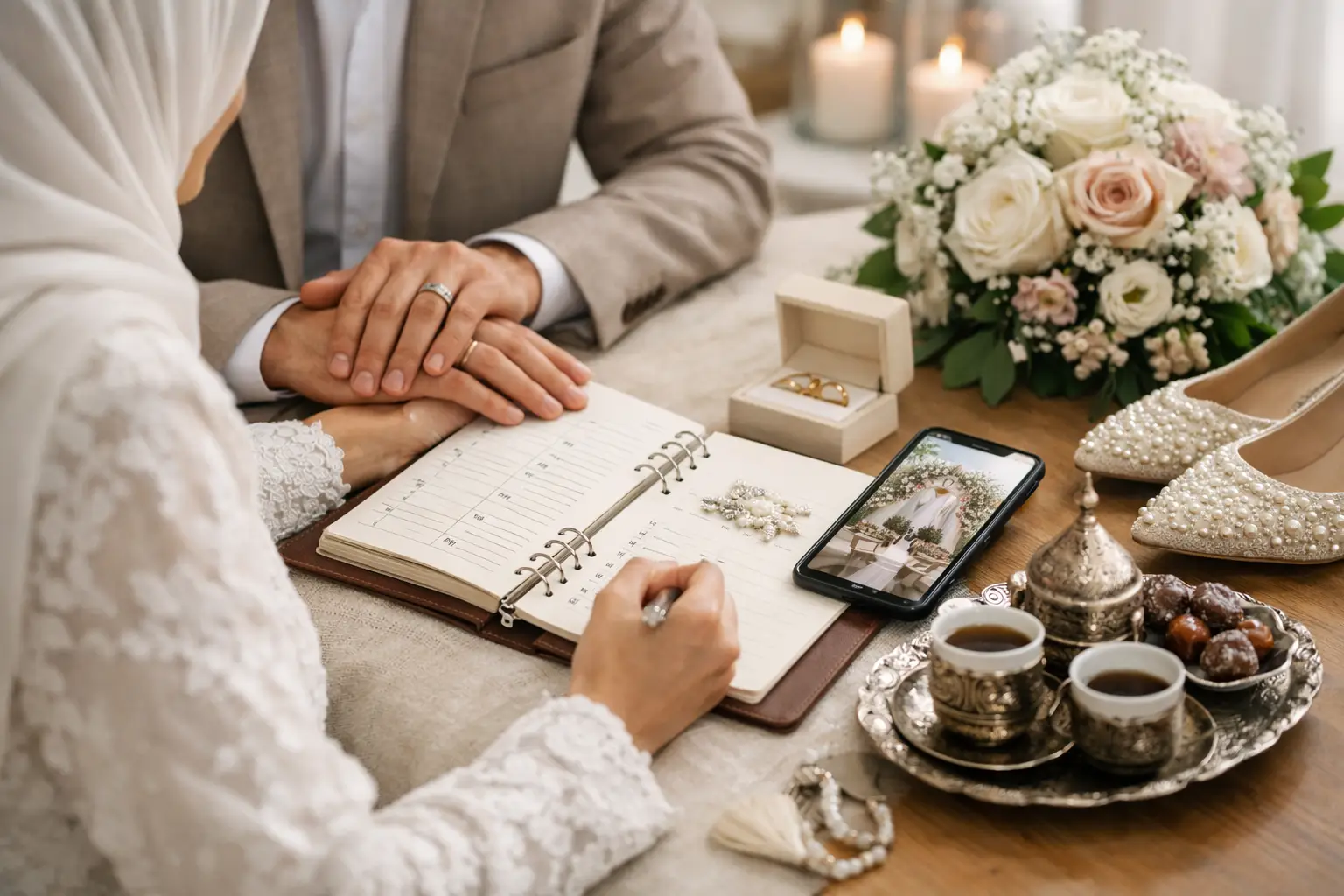
The guest list has already started growing, both families have opinions, and every decision seems to carry equal weight. That is usually the point when couples begin asking how to plan a halal wedding in a way that feels faithful, elegant and manageable. A beautiful celebration is not created by chance. It comes from clear priorities, thoughtful structure and a venue team that understands what matters to you and your families.
A halal wedding is never one-size-fits-all. Some couples want a large, glamorous reception with separate spaces and a full programme. Others prefer a more intimate gathering with modest styling and a simpler flow. The right approach depends on your values, your community, your guest list and how closely you want every part of the day to reflect specific religious and cultural expectations.
Start with faith, not aesthetics
Before you look at chandeliers, stage designs or menu tastings, decide what halal means for your wedding in practical terms. For some families, that begins and ends with certified halal catering and a respectful atmosphere. For others, it also includes separate seating, gender-segregated celebrations, no alcohol, modest dress expectations, prayer facilities and careful entertainment choices.
This conversation needs to happen early, and it needs to include the people whose input will shape the day. If expectations are left vague, small assumptions quickly become major points of stress. A couple may picture a mixed celebration with a formal dinner, while parents may be expecting stricter separation and a more traditional order of events. Neither side is necessarily wrong, but clarity is essential.
Once those boundaries are agreed, every later decision becomes easier. Your venue shortlist narrows naturally. Your catering conversations become more precise. Your décor, timings and room layout start to reflect purpose rather than guesswork.
How to plan a halal wedding with the right venue
The venue influences more than the look of the day. It affects privacy, comfort, logistics and whether your plans will feel effortless or constantly compromised. When you are planning a halal wedding, visual appeal matters, but operational suitability matters more.
A venue should be able to support the structure you actually want. That might mean space for separate entrances or sections, room for prayer, a flexible ballroom layout, reliable supplier coordination and catering that can confidently meet halal standards. If you are expecting a large South Asian Muslim wedding, capacity and flow are not minor details. They shape the guest experience from arrival to departure.
Parking and accessibility also deserve more attention than couples often give them at first. If older relatives, families with young children and guests travelling from across London and Essex are attending, ease matters. Luxury is not only about appearances. It is also about making people feel cared for from the moment they arrive.
This is where an experienced venue partner can make a marked difference. A team familiar with Muslim weddings will understand the practical details behind the beauty. They will know that privacy, timing and hospitality are not add-ons. They are central to the day.
Catering must be unquestionably halal
Food sits at the heart of many wedding celebrations, especially in South Asian households where hospitality carries real cultural significance. Halal catering should never be treated as a box to tick quickly. It should be confirmed properly and discussed in detail.
Ask how the food is sourced, prepared and served. If your families are expecting authentic Pakistani or Bangladeshi cuisine, quality and authenticity matter just as much as compliance. Guests will remember the standard of the food long after they have forgotten the exact shade of the table linen.
If you are hosting a mixed guest list, think carefully about the menu balance. Some couples want a traditional spread that feels deeply familiar to family. Others prefer a menu that blends classic halal dishes with broader crowd-pleasers. Neither approach is better. It depends on your guests and the style of celebration you want.
Service style matters too. A plated meal brings polish and structure. Buffet service can feel generous and sociable, particularly for larger weddings. The right choice depends on timing, guest numbers and the atmosphere you want to create.
Build a timeline that respects the day
One of the most common planning mistakes is trying to fit too much into one celebration without enough time between each part. If there is a nikah, reception, family photography, prayer breaks, outfit changes and formal entrances, the running order needs to be realistic.
A halal wedding timeline should feel graceful rather than rushed. Guests should not be left waiting without direction, and key moments should not feel squeezed for the sake of spectacle. Build the day around what matters most. If the nikah is the spiritual centre of the celebration, give it the dignity of proper timing and space.
Prayer arrangements should also be considered early. Depending on the season and your schedule, this may affect the flow of the event. A venue that can provide a clean, suitable area for prayer adds practical ease and peace of mind.
If you are including cultural traditions alongside the formal wedding day, such as a mehndi or smaller family gathering, decide whether those events should be hosted separately or woven into a broader wedding weekend. Larger family networks often appreciate distinct moments, but there is always a balance between a full programme and guest fatigue.
Think carefully about layout, privacy and comfort
When couples ask how to plan a halal wedding, they often focus on food and music first. Yet room layout can shape the atmosphere just as much. It affects whether guests feel comfortable, whether family groups can socialise naturally and whether the day reflects your expectations around modesty and interaction.
If you want separate seating or divided spaces, this should be planned with intention rather than added at the last minute. The best layouts feel elegant and coherent, not improvised. Screens, partitioning, entrance points and stage positioning should all work together.
Privacy is especially important if the bride wishes to be unveiled in a women-only setting for part of the celebration. In that case, venue access, staff awareness and photography arrangements all need careful handling. These details are easy to overlook until the final weeks, when changes become more difficult.
Comfort should guide styling decisions as well. Dramatic décor can be stunning, but if centrepieces block conversation or stage placement causes congestion, the room will not function as beautifully as it looks.
Choose entertainment that fits your values
Entertainment at a halal wedding varies widely. Some couples prefer a quiet, formal atmosphere with nasheeds, speeches and family-led moments. Others want a lively celebration that still stays within clear boundaries. There is no single formula, but there should be a deliberate standard.
If music is included, decide what is acceptable to you and your families. If dancing is part of the plan, think through whether it will be mixed, separate or limited to certain sections of the event. If you would rather avoid any uncertainty, a strong host, thoughtful programme and excellent hospitality can carry the atmosphere without needing constant performance.
The same principle applies to photography and videography. Brief your suppliers properly. Modesty, privacy and who can be photographed in which settings should be agreed in advance, not negotiated on the day.
Bring both families into the process, but keep decisions anchored
Halal weddings are often family occasions in the fullest sense. That support can be invaluable, but it can also make decision-making slower and more emotional. The answer is not to exclude family. It is to create a planning structure.
Decide early who has final say on key areas such as budget, guest list, catering and format. Without that clarity, even small decisions can become circular. Respect for elders and family traditions can sit comfortably alongside a well-managed planning process.
This is particularly useful when expectations differ between households. One family may prioritise scale and tradition, while the couple may want a more modern feel. The best weddings do not erase those differences. They manage them with care and confidence.
At venues such as The Grove Banqueting, that balance often becomes much easier when couples can rely on experienced planning support, trusted halal catering and a setting designed for large, culturally significant celebrations.
Budget for quality where it matters most
A halal wedding can be lavish, restrained or somewhere in between. What matters is spending in the areas that truly shape the experience. For most couples, that means venue quality, food, guest comfort and operational support.
There are places where flexibility makes sense. You may decide to simplify favours, reduce printed extras or scale back certain decorative elements. But if the catering is poor, the room feels overcrowded or the day runs late, those issues affect everyone.
Luxury is not excess for its own sake. It is the confidence that each detail has been considered and delivered properly.
Planning with faith and elegance in mind is entirely possible. When your priorities are clear and your team understands both the beauty and the responsibility of the occasion, the day feels less like a puzzle to solve and more like the celebration it was always meant to be.