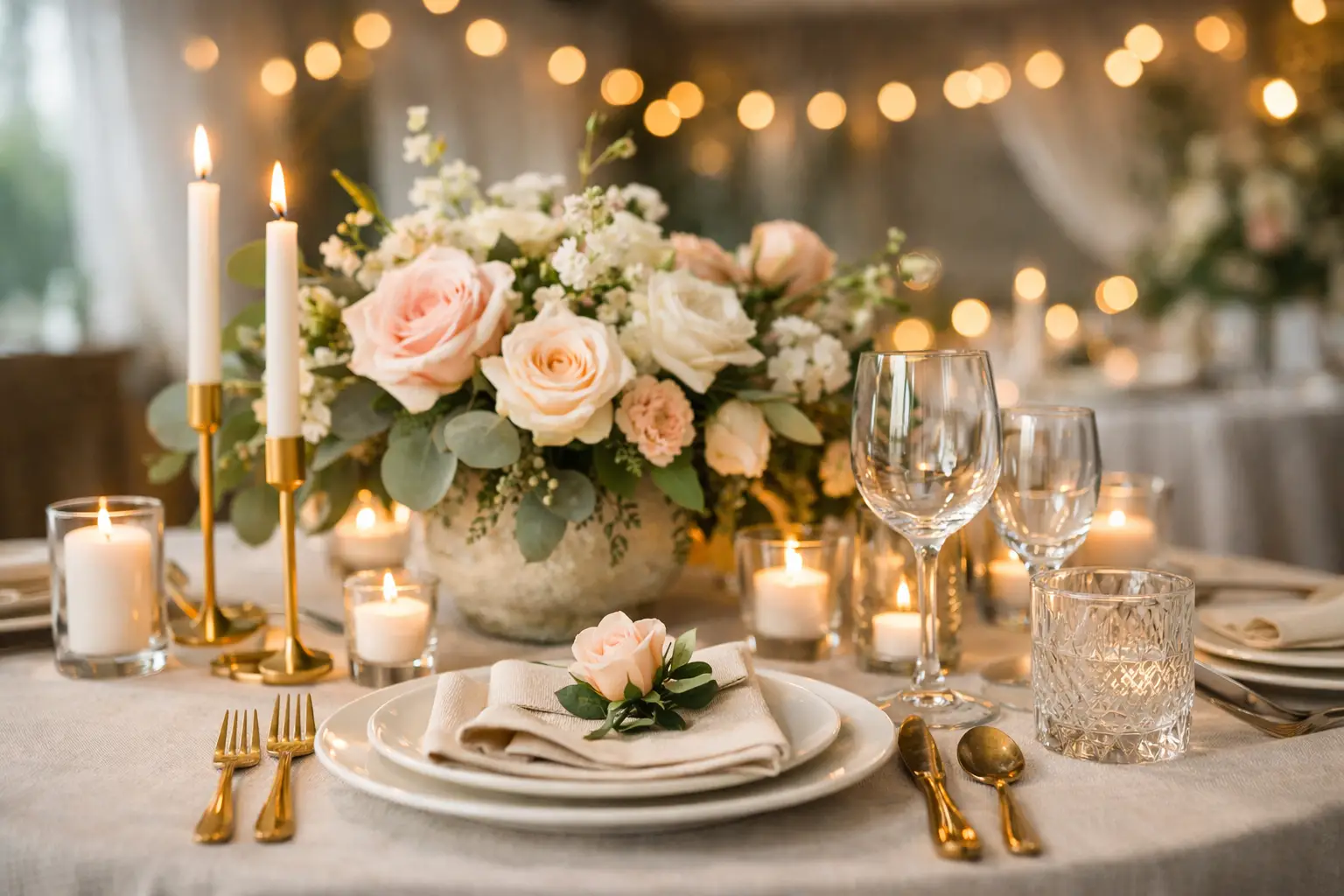
The difference between a beautiful wedding breakfast and a room that truly feels unforgettable often comes down to the tables. Guests may first notice the stage, the lighting or the entrance, but once they are seated, every detail in front of them starts shaping the experience. The best wedding table styling ideas do more than look impressive in photographs – they create atmosphere, support your theme and make every place setting feel considered.
For couples planning a large celebration, table styling also needs to work hard. It should feel luxurious, reflect your culture and complement the flow of the event without becoming impractical. That balance is where thoughtful design matters most.
Wedding table styling ideas that elevate the whole room
A well-styled table should never feel separate from the venue around it. The strongest designs are connected to the wider space, from the ceiling treatments and stage florals to the chair styling and lighting. When every element is pulling in the same direction, the room feels cohesive rather than crowded.
That does not mean everything has to match perfectly. In fact, the most elegant receptions usually rely on a clear palette, repeated textures and one or two focal details rather than too many competing features. If your venue already has a luxurious finish, your tables can be refined and layered without being overwhelming.
Start with your top table or sweetheart table
If you are deciding where to invest more of your styling budget, begin here. The top table naturally draws attention throughout the reception, and it appears in a large proportion of your photographs. A fuller floral arrangement, elevated candles, premium charger plates or customised signage can all make this area feel special without requiring every guest table to be styled in exactly the same way.
For larger Asian, Muslim and Afro-Caribbean weddings, this is especially useful. You can create a statement where it matters most, then echo that look across the room in a more streamlined form.
Build your design around a controlled colour palette
Colour is often where styling either becomes sophisticated or starts to feel disjointed. A controlled palette gives the room polish. Soft ivories, champagne tones, blush, gold, sage and white remain popular because they work beautifully under evening lighting and complement formal wear.
That said, bold colour can be stunning when handled with confidence. Deep emerald, burgundy, royal blue or rich plum can bring drama and cultural richness, particularly for autumn and winter weddings or celebrations with traditional attire in stronger tones. The key is restraint. Two main colours and one metallic accent often create far more impact than trying to include every favourite shade.
Centrepieces that suit the scale of your celebration
Centrepieces are often the first thing couples think about, but the right choice depends on guest numbers, table size and sightlines. A grand arrangement may look exceptional in a ballroom, yet on a smaller round table it can quickly become intrusive.
Tall centrepieces bring height, formality and a sense of occasion. They work particularly well in venues with generous ceiling height, allowing the room to feel layered and dramatic. Low arrangements, on the other hand, can feel intimate and abundant, especially when paired with candlelight and refined tableware. Neither is inherently better. It depends on the room and on how interactive you want the table to feel for guests.
Mix height carefully
One of the most effective wedding table styling ideas is to alternate centrepiece styles across the room. Some tables can feature tall floral stands while others use lower arrangements. This creates visual rhythm and helps large receptions feel dynamic rather than repetitive.
The balance matters. Too much variation can look fragmented, but a measured mix often gives a room the curated finish couples are after. It also helps with budget allocation, as not every table needs the same level of floral volume.
Candlelight adds instant luxury
Few styling elements transform a reception as effortlessly as candlelight. Even when real flames are not suitable, quality LED candles can produce the same warm, flattering effect. Grouped votives, hurricane candles and tapered holders soften the table and make metallic details glow.
Candlelight is particularly effective in evening receptions, where it adds warmth to formal décor and gives the room a more intimate mood. If your celebration includes a lively programme, speeches and late-night dancing, that softer ambience can make the transition from dining to party feel natural.
Layer each place setting with purpose
A luxury table rarely relies on a single statement piece. It is the layering that creates depth. Charger plates, folded napkins, glassware, menu cards and neatly aligned cutlery all contribute to that sense of refinement.
This is where many wedding table styling ideas become more practical than decorative. Guests interact with these details directly, so they should feel both beautiful and functional. A heavily embellished setting may photograph well, but if there is no room for service, platters or comfortable dining, it will not serve the event.
Linen and napkin styling matter more than many couples expect
Table linen sets the foundation. Crisp white remains timeless, but textured fabrics, soft sheens and carefully chosen overlays can add depth without making the table feel busy. Napkins are another opportunity for subtle detail. A clean fold with a personalised name card, a velvet tie or a delicate napkin ring can instantly elevate the setting.
For multicultural weddings, this is a good place to introduce personality without disrupting the overall elegance. You might bring in a heritage-inspired pattern, a meaningful motif or colours that reflect the couple’s traditions in a restrained, polished way.
Personalisation should feel refined, not forced
Personal touches are at their best when they enhance the guest experience. Thoughtfully designed table names, individual place cards, menus tailored to the service style or a small favour at each setting can all make the reception feel memorable.
The trick is not to overfill the table. If you already have charger plates, floral arrangements, candles and glassware, adding too many extras can tip the look from luxurious to cluttered. Editing is part of good styling.
Use table styling to honour culture and tradition
For many families, wedding design is not simply about appearance. It is also about respect, hospitality and celebrating heritage with pride. Some of the most successful wedding table styling ideas are those that weave cultural detail into a contemporary setting rather than treating tradition and luxury as separate choices.
This could mean incorporating gold accents that complement a South Asian wedding palette, using floral colours that sit beautifully alongside traditional outfits, or selecting table arrangements that leave space for generous service and shared dining. For Muslim weddings, couples often want a refined, faith-sensitive environment that feels elegant without losing practicality. For Afro-Caribbean celebrations, a rich and joyful style can still be executed with balance and sophistication.
At a venue such as The Grove Banqueting, where celebrations often bring together large guest lists, layered traditions and high expectations, this balance becomes especially valuable. Styling has to impress, but it also has to support the way the day unfolds.
Match the table design to your catering style
One of the easiest planning mistakes is choosing table décor before thinking through how food will be served. A plated meal allows for more styling flexibility because each setting remains largely undisturbed until service begins. Shared platters and family-style service need space. Buffet-led receptions may allow more decorative freedom on guest tables, while still requiring practical movement around the room.
If you are serving authentic halal cuisine, multiple courses or generous sharing dishes, table styling should account for that from the start. There is little point in creating a masterpiece that leaves no room for service. The most polished receptions are those where décor and hospitality work together.
Think beyond the table itself
A table never exists in isolation. Guest chairs, charger plates, glassware and floral vessels all read differently depending on the room lighting, the tablecloth colour and the surrounding décor. If your venue features statement chandeliers, mirrored details or a dramatic stage setup, your table styling may need a lighter touch.
On the other hand, if the room is intentionally clean and understated, the tables can carry more of the visual story. This is why styling decisions are easier when considered in the venue itself rather than as standalone items from separate suppliers.
How to choose wedding table styling ideas without overcomplicating the process
Most couples do not need more inspiration. They need clearer decisions. The simplest route is to choose one hero feature, one supporting floral or candle concept and one consistent finish for the place settings. Once those are established, the rest becomes easier to refine.
It also helps to be honest about priorities. If your photographs matter most, focus on the top table, statement centrepieces and candlelight. If guest comfort and dining experience lead the way, prioritise spacing, practical layouts and elegant but manageable styling. If cultural expression is central, let that shape the palette and details from the beginning rather than adding it in later.
There is no single formula for perfection, because every wedding has its own rhythm, traditions and guest expectations. The most successful tables are not always the most elaborate. They are the ones that make the room feel complete, welcome your guests beautifully and leave you with a setting that feels entirely your own.
When your table styling is thoughtful, balanced and suited to the way you plan to celebrate, the whole reception feels calmer, more polished and more memorable. That is where elegance stops being decorative and starts becoming part of the experience.