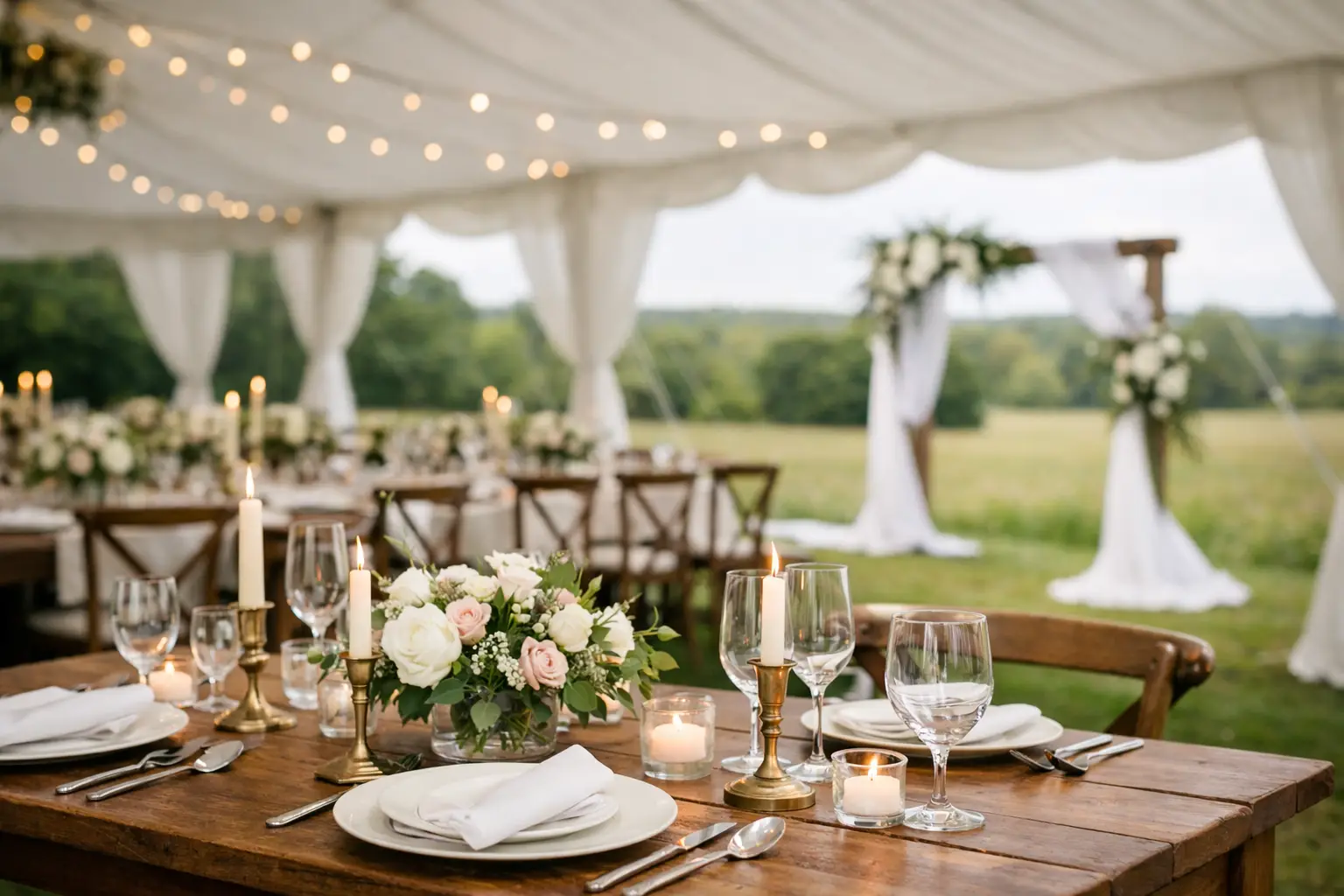
Some couples want every detail wrapped into one beautifully managed package. Others already know the caterer they trust, the décor team they love, and the traditions they want to honour in their own way. That is usually where the question begins: what is dry hire wedding planning, and is it the right choice for your celebration?
A dry hire wedding means you hire the venue space on its own, or close to it, without the full bundle of in-house services that often comes with an all-inclusive package. In simple terms, you are securing the setting, while bringing in some or all of your own suppliers for catering, décor, production, planning, furniture, entertainment, and other elements. Exactly what is included depends on the venue, which is why the detail matters.
What is a dry hire wedding in practice?
In practice, dry hire is about flexibility. Instead of choosing a wedding package where the venue arranges catering, styling, and supplier coordination for you, you start with the space and build the event around it.
That can be especially appealing for couples planning culturally specific celebrations. If your family has a preferred halal caterer, if you want regional Pakistani or Bangladeshi dishes prepared by a trusted chef, or if your celebration includes customs that need a specialist production team, dry hire gives you more freedom to shape the day around what matters most.
It is not always a case of “empty room and nothing else”. Some dry hire venues include tables, chairs, staffing for the building, basic lighting, parking, use of kitchen facilities, cleaning, or security. Others offer a more structured version where you can bring your own caterer but must use approved suppliers for certain services. That is why couples should never assume two venues mean the same thing when they both say dry hire.
What is usually included, and what is not?
This is where a dry hire wedding can look either refreshingly straightforward or unexpectedly complex.
The venue hire itself typically includes access to the event space for a set number of hours. You may also have use of preparation rooms, guest facilities, car parking, and standard venue staffing. Beyond that, there are often separate arrangements for catering, crockery, linen, stage design, florals, sound systems, generators, DJ setup, waiting staff, and cleaning beyond normal use.
At a premium venue, the building still sets the tone. You are paying for architecture, ambience, accessibility, guest comfort, and the confidence that the space can carry a major celebration with elegance. But the finer details of how the room is transformed, how guests are fed, and how the event runs may sit with you and your chosen suppliers rather than the venue team.
That distinction matters financially as well as logistically. Dry hire can offer control, but it also means more moving parts to cost, compare, and manage.
Why couples choose dry hire
For many families, the biggest advantage is cultural freedom. Weddings are rarely just about aesthetics. They are about food, faith, hospitality, music, timing, and traditions that carry real meaning across generations.
A dry hire wedding can suit couples who need a venue that welcomes their style of celebration while allowing them to bring in specialists who understand it fully. This is often relevant for Muslim weddings requiring halal catering from a trusted source, South Asian weddings with multiple ceremonies and large guest lists, and Afro-Caribbean celebrations where music, service style, and menu choices are central to the atmosphere.
There is also the matter of personal preference. Some couples already have longstanding relationships with caterers, decorators, or family-recommended planners. Others want more say over every detail, from the menu to the stage backdrop. Dry hire can make that level of customisation possible without compromising on the grandeur of the venue itself.
For larger weddings, it may also help families balance priorities. You might invest heavily in food and décor while keeping other areas simpler. With a package, the spend is more bundled. With dry hire, you decide where the budget should shine.
The trade-off: more freedom, more responsibility
The beauty of dry hire is choice. The pressure of dry hire is also choice.
When a venue provides a full-service package, much of the planning sits behind the scenes. Timings are coordinated, suppliers are aligned, and practical questions are often answered before you even ask them. With dry hire, many of those decisions come back to the couple or their planner.
You need to confirm who is setting up and when they can access the site. You need to know who is responsible for rubbish removal, food service, cutlery counts, power requirements, and breakdown after the event. If multiple suppliers are involved, someone needs to lead them.
That does not mean dry hire is stressful by definition. It means it works best when there is a clear plan. Couples who are organised, supported by family, or working with an experienced wedding planner often find it rewarding. Couples who want a more effortless route may feel more comfortable with a venue-led package.
What to ask before booking a dry hire venue
A polished brochure can make any venue look simple. The real value lies in the operational detail.
Ask exactly what the hire fee includes. Confirm access times for setup and derig. Check whether your caterer can use the kitchen on site, and whether there are restrictions around open flames, deep frying, smoke, music volumes, or late finishes. If you are planning a faith-sensitive or culturally detailed celebration, ask whether the venue has experience with your style of wedding and the guest numbers involved.
It is also wise to ask whether the venue works with a preferred supplier list. Some couples welcome this because it reduces risk. Others assume dry hire means complete freedom, then discover there are approved caterers, security teams, production partners, or décor companies they must use. Neither approach is wrong, but clarity avoids disappointment.
Insurance, licensing, staffing, parking, accessibility, and prayer space should also be discussed early. A luxury wedding should feel effortless for guests, and that only happens when the practical side has been handled with precision.
Is dry hire cheaper?
Sometimes yes, sometimes no.
Dry hire is often seen as the budget-friendly option because you are not buying a bundled package. But the total cost depends entirely on the scale of your celebration and the suppliers you choose. If you bring in premium caterers, elaborate décor, specialist lighting, a bespoke stage, and external staffing, the final figure can easily match or exceed an all-inclusive package.
The better question is not whether dry hire is cheaper, but whether it gives you better value for your priorities. If the menu is non-negotiable, if your cultural traditions need careful handling, or if you want complete creative control, dry hire may be worth every penny. If convenience and reduced planning pressure matter more, a managed package may feel like the smarter investment.
Dry hire versus all-inclusive weddings
This choice often comes down to how you want to plan, not just what you want to spend.
A dry hire wedding offers freedom, personalisation, and room for trusted external suppliers. An all-inclusive wedding offers coordination, convenience, and one experienced team guiding the day from start to finish. Neither is universally better. It depends on your priorities, your available time, and how involved you want to be.
For couples planning a high-capacity celebration in London or Essex, that decision can be especially important. Large weddings demand structure. If you choose dry hire, make sure the venue is genuinely equipped for ambitious events and not simply hiring out a room. Space, parking, service flow, kitchen support, and supplier access all affect the guest experience.
Some venues, including The Grove Banqueting, can offer both flexibility and support, which is often the ideal middle ground. That means couples can bring in the elements that matter most to them while still benefiting from a refined setting and a team that understands the complexity of multicultural weddings.
Who is dry hire best for?
Dry hire suits couples who have a strong vision and want to shape the wedding around it. It suits families with preferred caterers, communities with specific food or faith requirements, and celebrations where traditions do not fit neatly into a standard package.
It also suits those who want a statement venue without sacrificing control. If you have always imagined a celebration that feels entirely your own, from the entrance to the final course, dry hire can give you that freedom.
But if you want decisions simplified, supplier management reduced, and expert coordination built in from the start, a full-service package may deliver greater peace of mind. There is luxury in choice, and there is also luxury in being looked after.
The right wedding format is the one that allows you to celebrate fully, host generously, and enjoy the day with confidence. If dry hire gives you the flexibility to honour your traditions and create something exceptional, it can be a brilliant foundation for a wedding that feels both personal and beautifully polished.