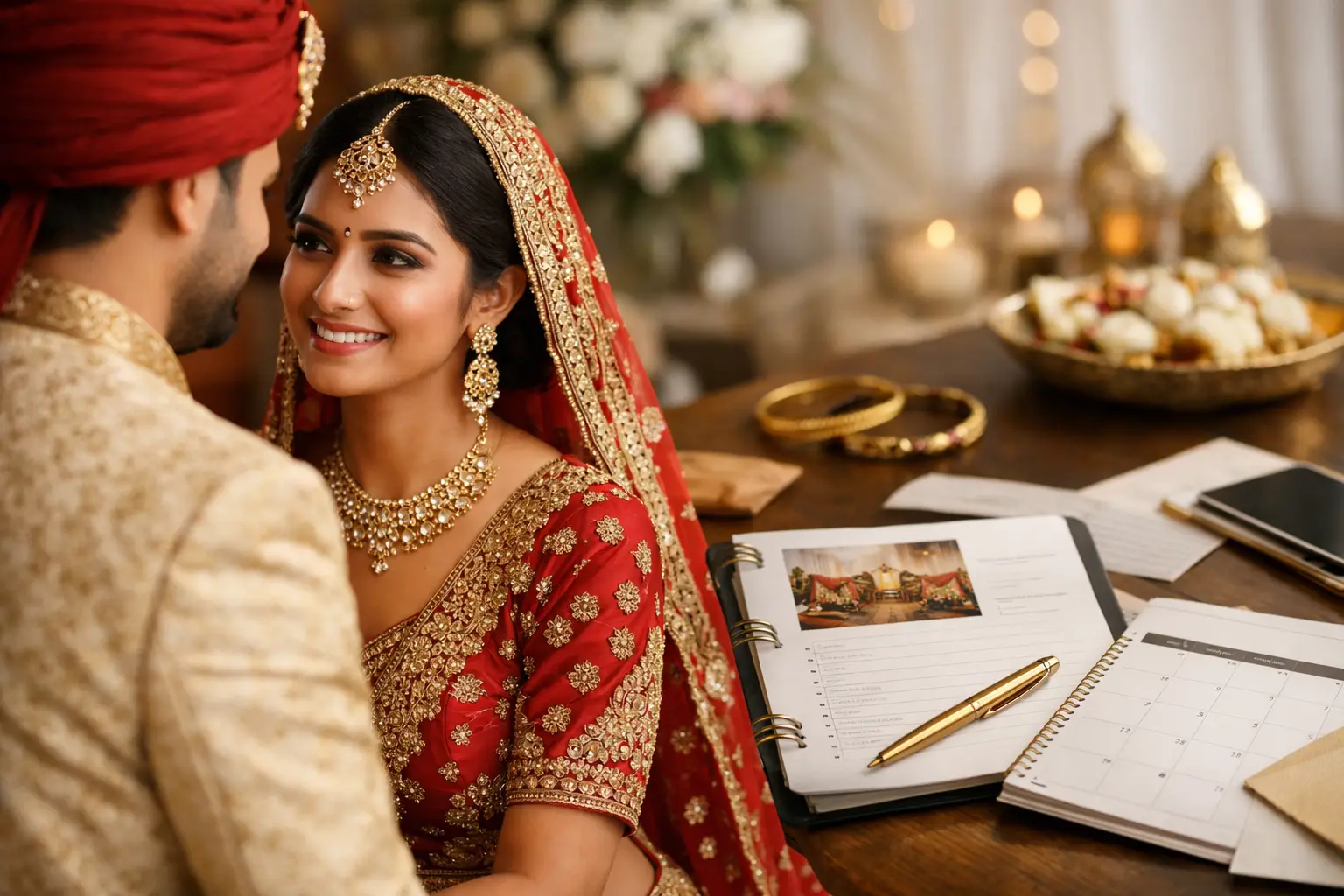
The guest list grows before you have even chosen the stage backdrop. An auntie wants a separate dhol entrance. Someone is asking whether the mehndi should be midweek or part of the main weekend. If you are working out how to organise Asian wedding celebrations, this is usually where the reality begins – not with the dress, but with the scale, the traditions and the number of moving parts.
Asian weddings are extraordinary occasions because they bring together family, faith, hospitality and celebration on a grand scale. They are also more complex than a standard one-day event. Whether you are planning a Pakistani, Bangladeshi, Indian or mixed-heritage wedding, the most successful celebrations are built around clarity from the start. Luxury does not come from excess alone. It comes from thoughtful decisions, experienced coordination and a venue team that understands the significance behind every detail.
How to organise Asian wedding planning from the start
The first step is deciding what kind of wedding you are actually hosting. That sounds obvious, but many couples begin by collecting ideas before defining the structure of the celebration. Some families want a nikah and reception on the same day. Others prefer separate events for the mehndi, shaadi, walima or civil ceremony. In some cases, one side of the family is expecting a traditional format while the couple would like a more contemporary flow.
This is where early conversations matter. Before booking suppliers, sit down with the key decision-makers and agree the broad outline. Which events are essential? Which customs must be included? How many guests are expected at each stage? Where are you happy to be flexible?
These discussions are not always easy, particularly with larger families, but they save considerable stress later. A polished wedding experience depends on reducing uncertainty. If the structure is settled early, every other decision becomes more straightforward, from budget and catering to timings and décor.
Set a realistic budget for the style you want
One of the biggest mistakes in Asian wedding planning is underestimating the cost of guest numbers and production. A visually impressive wedding with authentic catering, statement florals, stage design, entertainment and smooth service requires proper budgeting. There is a difference between spending well and overspending, and the right venue can help you find that balance.
Start with the three areas that shape the event most: venue, food and décor. For many families, catering is non-negotiable. Guests will remember the standard of the food, the generosity of service and whether the menu reflects the culture properly. The same is true of décor. If you are inviting several hundred guests, the room needs to feel cohesive and elevated, not simply full.
It also helps to separate fixed costs from flexible ones. Venue hire, catering packages and staffing are usually fixed. Favours, upgraded centrepieces, specialist entrances and additional entertainment tend to be the areas where costs can expand quickly. If the budget is tight, protect the essentials first. A beautifully run event with excellent food and elegant styling will always feel more luxurious than a wedding that tries to do everything at once.
Choose a venue that understands the traditions
A beautiful venue is only part of the equation. For an Asian wedding, operational experience matters just as much as appearance. A team may have a lovely ballroom, but if they do not understand prayer arrangements, halal catering standards, family seating expectations, late arrivals, multiple outfit changes or the practicalities of a grand entrance, the planning process can become harder than it needs to be.
When viewing venues, ask specific questions. Can they accommodate large guest lists comfortably? Do they have experience with segregated or family-led seating if required? Are they familiar with nikah setups, bridal stages, dhol players, mendhi nights or extended receiving lines? Is there sufficient parking and easy access for elderly relatives? These details have a direct impact on how relaxed the day feels.
For many couples in London and Essex, convenience is part of the luxury. A venue with planning support, trusted décor partners and culturally fluent catering options can remove layers of coordination at once. The Grove Banqueting, for example, is often chosen because couples want that combination of elegance and ease, without having to explain the basics of their celebration at every stage.
Guest numbers shape everything
If you want to know how to organise Asian wedding events well, be honest about numbers from the beginning. Guest estimates that shift dramatically can affect room layout, catering costs, table plans and even the atmosphere. A space that feels magnificent for 500 can feel sparse for 200. Equally, a venue that is too tight can make a premium celebration feel cramped.
Asian weddings often involve wider family networks, family friends, community guests and business connections. That is perfectly natural, but it means your invitation strategy needs care. Some couples create separate lists: immediate must-invite guests, family expectations and wider optional guests. This makes it easier to scale sensibly if needed.
It is also worth deciding early whether every event will include the same people. Mehndi functions are often more intimate and energetic, while receptions may be far larger and more formal. Being intentional about this protects both budget and flow.
Catering is not a detail – it is part of the experience
At an Asian wedding, food is hospitality in its most visible form. Guests notice quality immediately, and families care deeply about authenticity. This is why catering should never be treated as an afterthought.
Think beyond the menu card. Consider service style, timing and dietary needs. Will you offer a plated meal or buffet? Is there enough variety for different generations? Are children and elderly guests catered for comfortably? If the wedding is halal, does the venue have genuine experience delivering halal standards properly rather than as a last-minute adjustment?
Cuisine should feel generous and rooted in the occasion. Rich Pakistani and Bangladeshi dishes, elegant starters, fresh breads and well-paced service can turn dinner into one of the most memorable parts of the day. If you are bringing in your own caterers, make sure the venue is fully set up to support them. Dry hire flexibility can be valuable, but it works best when the logistics are tightly managed.
Decor, staging and atmosphere need a clear vision
Asian weddings are known for visual impact, but that does not mean every element needs to compete for attention. The most refined celebrations have a consistent look. That may be opulent and dramatic, soft and romantic, or clean and contemporary, but it should feel intentional.
Begin with the space itself. A strong venue gives you a polished foundation, which means you can use décor to enhance rather than disguise. From there, focus on the key visual moments: the entrance, stage, top table, dining tables and lighting. If these are right, the entire room feels composed.
Try not to choose décor in isolation. Your outfit colours, photography style, event timing and even catering presentation all contribute to the final impression. A daylight nikah may call for a different palette from an evening walima. A lively mehndi benefits from colour and movement, while a formal reception often works best with a more elegant, balanced approach.
Timings matter more than couples expect
A great Asian wedding does not just look beautiful. It flows beautifully. That means building a realistic schedule and accepting that some traditions naturally take longer than expected.
Hair, make-up, outfit changes, photography, family arrivals, religious formalities and receiving guests all need more time than a standard wedding timeline usually allows. If there is live entertainment, a bridal entrance or a speaking programme, those moments should be planned with breathing space around them. Guests are far more comfortable when the event feels calm and well-paced.
This is especially important when multiple generations are attending. Elderly relatives appreciate a clear sequence. Parents want confidence that dinner will not be delayed excessively. Children need enough structure that the day remains enjoyable. A well-run venue team will help you create timings that are ambitious but still realistic.
Family coordination needs diplomacy
Asian weddings are rarely planned by the couple alone. Parents, siblings, aunties, uncles and family friends may all have views, and often those views come from love, pride and tradition rather than interference. Still, too many voices without a clear process can slow decisions considerably.
It helps to agree who has final say in each category. One person may lead on catering, another on guest liaison, another on outfits or ceremony details. This avoids repeated conversations and mixed messages with suppliers. If the venue offers a dedicated planning contact, use them well. A calm, experienced point of coordination can reduce tension and keep everyone focused on the bigger picture.
The goal is not to remove family involvement. It is to make space for it in a way that supports the couple rather than overwhelms them.
How to organise Asian wedding details without losing sight of the joy
There will be spreadsheets, phone calls and last-minute changes. There may also be a seating issue, a delayed supplier or a relative who suddenly remembers an important custom the week before. This is normal. What matters is having the right structure around you.
The couples who enjoy the process most are usually the ones who secure a venue and planning team capable of carrying the operational weight. That allows the family to focus on the meaning of the celebration – the vows, the welcome, the reunion, the atmosphere in the room when everyone you love is gathered together.
Perfection in wedding planning is not about controlling every second. It is about creating a celebration that feels effortless, generous and true to you. When the essentials are handled with care, the day has space to become what it should be: a masterpiece of tradition, hospitality and joy.