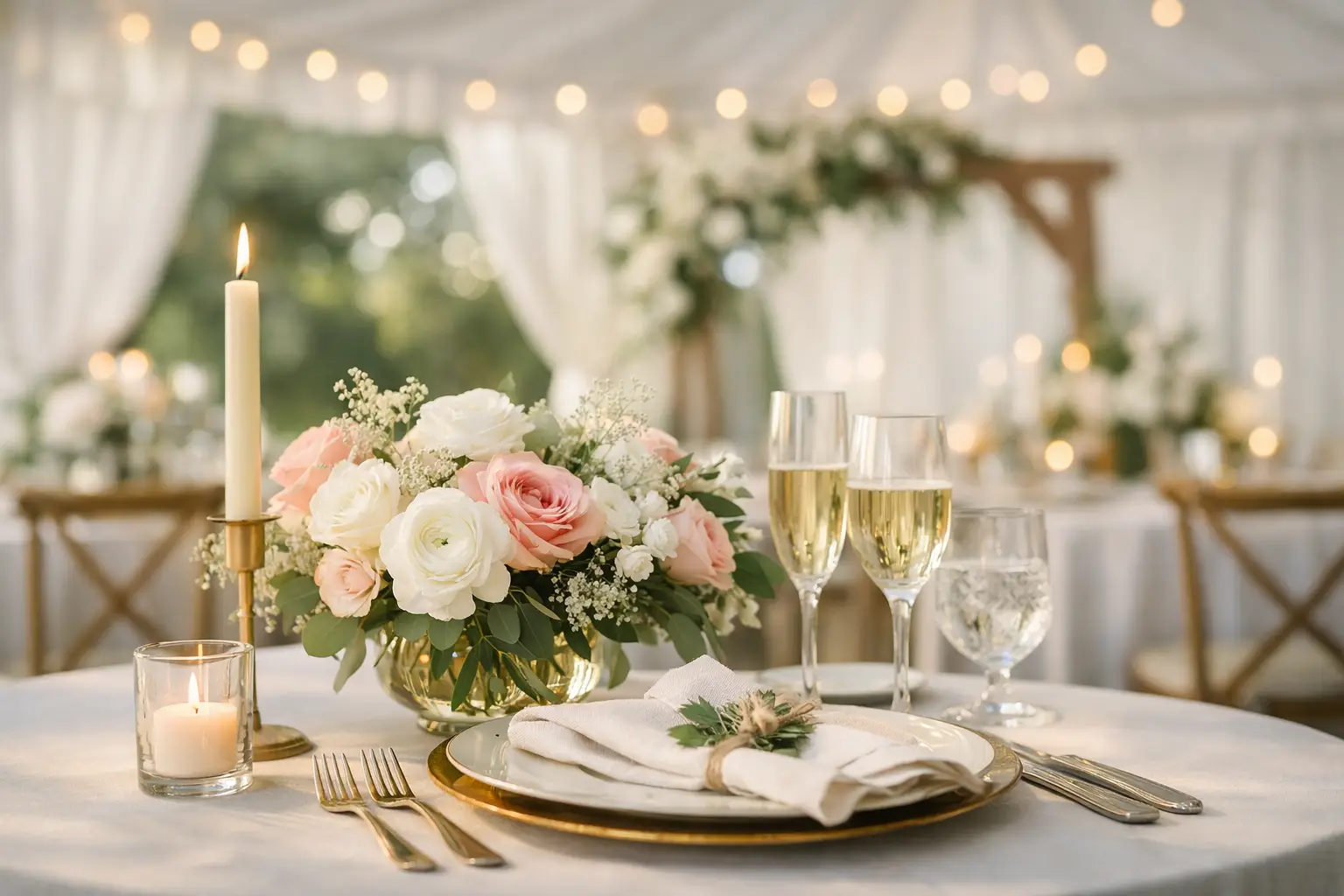
The room is quiet before the guests arrive. Then the lighting softens, the florals frame the aisle, the tables begin to glow and every carefully chosen detail tells your story. The finest wedding décor does more than make a venue look beautiful. It creates the atmosphere your family feels from the first welcome to the final dance.
For couples planning a celebration in London or Essex, décor often has to achieve several things at once. It should feel luxurious in photographs, honour cultural and faith traditions, work comfortably for a large guest list and remain practical for catering, speeches, entertainment and movement throughout the day. That balance is where thoughtful planning turns a beautiful idea into a truly memorable occasion.
Start Wedding Décor With the Feeling You Want to Create
Before choosing chair covers, flower varieties or a colour palette, consider how you want your celebration to feel. Perhaps you picture a candlelit evening reception with rich jewel tones and dramatic floral arrangements. Perhaps your vision is light, modern and romantic, with soft ivory draping, mirrored details and delicate blush florals. For some couples, the priority is a vibrant, joyful setting that brings together bold colour, music and heritage.
A strong décor scheme begins with a clear emotional direction. Words such as regal, contemporary, romantic, opulent or understated give your planner and décor team a more useful brief than a collection of unrelated images. They also help you make confident decisions when there are many tempting options.
It is worth choosing one central feature that guests will remember. This may be a grand floral stage, an elegant mandap, a striking nikah backdrop, a statement entrance or a beautifully dressed sweetheart table. When one focal point carries the visual drama, the remaining details can support it rather than compete for attention.
Choose a palette with depth, not just colour
A palette does not need to mean matching everything precisely. The most refined rooms usually layer complementary shades, textures and finishes. Ivory and gold can feel timeless, while emerald, burgundy and antique gold create an evening of richness and occasion. Soft white, sage and champagne offer a fresher, contemporary look.
Consider the venue itself as part of the palette. Wall finishes, flooring, ceiling height and existing lighting affect how colours appear. A shade that looks delicate in daylight may feel entirely different beneath warm evening lighting. Viewing fabric swatches, floral samples and table styling in the actual room is far more reliable than making every choice from a phone screen.
Let Culture and Tradition Shape the Design
For multicultural celebrations, wedding décor can be one of the most meaningful ways to make every guest feel represented. It should never be an afterthought added to a generic design. The most successful styling takes inspiration from your traditions while remaining unmistakably yours.
At a South Asian Muslim wedding, for example, a nikah setting may call for elegant seating, tasteful florals and a sense of calm that respects the significance of the ceremony. A walima might move towards a more formal evening look, using layered table settings, refined stage dressing and warm lighting. Couples planning a mehndi or sangeet may prefer marigold-inspired colour, lanterns, patterned textiles or a lively decorative backdrop designed for photographs and celebration.
Afro-Caribbean weddings may embrace rich colour, confident florals, family-centred seating and a reception space that feels ready for an exceptional party. British wedding traditions can sit beautifully alongside either contemporary minimalism or classic romance. There is no need to choose between heritage and luxury. With the right creative direction, they strengthen one another.
The practical question is how much tradition you want the décor to express. Some families want recognisable cultural touches throughout the room; others prefer them to appear in selected moments, such as the ceremony space, entrance display or stage. Both approaches can feel complete when they are planned with intention.
Design the Guest Experience, Not Only the Photographs
Photographs matter, but guests experience the room in motion. They need to find their tables easily, greet family without crowding the entrance, see the stage clearly and enjoy their meal without tall centrepieces blocking conversation. Luxury is not simply about adding more. It is about making every detail look considered and feel effortless.
Begin at the arrival point. A dressed welcome sign, floral plinths, candles or a coordinated seating plan can establish the atmosphere immediately. This area also needs to cope with the natural bustle of arrivals, particularly at larger celebrations where guests may reach the venue at the same time.
Then consider sightlines. The top table, stage or couple’s seating should be visible from across the room, but not so oversized that it overwhelms the dining layout. If speeches, performances or traditional entrances are part of the day, leave suitable clear space for them. A beautiful room must still work as a room.
Table décor deserves the same care. Low arrangements create intimacy and allow guests to talk across the table, while elevated centrepieces bring scale and grandeur. Many couples achieve the best result by mixing the two, giving the room rhythm without making every table identical. Charger plates, napkins, menu cards and glassware add polish, although they should serve the overall scheme rather than introduce more colours and finishes than the eye can settle on.
Use Lighting to Create Effortless Elegance
Lighting is often the difference between décor that looks pleasant and décor that feels cinematic. It shapes the mood, softens large spaces and brings texture to florals, fabric and table settings. Yet it must be planned around the pace of the celebration.
A ceremony or daytime reception may benefit from bright, flattering illumination, particularly for family photographs. As the evening progresses, warmer lighting, a glowing dance floor or carefully placed uplighters can transform the same space for dinner and entertainment. If your décor includes reflective surfaces, crystals or metallic details, lighting becomes even more influential.
Avoid relying on one bright overhead light throughout the event. It can flatten carefully selected colours and make elegant details disappear. Equally, a room that is too dark may make dining, filming and welcoming older relatives difficult. The right approach is layered lighting: practical where guests need it, atmospheric where you want drama and flattering where photographs will be taken.
Where to invest when the budget has limits
Most couples have a wish list larger than the décor budget, and that is entirely normal. The answer is not to reduce every element equally. Prioritise the spaces that carry the most attention: the ceremony area, stage or couple’s table, entrance and guest tables.
Fresh florals are undeniably beautiful, but they are not the only route to a polished result. High-quality silk florals, candles, draping, plinths and considered lighting can produce remarkable impact, especially when used alongside a smaller number of fresh arrangements. Seasonal flowers may also offer better value and a more natural look than insisting on blooms that must be sourced out of season.
Be cautious with trends that do not suit the room or your personal style. A dramatic hanging installation may be stunning, but it can be less worthwhile if it is barely visible to guests beneath it. Similarly, heavily decorated tables can look impressive in a styled photograph but leave little room for serving dishes, conversation or family comfort. Spend where the eye naturally lands, and keep the rest elegantly restrained.
Give Your Suppliers One Clear Creative Brief
Décor, catering, cake design, stationery, entertainment and photography all affect the atmosphere of the wedding. When suppliers work from separate ideas, the result can feel disjointed even when each individual element is beautiful.
Create a concise visual brief that sets out your palette, preferred finishes, key cultural details, non-negotiables and items you would rather avoid. Include a small number of reference images, but explain what you like about them. Is it the fullness of the florals, the clean lines of the stage, the candlelight or the richness of the colours? This gives professionals space to adapt the idea intelligently to your venue and guest numbers.
It also helps to agree responsibilities early. Confirm who provides centrepieces, table linen, signage, candles, stage furniture, draping and set-up timing. For couples choosing dry hire, this level of coordination is particularly valuable, as multiple suppliers may need access to the venue within a limited installation window. An all-inclusive approach can simplify these decisions by bringing décor, hospitality and catering into one coordinated plan.
At The Grove Banqueting, couples can shape a setting around their traditions and style while benefiting from experienced support for the details that make a large celebration run smoothly. The aim is not a room that looks copied from somewhere else, but a refined setting that feels made for your family and your occasion.
Your wedding décor should create a sense of arrival: the feeling that every guest has stepped into a celebration with care behind it. Choose the details that matter to you, allow room for comfort and tradition, and let the final design make the day feel unmistakably like yours.