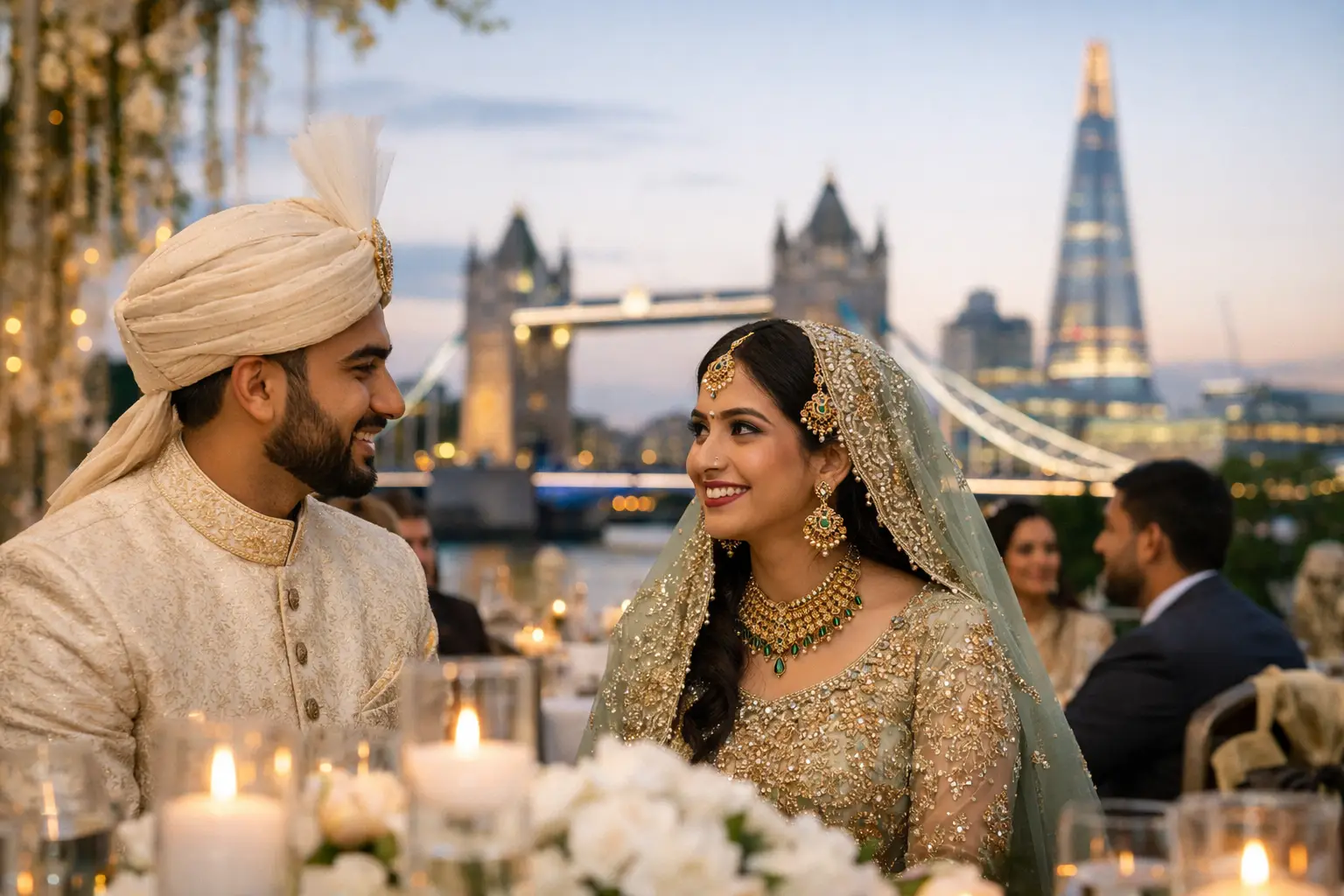
A Pakistani walima is often the first occasion where a couple can pause, welcome loved ones as newlyweds and celebrate with a sense of gracious abundance. The best Pakistani walima celebration example is not simply a beautiful room and a generous meal. It is an occasion where faith, family, hospitality and personal style are given equal care, leaving every guest feeling warmly received.
For couples in London and Essex, the challenge is usually not finding inspiration. It is bringing together a substantial guest list, authentic halal catering, a polished setting and a smooth running order without asking family members to spend the day solving practical problems. A thoughtfully planned walima makes elegance feel effortless.
What makes a Pakistani walima feel complete?
The walima is traditionally hosted by the groom’s family and is widely understood as a joyful reception following the nikah. In practice, each family may approach the timing, scale and formality differently. Some prefer an intimate luncheon the day after the wedding; others choose a grand evening reception with several hundred guests, formal photography and a lively stage entrance.
That flexibility is part of its beauty. What should remain constant is the spirit of welcome. Guests should arrive to a space that feels considered, be served with generosity and have enough time to congratulate the couple without the schedule becoming rushed. A luxurious walima has presence, but it never feels impersonal.
The most successful celebrations balance three elements: a refined visual setting, food that honours guests’ expectations and hospitality that anticipates the details families may otherwise need to manage themselves. Parking, prayer considerations, clear access for older relatives, a comfortable waiting area and a reliable event timetable can be as meaningful as the floral centrepieces.
A Pakistani walima celebration example: from arrival to farewell
Imagine a Sunday afternoon reception for 350 guests, held in an elegant banqueting suite within easy reach of East London, Romford and Essex. The couple have chosen a classic ivory, champagne and soft sage palette – graceful enough for a formal walima, while allowing their own style to shine through.
A welcoming arrival
Guests are greeted by a dressed entrance with florals, soft lighting and a welcome sign carrying the couple’s names. The welcome does not need to be extravagant to feel special. A calm, beautifully presented arrival immediately reassures relatives travelling from different parts of London that they are in the right place and that the day is being well cared for.
A reception drinks area offers dates, water, juices and carefully selected non-alcoholic refreshments. This gives guests time to greet one another before entering the main suite, while the couple complete portraits with their immediate families. For a large celebration, this gentle buffer prevents the room from feeling crowded and avoids delaying the meal while guests settle.
A stage designed for family moments
Inside, the focal point is a statement stage with layered draping, fresh or high-quality artificial florals, soft candle-style lighting and elegant seating for the bride and groom. The design is romantic but not overworked. Ivory drapes, gold detailing and clusters of white blooms create a timeless look; a couple seeking a more contemporary finish might introduce mirrored plinths, sculptural floral arrangements or a subtle wash of colour.
The aisle and guest tables should feel connected to the stage rather than treated as separate features. Coordinated centrepieces, charger plates, linen and carefully placed lighting give the entire room a sense of occasion. This is particularly valuable in a large venue, where a coherent décor plan makes the scale feel intimate rather than overwhelming.
As the couple enter, the host or toastmaster can invite guests to stand, offer a brief welcome and guide the transition into the reception. Some families prefer a quiet entrance with nasheeds or instrumental music, while others want a more energetic celebration. The right choice depends on family preferences and the atmosphere you want to create. What matters is that it is agreed in advance, so the entertainment, lighting and photography teams work to one clear cue.
Halal dining as a centrepiece of hospitality
At a Pakistani walima, the meal is a central expression of generosity. A well-planned menu should feel authentic, abundant and suitable for the full guest list, including children, elders and guests less familiar with South Asian cuisine.
For this example, a plated starter of chicken tikka or vegetable samosas is followed by a buffet featuring fragrant biryani, tender lamb karahi, chicken handi, seasonal vegetables, fresh naan, salad and raita. A live station can add theatre, perhaps with seekh kebabs, chaat or freshly prepared naan, provided there is enough space for guests to queue comfortably. The dessert table might combine traditional favourites such as gulab jamun and kheer with mini cheesecakes, fruit and tea.
There is no single correct menu. A family with roots in Lahore may favour richer Punjabi dishes, while another may wish to include Kashmiri, Sindhi or regional specialities. The essential point is to work with halal caterers who understand the flavours, quantities and service style expected at a walima. Food that is beautifully presented but lacks familiarity can disappoint; equally, exceptional cuisine needs attentive service and sensible timing to be enjoyed at its best.
For a formal reception, table service offers a composed experience. For very large guest numbers, a well-managed buffet may be more practical and can provide greater choice. The trade-off is flow: sufficient serving points and an experienced front-of-house team are vital to prevent long queues and keep the room feeling relaxed.
Speeches, photographs and unhurried celebration
Once guests have eaten, the couple can make time for a small number of meaningful moments. This may be a short welcome from the groom’s father, a prayer, a thank-you from the newlyweds or a few carefully chosen speeches. Keeping this part of the programme concise is usually wise. Relatives value heartfelt words, but guests also want time to speak with the couple and enjoy the occasion.
Family photographs are best planned rather than improvised. A coordinator can call immediate family groups to the stage in a clear order, allowing the photographer to capture the essential portraits efficiently. This avoids the familiar scene of a bride and groom spending the whole reception searching for cousins while their dinner grows cold.
For families who want additional entertainment, consider how it will sit with the tone of the day. A restrained live vocalist, a nasheed performance or a beautifully curated background playlist can elevate the atmosphere without taking attention away from the couple. If children are expected in large numbers, a small activity corner or a dedicated family seating area can make the event more comfortable for everyone.
Details that protect the guest experience
Walima planning is often judged in the small moments guests may never mention directly. Are elderly relatives able to reach the venue and find a seat easily? Is there adequate parking or a clear drop-off point? Does the venue have enough space for prayer if required? Are dietary needs confirmed before the event? Has the couple been given a private moment to eat?
These considerations are not separate from luxury. They are luxury. A room can look spectacular in photographs, but genuine hospitality is felt through calm service, comfortable surroundings and the confidence that someone experienced is overseeing the moving parts.
This is why an all-inclusive approach can be especially valuable for a detail-heavy celebration. With venue, halal catering, décor, service staff and planning support coordinated through one experienced team, there are fewer handovers and fewer last-minute questions for the family to answer. At the same time, dry hire and self-catering can be the better option for couples who already have a trusted caterer or a highly specific creative vision. The right arrangement depends on how much flexibility you need and how much coordination you want to retain.
Creating a walima that feels personal
Tradition gives the walima its foundation, but personality gives it warmth. A couple might display childhood photographs at the entrance, choose a family recipe for one course, provide favours that reflect their heritage or create a seating plan that brings two families together thoughtfully. None of these touches needs to be expensive. They simply need to feel true to the people being celebrated.
At The Grove Banqueting, this balance of cultural understanding and polished event delivery is at the heart of a memorable reception. Couples can shape the menu, décor and format around their family traditions while benefiting from a venue experience designed to feel calm, considered and impressive from the first guest arrival to the final farewell.
A walima should leave the newly married couple free to enjoy the faces around them: grandparents offering blessings, friends reuniting over dinner and both families beginning a new chapter together. When the planning is handled with care, that is what guests remember long after the final photographs are taken.