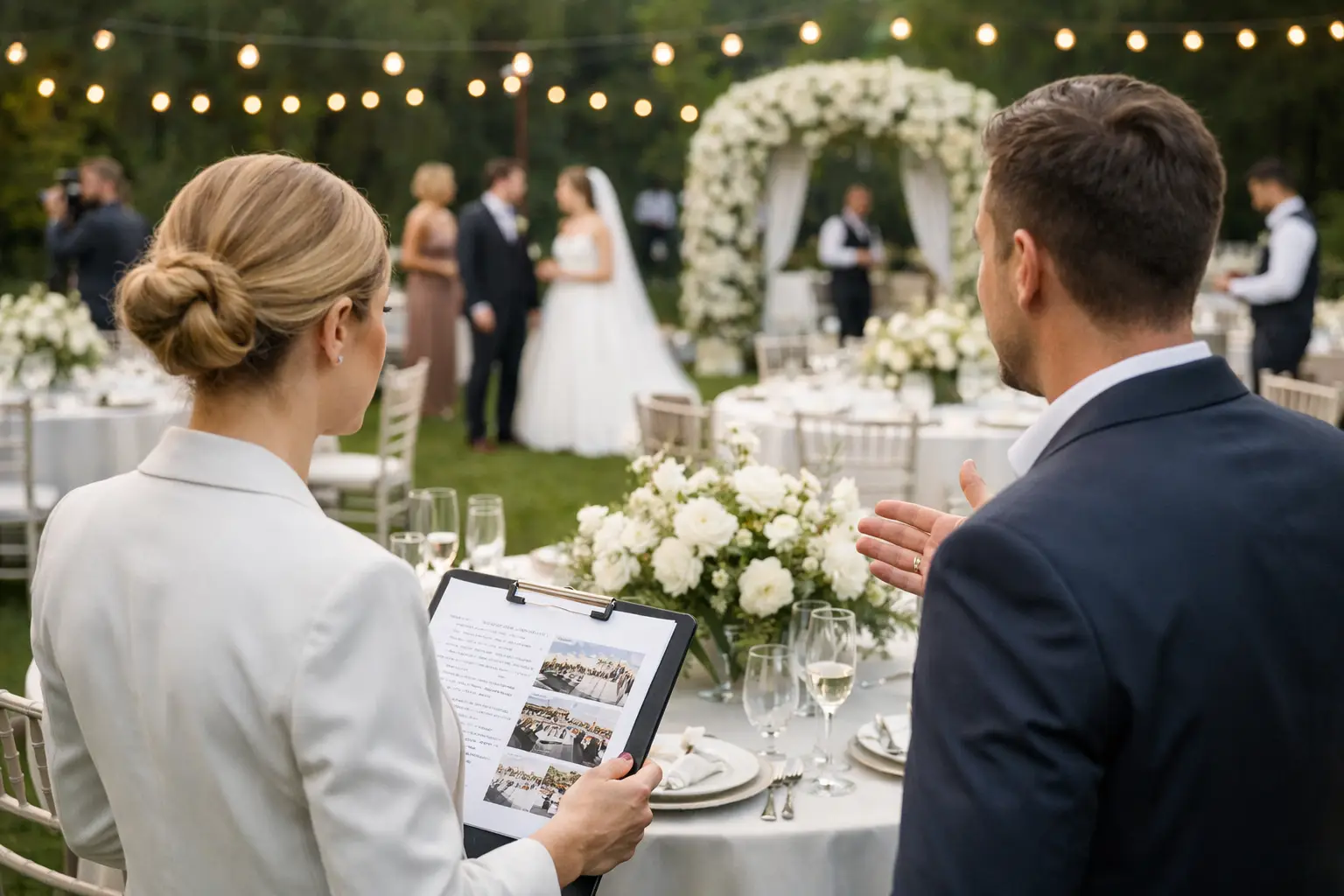
A 350-person wedding has a different energy to an intimate celebration. The entrance feels more momentous, the dancefloor carries more life, and the room becomes a gathering place for generations of family and friends. But large guest wedding planning also asks more of every decision. A beautiful venue alone is not enough – the guest journey, food service, timings and traditions must all work together with quiet precision.
For couples planning a grand celebration in London or Essex, the aim is not to make the day feel managed. It is to make every guest feel warmly received, well fed and included in a celebration that still feels unmistakably personal.
Start with the guest experience, not the guest count
A large number on a guest list can feel daunting when viewed as a logistics problem. View it instead as a hospitality promise. Consider who will be arriving, how they will travel, whether elderly relatives need easier access, and how families will move through the day from ceremony to reception, dining and celebration.
A venue should have the capacity to host your numbers comfortably rather than simply accommodate them. There is a meaningful difference. Guests need space to greet one another, find their tables and move between key moments without queues becoming the feature of the evening. Generous room proportions, clear entrances, practical parking and considerate accessibility all contribute to the effortless elegance guests remember.
This is also where a venue viewing is invaluable. Walk the route as a guest would. Ask where welcome drinks will be served, how quickly the room can turn around if required, and where family members can gather before a grand entrance. The details that appear minor at a viewing often protect the calm of the wedding day.
Build a realistic large guest wedding planning budget
With a sizeable celebration, every per-person decision has an effect. Catering, table settings, chair choices, favours and drinks can all change the final figure quickly. The answer is not to dilute the experience. It is to decide where quality is most visible and meaningful to your guests.
For many families, exceptional food, generous hospitality and striking décor are non-negotiable. These elements create the feeling of abundance that a large wedding deserves. Less visible extras can then be assessed with care. For example, a beautifully designed place card may matter more than an elaborate favour that is left behind, while a refined floral focal point can have greater impact than small arrangements competing across every surface.
All-inclusive packages can bring valuable clarity at this stage. When venue hire, halal catering, décor and planning support are coordinated through experienced partners, there are fewer separate invoices, delivery schedules and supplier conversations for the couple to manage. Dry hire may suit families with established suppliers or highly specific creative plans, but it requires more coordination and a clear understanding of responsibility on the day.
Whichever route you choose, allow a contingency for additional guests, last-minute dietary requirements and practical needs such as transport or extended venue hours. A considered budget is not restrictive. It gives you the confidence to make decisions without compromising the atmosphere you want to create.
Choose a layout that feels intimate at scale
A full ballroom can still feel personal. The key is creating a considered sense of flow rather than filling a room with tables. Your seating plan should support conversation, preserve clear sightlines to the top table or stage, and leave enough space for service staff to work discreetly.
Round tables encourage a sociable, traditional dining experience, while long tables can create a more contemporary family-feast feel. The right choice depends on your guest mix, the shape of the room and whether you want a prominent dancefloor throughout dinner. A professional layout will also account for the DJ or live band, photographer, cake display, prayer arrangements where needed, and a clear route for entrances.
Décor has an important role in defining the room. Statement florals, elevated centrepieces, soft lighting and coordinated linens can give a large space warmth and occasion. However, the most elaborate scheme is not always the most effective. Tall arrangements should not block conversation, and feature installations should enhance the room without reducing usable space or disrupting service.
Give each moment its own setting
Large celebrations often include multiple meaningful moments: a nikah, civil ceremony, reception entrance, walima, speeches, cake cutting, first dance or traditional performances. When these are planned as distinct experiences within one event, the day feels rich rather than rushed.
A dedicated welcome area creates a gracious first impression. A well-positioned stage gives every guest a view of the couple. Thoughtful lighting can then shift the mood from elegant dining to a lively evening celebration. Discuss these transitions early with your venue and décor team so that the room tells the story of your day without lengthy pauses or visible disruption.
Plan food service around culture and timing
For a large wedding, catering is one of the clearest expressions of care. Guests may forgive a delayed speech, but they will remember whether they were welcomed with warmth and served a meal worthy of the occasion.
The service style should reflect your traditions and schedule. A formal plated meal brings structure and refinement, while a buffet or family-style service can offer variety and a generous sense of celebration. For South Asian Muslim weddings, authentic halal cuisine is often central to the guest experience, particularly when elders expect familiar flavours and high standards. The same principle applies to Afro-Caribbean, British and multicultural menus: food should feel chosen with knowledge, not added as an afterthought.
Ask how the catering team manages service for your expected numbers. The key questions are practical: how many guests can be served at one time, when will children and elderly guests be prioritised, and how will dietary or allergen requirements be identified? If the ceremony runs later than planned, can canapés or refreshments be adjusted to keep guests comfortable?
A menu tasting is the moment to assess more than flavour. Consider portion size, presentation, temperature and the pace of service. A menu that is excellent for ten guests must still arrive with consistency for hundreds.
Protect the timetable from unnecessary pressure
The larger the guest list, the more likely small delays will multiply. Late arrivals, family photographs, traffic and extended greetings are all normal. The solution is not an overly rigid schedule. It is a timetable with sensible breathing room.
Allow time after the ceremony for greetings and photographs, particularly when close family members have travelled from across London, Essex or further afield. If there is a gap before the meal, provide a comfortable reception experience rather than leaving guests to wait without direction. Clear announcements and an experienced event manager make a considerable difference here.
Keep formalities purposeful. Speeches can be deeply moving, but several long speeches after a late dinner can affect the energy in the room. Agree an order in advance, encourage speakers to be concise, and ensure the person coordinating the day knows when to gently move the programme forward.
Make family involvement a strength
Large weddings often involve many loving opinions. Parents, siblings, aunties, uncles and close friends may all want to contribute, especially where cultural customs carry deep significance. This involvement can be one of the great joys of planning, provided decisions have a clear structure.
Choose a small group for final approvals and keep one shared version of the guest list, seating plan and event timetable. Give family members meaningful roles that suit them, whether that is welcoming guests, overseeing gifts, helping elders find their seats or coordinating a particular tradition. This preserves their involvement without asking the couple to answer the same question repeatedly.
At The Grove Banqueting, culturally informed planning can bring reassurance to families who want a refined celebration without losing the customs that make it their own. From faith-sensitive requirements to bespoke catering and décor choices, knowledgeable coordination allows tradition and luxury to sit naturally together.
Confirm the details guests never see
The most polished large weddings are supported by preparation behind the scenes. Before the final meeting, confirm supplier arrival times, loading arrangements, table numbers, dietary lists, contact details and who has authority to make decisions on the day. Ensure your photographer knows the essential family groupings, rather than trying to gather relatives spontaneously from a room of several hundred people.
It is also wise to appoint one trusted person who is not a member of the couple to handle minor questions. They can liaise with the venue team, take calls from suppliers and resolve small issues before they reach you. Your role on the day is to be present with the people you love.
A large wedding need not feel impersonal or overwhelming. With a venue designed for generous hospitality, a trusted planning team and choices grounded in your family’s traditions, a full guest list becomes exactly what it should be: a room filled with people who have come to celebrate your next chapter. Begin with the experience you want them to have, and let every practical decision support that feeling.