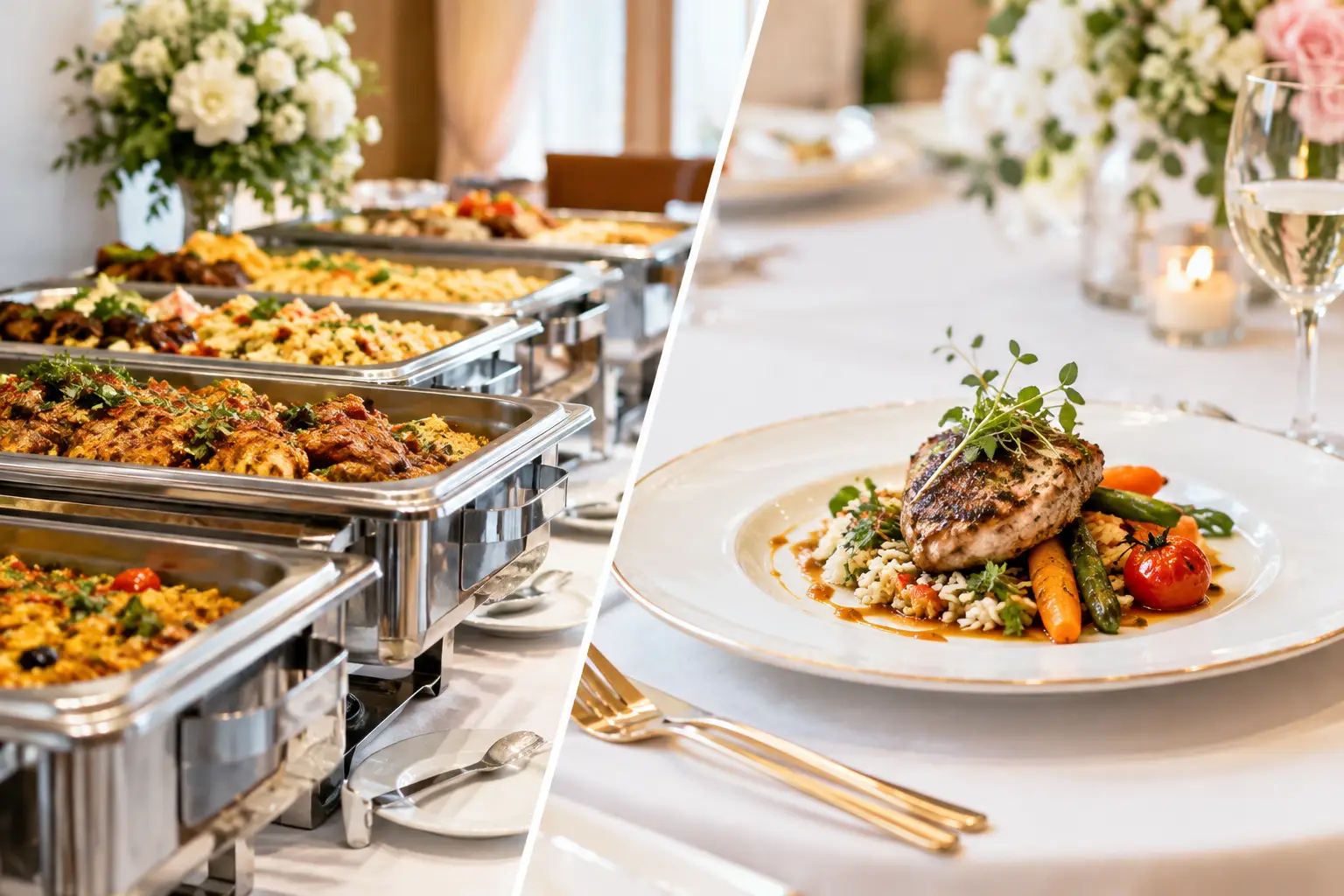
A wedding meal is never simply a meal. It is the moment when guests settle into the celebration, families share a table, and your hospitality becomes part of what people remember. When deciding between halal buffet versus plated service, the right choice depends on the atmosphere you want to create, the size and shape of your guest list, and the traditions that matter most to your families.
For some couples, a generous halal buffet feels like the warmest possible welcome: abundant, sociable and full of choice. For others, a plated service brings the composed rhythm and refined presentation of a formal banquet. Both can be beautifully executed. The question is which one will make your reception feel effortless for you and your guests.
Halal Buffet Versus Plated Service: The Essential Difference
A halal buffet invites guests to choose their dishes from a carefully presented spread, usually arranged by course or cuisine. It is particularly well suited to celebrations where authentic Pakistani, Bangladeshi, British or Afro-Caribbean flavours are central to the occasion. Guests can select the dishes they enjoy, revisit favourites and accommodate personal preferences without the formality of a fixed plate.
Plated service, by contrast, brings each course directly to the table. Every guest receives the same considered presentation, or a pre-selected alternative communicated in advance. Service is paced by the events team, creating a polished dining experience that works especially well for couples planning an elegant, structured reception.
Neither format is automatically more luxurious. Luxury comes from quality, presentation and thoughtful service. A beautifully styled buffet with exceptional halal cuisine can feel every bit as impressive as a three-course plated dinner, while a plated meal can feel impersonal if the menu does not reflect the tastes of the people around the table.
Why a Halal Buffet Can Feel Generous and Personal
For large multicultural weddings, a buffet often offers the easiest way to honour the range of tastes in the room. A well-designed menu might bring together aromatic curries, grilled meats, rice dishes, fresh salads, vegetarian options and carefully prepared sides, allowing guests to build a plate that feels familiar and satisfying. This is valuable when several generations are celebrating together and expectations around food are understandably high.
Choice is the buffet’s greatest strength. Guests who enjoy a fuller meal can serve themselves accordingly, while elderly relatives, children and lighter eaters can take smaller portions. It can also reduce the need to ask guests to make detailed menu choices weeks before the wedding, which is helpful when attendance numbers are still evolving.
A buffet creates movement and conversation, too. It has a relaxed energy that suits lively receptions, especially where the dining experience is intended to be an extension of family hospitality. The key is thoughtful management. Stations should be accessible, clearly arranged and replenished discreetly, so guests do not face long queues or uncertainty about where to go.
The practical considerations of buffet dining
With a substantial guest list, buffet flow needs planning as carefully as the menu itself. Calling tables in stages, providing generous space around service points and ensuring professional staff are on hand keeps the room feeling calm. Couples should also consider guests with limited mobility and ensure assistance is available, rather than expecting everyone to join a queue.
Buffets are often perceived as the more flexible option, but they are not automatically the lower-cost choice. A broad menu, multiple live stations, premium ingredients and extended service can all influence the final investment. What matters is designing a menu with purpose, rather than adding choices simply for the sake of it.
The Case for a Refined Plated Service
Plated service gives the wedding breakfast a sense of occasion. Once guests are seated, they can remain fully present at their tables while each course arrives with consistency and care. This is an excellent choice for couples who picture a formal reception with speeches, toasts and a carefully timed entrance into the evening celebration.
The visual impact is part of the appeal. Each plate arrives finished and composed, complementing your tablescape, florals and décor. For a reception built around understated elegance, plated dining can create a beautiful pause in the day: a moment when the room feels settled, attentive and impeccably hosted.
It also offers more predictable timings. Because food is served to guests rather than collected by them, the events team can coordinate service around speeches, prayers, outfit changes or entertainment. That control can be reassuring when your wedding schedule includes meaningful cultural moments that must happen at a particular time.
What plated dining asks of you
The trade-off is that plated service requires more certainty before the day. Final numbers, menu selections and dietary requirements need to be gathered in good time. If your guest list includes people with varied preferences, a single menu may not satisfy everyone unless you offer considered alternatives.
For halal weddings, it is vital to work with caterers who understand that halal assurance is not a minor detail. It includes ingredient sourcing, preparation and service standards, alongside the flavour and authenticity guests expect. A plated meal should never mean compromising on the generous, recognisable cuisine your family values.
There is also a guest-experience point to consider. Some families love the formality of being served, while others may feel more at home choosing their own food. If the reception is likely to be highly sociable and food-led, the calm precision of plated dining may feel less natural than an abundant buffet.
Choosing Around Your Wedding, Not a Rulebook
Your venue layout, guest count and programme should guide the decision. A grand ballroom with ample room for stations can make buffet service feel beautifully considered rather than crowded. A reception with a tight timetable, formal speeches and a late evening entertainment schedule may benefit from the steady pace of plated courses.
Think about your guests before following a trend. If many are travelling from across London, Essex or further afield, a generous buffet may be a particularly welcome expression of care after their journey. If you are hosting an intimate evening reception where every detail is deliberately curated, plated service can support that elevated atmosphere.
Cultural traditions deserve equal weight. South Asian Muslim celebrations often place food at the heart of hospitality, with guests anticipating variety, familiar flavours and generous portions. Afro-Caribbean menus may similarly call for choice and abundance. Yet there are no fixed rules: a plated menu can honour heritage brilliantly when it is created with real culinary understanding, and a buffet can look exceptionally polished when it is styled and staffed to a premium standard.
A Third Option: The Best of Both
Many couples do not need to choose one format exclusively. A plated starter followed by a halal buffet main course can bring formal elegance to the opening of the meal while preserving the variety guests appreciate. Alternatively, a buffet reception can be followed by plated desserts, tea and coffee, giving the final course a more composed finish.
Live cooking stations can also provide theatre without sacrificing quality. They work particularly well for late-night food, when guests have returned from the dance floor and want something freshly prepared. This approach should be used selectively, however. Too many formats at once can complicate timings and distract from the atmosphere you have worked hard to create.
At The Grove Banqueting, the most memorable menus begin with a conversation about your families, traditions and the feeling you want your guests to take away. Whether you favour a lavish halal buffet or an elegant plated meal, experienced coordination ensures the service feels considered from the first welcome drink to the final course.
The best choice is the one that lets you look around the room and see guests comfortable, well fed and completely part of your celebration. Choose the service style that reflects your hospitality, then give it the care, flavour and presentation worthy of the day.