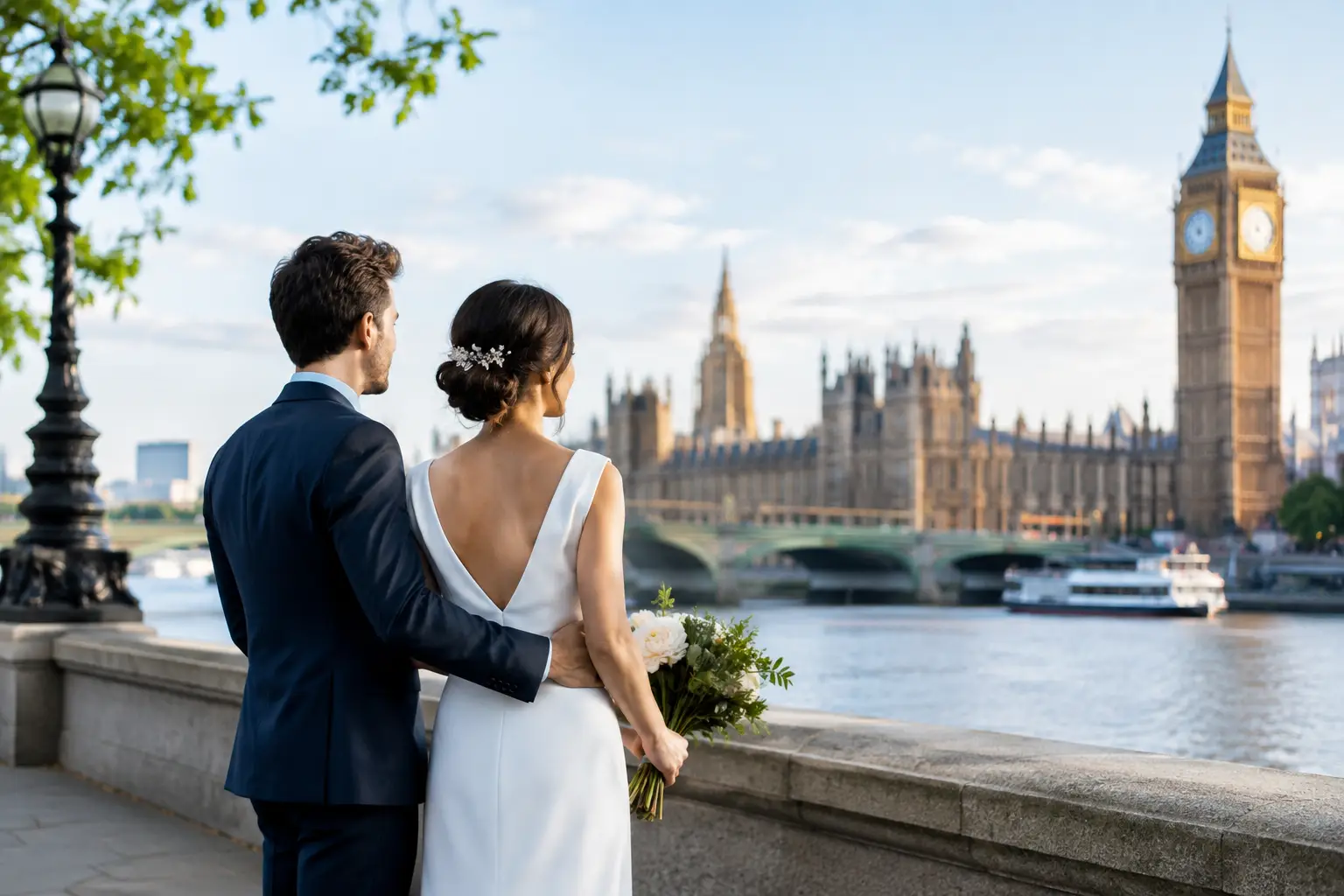
The moment you exchange vows should not feel like an administrative appointment before the ‘real’ celebration begins. The right setting turns the legal ceremony into part of the masterpiece: a beautifully dressed room, your closest people seated comfortably, and a smooth transition into the reception that follows. This civil ceremony venue guide is designed for London and Essex couples who want that sense of occasion without losing sight of the practical details.
What makes a civil ceremony venue right for you?
A civil ceremony venue must offer more than an attractive backdrop. It needs to support the legal part of the day with confidence, while giving your family and guests the comfort, space and hospitality expected from a premium wedding celebration.
Begin with the atmosphere you want when you make your entrance. Some couples imagine an intimate ceremony with a smaller guest count, followed by a grand evening reception. Others want every guest present from the first vow to the final dance. Neither approach is more meaningful, but it will affect the room layout, timings, staffing and package you choose.
For large South Asian, Muslim, British or Afro-Caribbean weddings, it is particularly helpful to select a venue that understands how a civil ceremony can sit naturally alongside cultural traditions. Your legal marriage may take place first, with a nikah, blessing, family entrance, speeches or other significant moments arranged later in the day. A venue team with multicultural wedding experience can protect the flow of each occasion rather than treating them as separate events competing for time.
Confirm the legal arrangements before falling in love with the room
A beautiful venue is only suitable for a civil ceremony if the legal arrangements are in place. In England and Wales, civil ceremonies are conducted by registrars, and the ceremony must take place at an approved premises or register office. Availability differs between local authorities, particularly on popular weekend dates.
Ask early whether the venue is licensed for civil ceremonies, which rooms are approved, and how the registrar booking works. In many cases, you will need to book the venue and registrar separately. Do not assume a preferred date is secure until both are confirmed.
It is also wise to discuss the ceremony wording, music and format with your registrar. Civil ceremonies have rules around religious content. If faith is central to your day, your venue should be able to help you plan a respectful timetable for a separate religious or cultural ceremony, where appropriate, without compromising the legal proceedings or the guest experience.
The civil ceremony venue guide to guest comfort
Luxury is felt in the details guests rarely mention directly. They will remember whether arriving was straightforward, whether older relatives were comfortable, whether children had room to settle, and whether the transition from ceremony to dining felt effortless.
Location matters, especially when guests are travelling from across East London, Essex and the wider capital. Look beyond the postcode. Consider nearby transport connections, clear driving routes, parking capacity and whether guests can be welcomed without queueing outside. For celebrations with a substantial guest list, generous on-site parking is not simply convenient. It is a thoughtful part of your hospitality.
Accessibility should receive the same careful attention. Ask about step-free access, accessible facilities, lift access where needed and the distance between the ceremony room, reception space and toilets. A beautifully planned wedding allows grandparents, young children and every guest to feel included from the beginning.
Choose a space that changes with the day
The strongest civil ceremony venues do not make you choose between formality and celebration. They provide a setting that can evolve. Your ceremony room should feel focused and elegant for the vows, then allow guests to move naturally into a drinks reception, photographs and dining while the room is refreshed if required.
Ask to see how the space looks in real wedding layouts, not only when empty. Chair placement, aisle width, floral displays, registrar tables and staging all affect the feeling of the room. A grand suite can still feel personal with considered seating, while a smaller room can become uncomfortable if every chair is squeezed into place.
Natural light is valuable for daytime photographs, but lighting after sunset is equally important. Discuss whether the venue can create a soft, romantic ceremony atmosphere and then shift into a more dramatic look for your entrance, first dance or evening celebration. This is where professional décor and venue coordination make a visible difference.
Catering should suit the celebration, not interrupt it
For many families, food is one of the clearest expressions of welcome. If you are planning a halal wedding, ask detailed questions rather than relying on a broad assurance. Confirm the catering approach, menu tasting process, service style and the team’s familiarity with Pakistani, Bangladeshi or other cuisine that matters to your family.
Authentic halal dining can be presented with the refinement expected at a luxury wedding, whether you prefer an elegant served meal, a generous buffet or live food stations. The decision depends on your guest count, timings and the style of celebration. A plated meal may suit a formal, unhurried reception, while buffet or station service can work beautifully for a lively, high-capacity event when managed by an experienced hospitality team.
It is worth asking how the venue accommodates vegetarian, vegan, allergy-aware and children’s meals. These details should not become a last-minute worry for the couple or their parents. A capable events team will gather dietary requirements early and build them into the service plan.
At The Grove Banqueting, couples can choose the reassurance of coordinated halal catering, décor and hospitality or retain greater control through dry hire and self-catering flexibility. That choice matters. An all-inclusive package can reduce the number of decisions and suppliers to manage, while dry hire may be the better fit if a family has a trusted caterer, decorator or cultural specialist they are determined to include.
Ask how the venue will protect your timetable
A civil ceremony day has more moving parts than it first appears. There is the registrar’s arrival, guest seating, the ceremony itself, family photographs, room changes, prayer considerations, catering preparation, speeches and entertainment. Even a modest delay can affect the rest of the day.
During a viewing, ask who will be your point of contact and whether a dedicated coordinator will be present on the day. You should understand exactly who manages suppliers, guides guests, communicates with the registrar and keeps the schedule on track. The answer should be specific, not simply a promise that someone will be available.
Share the traditions that are important to you from the outset. Perhaps your day includes a nikah, a tea ceremony, a traditional entrance, a cake ceremony, separate family photography or a late-evening dancefloor reveal. These are not extras to be fitted into spare minutes. They are part of your wedding story, and the venue should help build a realistic running order around them.
Look closely at what is included
Venue quotes can look similar until you examine what sits behind the headline figure. Ask whether the price includes tables, chairs, linen, crockery, staffing, security, cleaning, lighting, stage décor, a bridal room and use of all relevant spaces. Clarify the permitted finishing time, access times for suppliers and any charges for extended hours.
This is also the right time to discuss décor. A statement floral backdrop, aisle styling, centrepieces and a personalised stage can transform a room, but they need to be designed around the venue rather than added as an afterthought. Established décor partners often understand the room dimensions, ceiling height and practical setup requirements, which can make the process more efficient and the final result more polished.
Make the viewing feel like a planning meeting
When you visit a potential venue, picture your actual day rather than an idealised photograph. Walk the route your guests will take from the car park to the ceremony room. Stand where you will exchange vows. Consider where your photographer will work, where elderly relatives can sit, and where family groups can gather without blocking service.
Bring a rough guest count and an honest outline of your priorities. If food is non-negotiable, ask to discuss menus. If your parents need reassurance about logistics, invite them to the viewing. If you have a particular cultural or faith-sensitive requirement, raise it directly. The right venue will meet those conversations with experience and care, not uncertainty.
Your civil ceremony deserves the same attention as every other part of the wedding. Choose a venue where the legal ‘I do’ feels beautifully personal, where your traditions have room to shine, and where you can walk into the celebration knowing every detail is in capable hands.