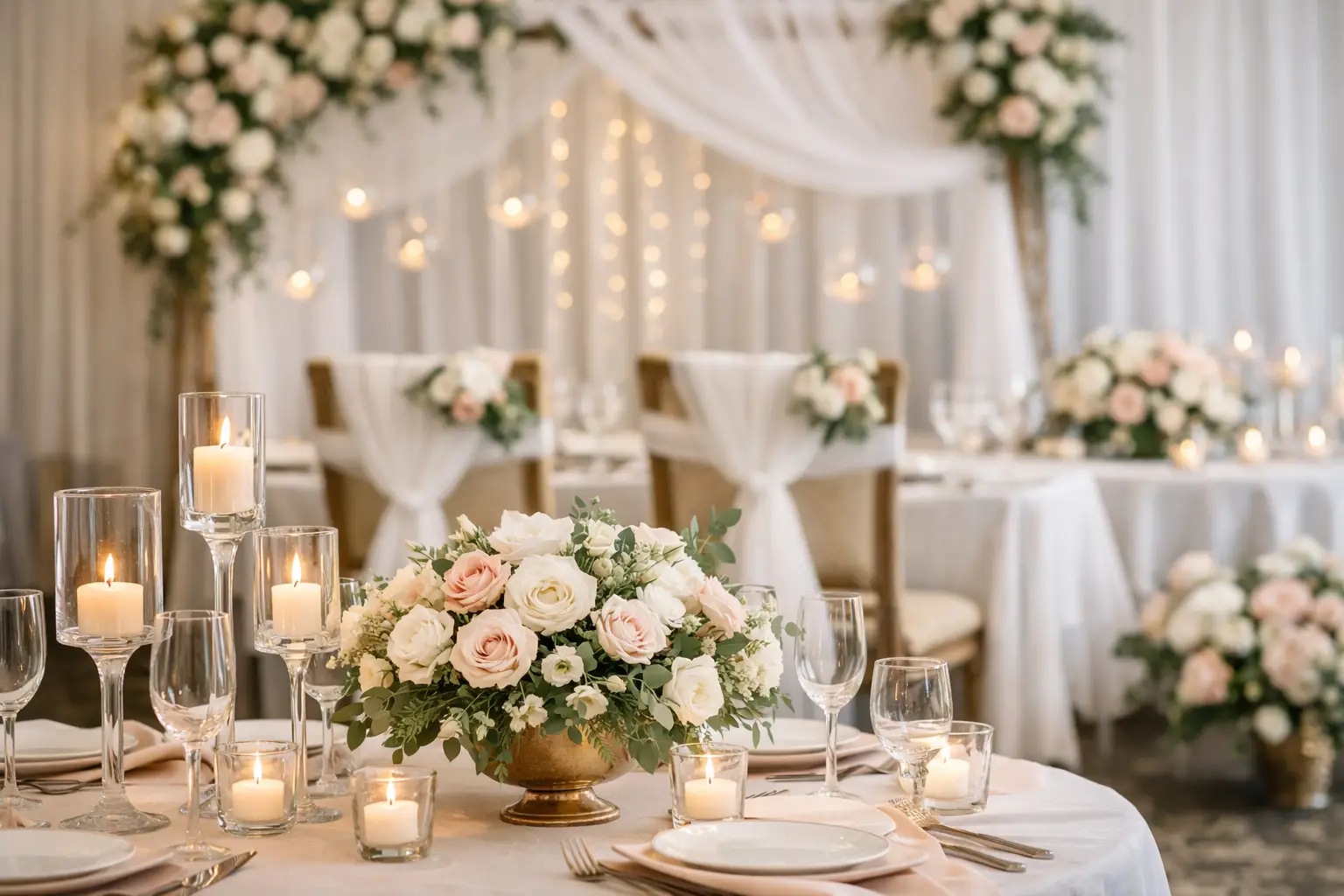
One of the quickest ways a wedding budget can drift is when a couple assumes styling is included, only to find that the floral stage, centrepieces and chair décor sit on a separate quote. So, do wedding packages include decor? Sometimes they do, sometimes they include only the basics, and sometimes the word package refers almost entirely to the room hire, food and staffing.
That distinction matters more than most couples realise. Decor shapes the first impression your guests have when they enter the room, but it also affects setup times, supplier access, logistics and how smoothly the day comes together. For families planning a large celebration, especially one with cultural or faith-specific traditions, clarity on what is included can save both money and unnecessary stress.
Do wedding packages include decor at most venues?
There is no universal rule. Some venues offer all-inclusive packages where décor is built into the price, while others provide a blank canvas and leave styling entirely to external suppliers. In practice, most wedding packages fall somewhere in the middle.
A package may include the venue dressed to a certain standard, such as table linen, chair covers, a cake table, a top table backdrop or basic centrepieces. That can be enough for couples who want elegant simplicity. However, if you are picturing a statement entrance, bespoke stage design, floral arches, luxury table styling or coordinated lighting, those elements are often treated as upgrades.
This is why two packages with similar headline prices can deliver very different results. One may include meaningful décor value, while another covers only the operational essentials. The wording can sound polished in both cases, so it is worth asking exactly what the room will look like on the day, rather than relying on broad terms such as venue styling or event dressing.
What decor is usually included in a wedding package?
The starting point is often functional décor rather than full visual design. Many packages include items the venue already holds in-house and can provide efficiently. That may mean guest tables and chairs, standard linen, napkins, crockery, cutlery and glassware. Some venues also include a simple dance floor, stage platform or neutral backdrop.
At more premium venues, included décor can be far more generous. You may see options such as charger plates, blossom trees, centrepieces, LED lighting, chair sashes, a bridal table setup or a coordinated colour scheme. Where a venue specialises in high-capacity weddings and formal receptions, there is often greater recognition that décor is not an add-on but part of the overall guest experience.
Even then, included does not always mean unlimited. There may be a set number of centrepieces, one stage style, one mandap or nikah table setup option, or a fixed palette that works beautifully but is not completely bespoke. For many couples, that is a very worthwhile balance. You get polished presentation and professional setup without paying for a fully custom production.
The difference between standard styling and bespoke decor
This is where misunderstandings happen. Standard styling usually means the room will look elegant, cohesive and event-ready using the venue’s existing stock and trusted formats. Bespoke décor means creating a look around your exact vision, whether that is romantic ivory florals, dramatic jewel tones, mirrored plinths, a traditional mehndi aesthetic or a refined black-tie reception.
Neither option is better in every case. Standard styling can offer excellent value and a beautifully finished result. Bespoke décor gives more creative freedom but usually involves more planning, more supplier coordination and a higher spend.
Why decor inclusion matters for large and cultural weddings
For intimate weddings, décor decisions may be relatively straightforward. For larger celebrations, especially those shaped by specific traditions, décor becomes more layered. There may be separate styling for the ceremony and reception, a dedicated stage, family seating considerations, space for religious formalities, and expectations around grandeur.
South Asian Muslim weddings, for example, often involve visual focal points such as a nikah area, bridal stage, entrance feature and detailed guest table styling. Afro-Caribbean weddings may prioritise a vibrant yet refined reception atmosphere with strong attention to layout, celebration flow and guest comfort. British weddings may lean towards understated elegance, but still place real importance on florals, top table presentation and evening transformation.
In each case, décor is part of how the event feels. It supports photographs, hospitality and the sense that the day has been carefully considered. A venue that understands these expectations can make planning feel far more effortless because styling decisions are handled in the context of the celebration, not in isolation.
What to ask before you book
The right questions can tell you very quickly whether a package offers genuine value. Start by asking for a precise list of included décor items. Ask whether the stage, centrepieces, chair styling, table linen, tableware, entrance décor and lighting are included, and if so, in what style and quantity.
It is also wise to ask whether the décor shown in the venue’s photography is part of the standard package. Sometimes the images reflect a fully upgraded event rather than the package most couples first enquire about. There is nothing wrong with that, but you need a realistic picture of what your quoted price delivers.
You should also ask who installs and removes the décor, whether outside decorators are permitted, and whether there are supplier restrictions or access time limits. If a venue offers dry hire or self-catering flexibility, the décor arrangements may differ significantly from its all-inclusive weddings.
Watch for these common grey areas
Florals are a frequent one. Artificial centrepieces may be included, while fresh flowers are not. Lighting is another. Basic house lighting may be part of the package, but uplighting, spotlights, name projection or a full ambience design may cost extra. Stage décor can also vary, with a simple backdrop included and more elaborate structures priced separately.
Candles, charger plates, signage, aisle styling and luxury furniture often sit in that middle ground too. They transform the room, but they are not always part of the base package. This is where a transparent venue team makes all the difference.
Is an all-inclusive package better than bringing in your own decor?
It depends on your priorities. If you want convenience, consistency and one team coordinating the visual and operational side of the day, an all-inclusive package is often the smoother route. It reduces the number of moving parts and usually means the décor has already been tested in the space for scale, layout and impact.
That matters in a premium setting. When catering, room layout, guest numbers and décor are all working together, the event feels calm and beautifully managed. Families are free to enjoy the occasion instead of fielding supplier calls or last-minute setup questions.
Bringing in your own décor can work well if you have a very specific creative vision or want to work with a specialist stylist. It can also suit couples choosing dry hire because they want more freedom over suppliers, cuisine or cultural presentation. The trade-off is that more freedom usually brings more responsibility. Someone still has to coordinate access, timings, health and safety considerations, power requirements and pack-down.
At a venue experienced in all-inclusive and flexible wedding formats, the best option is not pushed as one-size-fits-all. Instead, couples are guided towards the route that gives them the right blend of luxury, control and ease.
How to compare packages fairly
When asking do wedding packages include decor, the real question is often whether the package includes enough décor to create the wedding you actually want. Price alone will not tell you that.
A lower package price may look attractive until you add a separate décor company, setup charges, transport, supplier meals, access fees and styling extras. A higher package may represent better value if it already includes coordinated décor, trusted suppliers and planning support. This is especially true for large guest lists, where every additional decorative element has to be repeated at scale.
Ask for examples of real weddings at your likely guest count. A room styled for 80 people can look very different when set for 300. You want to know that the included or recommended décor will still feel balanced, luxurious and practical at your event size.
For couples planning in East London, Essex and the surrounding areas, this level of transparency is one of the clearest signs of a venue that understands weddings properly. At The Grove Banqueting, that means appreciating that décor is never just decoration. It is part of the hospitality, the atmosphere and the confidence that everything will be ready exactly as it should be.
The best wedding package is not the one with the longest inclusions list. It is the one that gives you a beautiful setting, honest expectations and the reassurance that your day will look every bit as special as it feels.