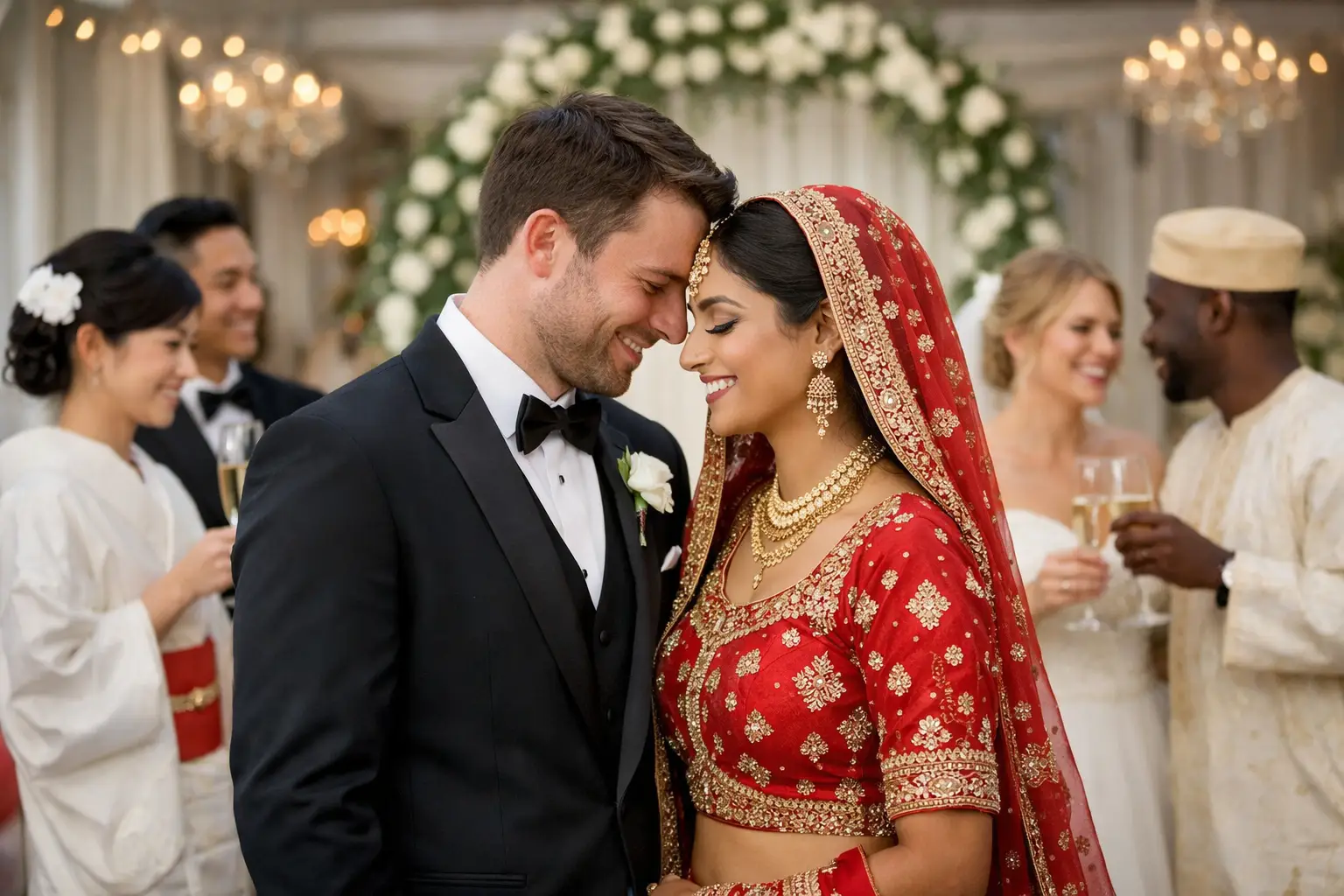
A mixed cultural wedding can look breathtaking on the day and feel exhausting in the planning stage. One family imagines a nikah before lunch, another expects speeches after dinner. One side wants a formal sit-down meal, the other pictures a lively dance floor from the outset. So when couples ask, can venues handle mixed cultural weddings, what they are really asking is whether a venue can hold different expectations with equal care and still deliver something elegant, respectful and beautifully run.
The honest answer is yes – but not every venue can do it well.
Can venues handle mixed cultural weddings in practice?
A venue may be visually impressive and still struggle with a multicultural celebration. Grand interiors matter, but mixed cultural weddings are rarely defined by aesthetics alone. They are shaped by timing, faith requirements, catering rules, family etiquette, dress changes, music preferences and guest flow. If a venue team only understands a standard reception format, those details can quickly become pressure points.
The venues that do this properly tend to share a few strengths. They ask better questions early, they are comfortable adapting the order of the day, and they understand that tradition is not a decorative extra. It affects everything from room layout to service timing. That is where experience becomes the difference between a stressful compromise and a celebration that feels personal.
For many couples, especially across London and Essex, the real value is not simply finding a place that says yes. It is finding a team that already understands why those requests matter.
What mixed cultural weddings demand from a venue
The first challenge is often structure. A mixed cultural wedding may combine religious rites, civil elements and separate celebration styles in one day or across several events. That could mean a ceremony in one format, catering in another, and an evening reception designed to bring both families together. A venue has to support those shifts without making the day feel disjointed.
Capacity also matters more than many couples expect. Some traditions bring larger guest numbers, extended family attendance and a stronger emphasis on hospitality. A venue must be able to accommodate not just the headline guest list, but the way those guests arrive, mingle, dine and celebrate. Spacious interiors, sensible access, reliable parking and smooth service become part of the luxury.
Then there is the issue of pace. Some celebrations are designed to unfold gradually, with formal entrances, multiple outfit changes, prayer considerations or separate moments for different family groups. A venue used to quick turnovers may find that difficult. A venue with planning support and operational flexibility will treat that pacing as part of the masterpiece, not as an inconvenience.
Faith and cultural sensitivity are not optional extras
This is where many venues overpromise. Saying you welcome all weddings is not the same as understanding them. A Muslim wedding may require halal catering with genuine credibility, appropriate handling of service and space for prayer. A South Asian celebration may include pre-wedding rituals that need setup time, family coordination and décor changes. An Afro-Caribbean wedding may place strong emphasis on music, atmosphere and generous hospitality. A British reception may focus on speeches, table service and a refined evening flow. None of these are difficult in isolation. The complexity comes when they are combined.
A capable venue does not force one tradition to shrink so the other can fit. Instead, it helps couples build a day where each side feels seen. That might mean adjusting the running order, creating distinct zones within the venue, or coordinating trusted suppliers who already understand the brief.
Catering is often the real test
If you want to know whether venues can handle mixed cultural weddings, ask about food before you ask about chandeliers. Catering is one of the clearest signals of genuine experience.
Food carries memory, identity and family expectation. If one side of the family expects authentic halal Pakistani or Bangladeshi cuisine and the other wants a British wedding breakfast or a broader international menu, the venue must know how to deliver both quality and coherence. It is not enough to offer a generic menu with a few cultural labels attached.
The best venues understand that authenticity and presentation must sit together. Guests should feel looked after, not managed. Service should be polished, portions generous, and dietary standards clear and dependable. For many families, especially where halal requirements are non-negotiable, trust in the kitchen is trust in the whole venue.
This is also where flexibility matters. Some couples want an all-inclusive package because it simplifies everything. Others want dry hire or self-catering so family traditions or specialist caterers can play a central role. A strong venue can support either route without lowering the standard of the event.
Décor, layout and atmosphere need room to adapt
Mixed cultural weddings often need more from a room than a single fixed look. The space may need to move from ceremony to dining to dancing, or from a modest faith-led setup to a rich, dramatic reception. Stage design, table layout, lighting and entrances all affect how the day feels.
That does not mean everything has to be extravagant. It means the venue should have the versatility to support different expressions of elegance. Some couples want soft florals and understated luxury. Others want a statement backdrop, bold colour, a grand aisle and a lively evening transformation. The right venue treats décor as part of the planning conversation, not an afterthought.
This is particularly important when two families have different visual expectations. A thoughtful team can help blend styles in a way that feels elevated rather than split in half. The result should feel like one celebration with depth, not two competing events sharing a postcode.
The questions couples should ask before booking
A venue does not need to have hosted every possible cultural combination to be a good fit. But it does need the confidence and infrastructure to handle complexity. Couples should pay close attention to how the venue answers practical questions, not just how quickly it says yes.
Ask whether the team has experience with faith-sensitive planning, large family-led events and specialist catering requirements. Ask how flexible the running order can be. Ask whether outside caterers or decorators are allowed if needed. Ask how the venue manages prayer space, alcohol preferences, music cut-off times, parking and guest flow.
Just as importantly, notice the tone of the answers. Experienced teams do not sound flustered or vague. They explain what works, where there are limitations, and how they would help shape the day around your priorities. That honesty is reassuring. Luxury is not pretending every request is simple. It is making complexity feel calmly handled.
Why all-inclusive support can make a major difference
When families are balancing different customs, personalities and expectations, planning can become emotionally heavy very quickly. An all-inclusive model can remove much of that strain, provided the venue’s packages are genuinely culturally informed.
The advantage is not only convenience. It is continuity. When catering, décor, hospitality and planning support are coordinated by one experienced team, there is less room for confusion. Timings are tighter, communication is clearer and the final result feels more polished. For couples who want effortless elegance without losing cultural detail, that support can be invaluable.
At the same time, flexibility still matters. Some families want the reassurance of a fully managed package. Others want more control over catering or ceremonial elements. A premium venue should be able to offer structure without rigidity. That balance is often what makes mixed cultural weddings feel both personal and perfectly executed.
At The Grove Banqueting, this balance is a central part of the experience – offering the refinement of a luxury venue alongside the cultural fluency and flexibility these celebrations demand.
So, can venues handle mixed cultural weddings well?
Yes, but the right question is whether a venue can handle them with grace. That means understanding more than logistics. It means recognising why family traditions matter, how food shapes trust, when timing needs to bend, and what hospitality looks like across different communities.
The best venue for a mixed cultural wedding is rarely just the prettiest one. It is the one that can bring together faith, style, celebration and family expectation without losing the sense of occasion. When that happens, the day does not feel like a compromise. It feels like it was always meant to be celebrated this way.
If you are choosing between venues, look for the team that listens closely, answers clearly and treats your traditions as part of the design, not a difficulty to work around. That is usually where peace of mind begins.