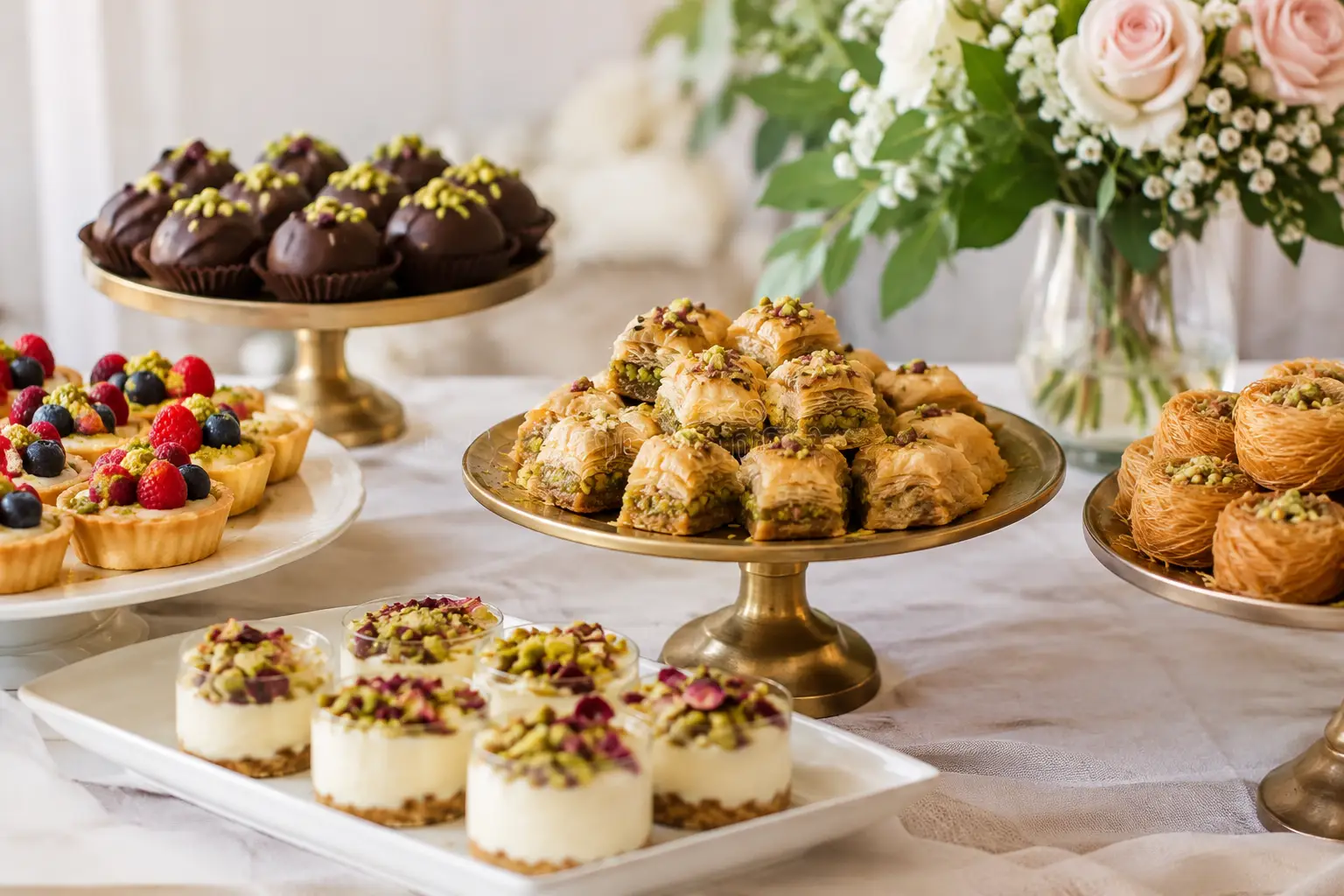
A wedding dessert table is often one of the first details guests photograph and one of the last things they remember. From jewel-toned mithai and delicate pastries to an elegant tiered cake, the question is not simply whether are halal desserts available. It is whether every sweet served can be enjoyed with complete confidence, without compromising on presentation, flavour or the standards that matter to your family.
The reassuring answer is yes. Halal desserts are widely available across London and Essex, and a thoughtfully planned selection can feel every bit as luxurious as any traditional patisserie display. The key is understanding what makes a dessert halal, asking the right questions early and choosing caterers or suppliers who respect the importance of clear, careful preparation.
Are halal desserts available for every style of celebration?
Yes, provided the ingredients and preparation meet halal requirements. This can include a showstopping wedding cake, plated desserts, dessert canapés, a grand sweet table, ice cream stations and traditional favourites served after a Nikah, Walima or wedding reception.
For Pakistani, Bangladeshi and Bengali celebrations, there is a beautiful opportunity to make dessert part of the cultural experience. Fresh gulab jamun, ras malai, kheer, jalebi, mishti doi, halwa and premium mithai can sit alongside contemporary options such as macarons, chocolate-dipped fruit, mini cheesecakes and individual dessert pots. The result can be a table that feels personal to the couple while still offering the polished finish expected of a luxury celebration.
Halal choices are not limited to Asian sweets, either. A classic British wedding cake, Afro-Caribbean-inspired bakes, French-style petits fours and refined chocolate desserts can all be made halal. Availability depends less on the style of dessert and more on how it has been sourced and produced.
What makes a dessert halal?
The simplest answer is that it must not contain ingredients prohibited under Islamic dietary principles, and it should be prepared in a way that avoids contamination with non-halal items. Yet desserts can be more complex than they first appear. A cake may look suitable, but its filling, flavouring, glaze or decorative elements may require closer attention.
Gelatine is one of the most common considerations. It can appear in marshmallows, mousse, jelly, panna cotta, gummy sweets and some fondant or sugar decorations. Unless it is halal-certified, fish-based or clearly plant-based, it may not be appropriate for a halal dessert offering.
Alcohol is another important point. It may be used in tiramisu, rum cakes, truffles, fruitcakes, extracts, sauces and certain flavourings. Even a small amount in a syrup or ganache can make a dessert unsuitable for guests seeking halal food. Ask specifically about alcohol-based flavourings rather than assuming that a vanilla, coffee or chocolate dessert is automatically compliant.
Animal-derived emulsifiers, shortening and colourings can also require checking. Most reputable specialist suppliers will be able to provide an ingredient list or explain their sourcing. For a wedding, that transparency is not a small detail. It allows couples and families to make decisions with ease rather than second-guessing every item on the table.
Do vegan desserts automatically meet halal requirements?
Not always. Vegan desserts can be an excellent option because they commonly avoid dairy, eggs and animal gelatine, but vegan does not automatically mean halal. A vegan bake may still contain alcohol-based flavouring, be made in a kitchen where non-halal ingredients are handled, or include a component whose source is unclear.
The same applies in reverse: halal does not necessarily mean vegan, dairy-free or nut-free. Where guests have several dietary requirements, the most elegant approach is to create a clearly labelled selection and confirm each item with the supplier. This protects guests with allergies as well as those observing faith-based dietary preferences.
For larger receptions, visual clarity matters. Discreet but polished labels can identify halal, vegan, gluten-free and nut-containing choices without making the dessert display feel clinical. Your guests should be able to enjoy the moment, not search for reassurance.
Choosing a halal wedding cake with confidence
A wedding cake deserves the same care as the main menu. Before confirming your cake designer, discuss the sponge, fillings, buttercream, fondant, edible flowers, lustre dust, ganache and any novelty decorations. If the design includes macarons, truffles, marshmallows or sugar flowers, check these as separate components too.
It is useful to ask whether the cake is entirely halal or whether only selected tiers are suitable. For a single shared cake, an entirely halal design is usually the simplest and most inclusive choice. Couples can still enjoy sophisticated flavours such as pistachio and raspberry, cardamom and rose, chocolate orange, coconut, mango, lemon elderflower or rich vanilla bean.
There is also a practical consideration: a beautiful cake is not always intended to serve every guest. At a reception of several hundred people, couples may choose a smaller display cake for the cutting ceremony, followed by matching halal sheet cakes or individually portioned desserts served by the catering team. This keeps the visual moment grand while making service efficient and reducing waste.
Questions to ask your dessert supplier
A good supplier will welcome clear questions and answer them without hesitation. Ask whether all ingredients are halal-certified or otherwise verified as halal, whether alcohol or non-halal gelatine is used anywhere in the recipe, and whether the products are prepared separately from non-halal items.
It is also worth asking how the desserts will be transported, stored and displayed. Cream-based desserts need appropriate temperature control, especially at summer weddings or long receptions. If your event includes a late-night dessert station, establish how items will be replenished and how long they can remain on display while retaining their quality.
For families planning a culturally significant occasion, request a tasting where possible. A halal dessert should never feel like a compromise. The tasting is your chance to assess the sweetness, texture, portion size and presentation, and to ensure the flavours feel right for your guests.
Creating a dessert table that feels generous, not excessive
The most memorable dessert tables have a clear point of view. Rather than ordering every sweet imaginable, choose a balanced collection with familiar favourites, a few statement pieces and options for different dietary needs. A traditional mithai display may be complemented by a modern cake stand and a small selection of plated desserts, creating contrast without overwhelming the table.
Consider the rest of the menu, too. After a generous Pakistani or Bangladeshi wedding feast, many guests may prefer smaller portions, fresh fruit, kulfi, tea and a few beautifully made sweets rather than heavy slices of cake. At a British, African or Afro-Caribbean celebration, the dessert selection can similarly reflect family heritage while remaining cohesive with the wider menu.
Presentation matters as much as variety. Crystal stands, fresh florals, coordinated linens, soft lighting and serving vessels that complement the stage or table décor can turn a dessert station into part of the room’s design. It should look considered from the moment guests enter, then remain easy to navigate when the room is full.
The value of a venue team that understands halal hospitality
A venue can make dessert planning considerably easier when its team understands the difference between a general dietary request and a faith-sensitive catering requirement. It means asking the right questions before the event, coordinating with trusted halal caterers and ensuring the service team knows how each dessert should be handled and described.
At The Grove Banqueting, couples can plan celebrations around authentic halal cuisine, considered décor and experienced event coordination, while retaining the flexibility to tailor elements to their own traditions. For a large family celebration, that joined-up support can remove a great deal of pressure from the weeks before the wedding.
The right dessert selection is not simply a sweet ending to the meal. It is a gesture of welcome. When every guest knows they have been considered, they are free to enjoy the celebration fully – and that is where effortless elegance truly begins.