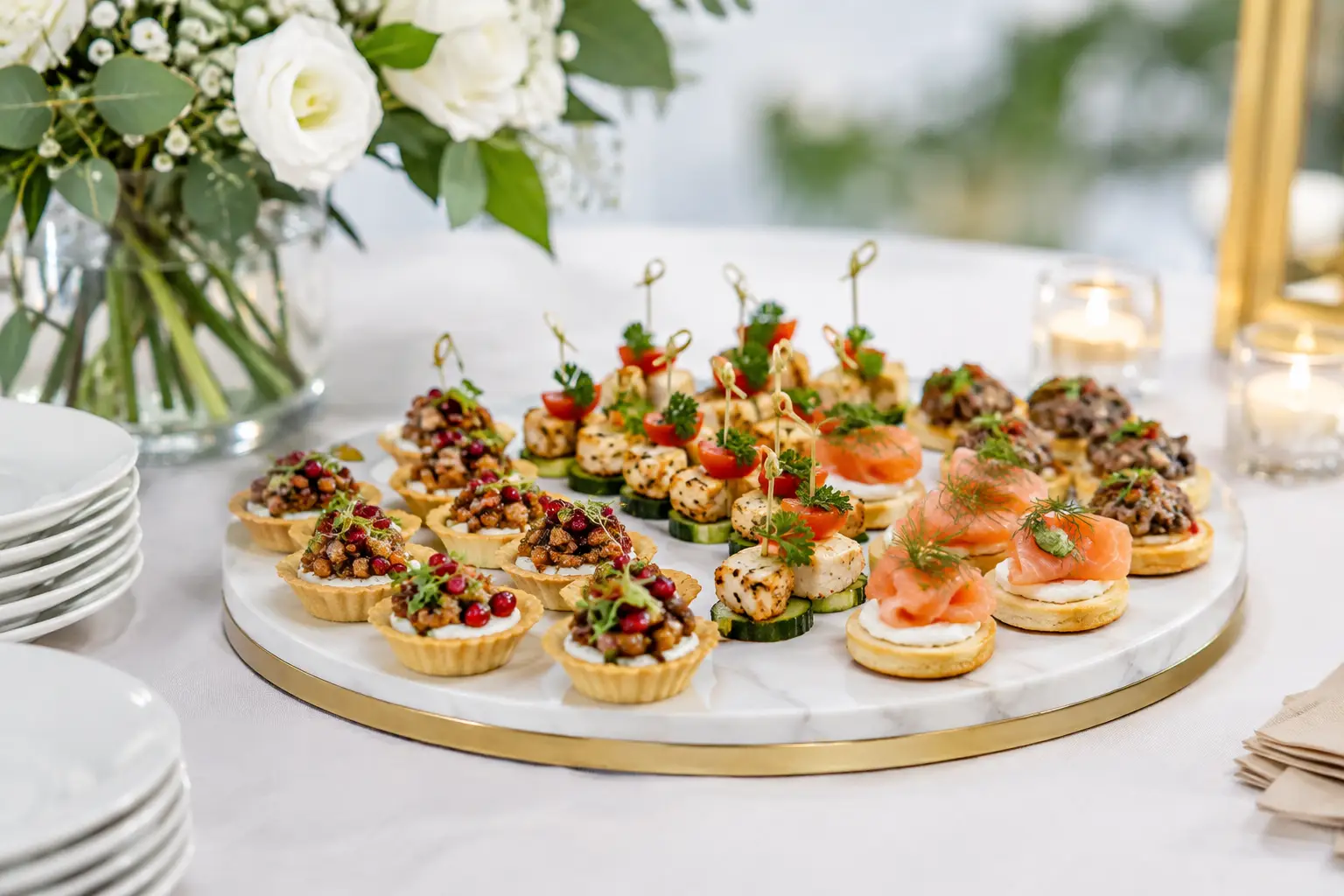
The first welcome your guests receive should feel as considered as the ceremony itself. Knowing how to serve halal canapés well means more than selecting attractive bites: it is about protecting halal integrity, anticipating the flow of the day and presenting generous hospitality with effortless elegance.
For a Nikah, Walima, Mehndi or multicultural wedding reception, canapés create a graceful pause between arrivals and the main celebration. They give family and friends something beautifully prepared to enjoy while photographs are being taken, greetings are exchanged and the room begins to fill with anticipation.
Start with halal confidence, not assumptions
A canapé may be small, but the standards behind it should be exacting. Halal catering begins with carefully sourced meat and poultry, but it also involves the ingredients used in sauces, marinades, stocks, pastry, cheeses and desserts. Gelatine, cooking wine, alcohol-based flavourings and unclear emulsifiers can all require attention.
The safest approach is to work with a caterer that understands halal food preparation from procurement through to service. Ask clear questions about the provenance of meat, whether alcohol is used anywhere in cooking, and how food is stored, prepared and transported. This is particularly valuable when your menu includes international dishes, where a familiar canapé may contain an unexpected ingredient.
Cross-contamination matters as much as the menu itself. Separate preparation areas, utensils, frying oil and service platters help preserve confidence for Muslim guests. If a third-party supplier is contributing particular items, such as desserts or grazing-table elements, ensure their practices meet the same standard. A beautiful display is never worth uncertainty.
Build a canapé menu with balance
The most memorable canapé menus feel abundant without becoming repetitive. Aim for a balance of warm and cold bites, familiar favourites and more distinctive flavours. Your guests should be able to take a small plate and find something appealing within moments, whether they favour traditional South Asian spice, refined British classics or vibrant Afro-Caribbean flavours.
For many wedding receptions, six to eight varieties work beautifully. If canapés are being served before a full meal, plan for around five to seven pieces per guest during a one-hour drinks reception. If the reception is longer, or the wedding breakfast will be served later, increase this to eight to ten pieces per guest. The right quantity depends on the schedule, the guest list and whether children will be present, but running short is one of the few details guests always notice.
A thoughtfully composed selection could include delicately spiced chicken tikka skewers, miniature lamb seekh kebabs, vegetable samosas, pani puri served with care, smoked salmon blinis made without alcohol-based ingredients, and elegant vegetarian tartlets. For a more contemporary finish, consider crispy buttermilk-style chicken sliders prepared with halal chicken, masala arancini or Caribbean-inspired jerk chicken bites.
Vegetarian choices should never feel like an afterthought. A well-made paneer canapé, aubergine bite or sweet potato croquette can be every bit as luxurious as a meat option. Where vegan, gluten-free or nut-free dishes are required, create distinct, attractive choices rather than simply removing ingredients from another canapé. It makes guests feel genuinely included.
Let the wedding style lead the flavours
A formal Walima may suit polished, tray-served canapés with restrained garnishes and refined plating. A colourful Mehndi can welcome bolder flavours, vibrant chutneys and playful street-food-inspired bites. For a British, African or Afro-Caribbean celebration, the menu can reflect both families with confidence: think saltfish-inspired alternatives prepared to halal standards, peppered beef bites, mini Yorkshire puddings with halal roast beef, or plantain croquettes.
The best menus do not try to represent every cuisine at once. Choose a clear flavour story, then allow two or three signature dishes to express the couple’s heritage. This creates a reception that feels personal rather than crowded.
How to serve halal canapés with perfect timing
Timing turns excellent food into excellent hospitality. Canapés should appear when guests need them most: shortly after arrival, while the couple is occupied with photographs, during a room turnaround or before the main meal. Guests who have travelled across London or Essex, dressed for a long celebration and waited through a ceremony will appreciate being welcomed promptly.
Warm canapés are at their best when they reach the room in small, frequent waves. Rather than sending every item out at once, stagger the service so there is always something freshly prepared in circulation. This protects texture – crisp pastry stays crisp, fried items remain light and skewers arrive properly warm – while giving the reception a sense of abundance.
Cold canapés can be arranged on elegant displays, but they still need attentive replenishment. Avoid leaving delicate items under warm lighting for extended periods. Your catering team should monitor the display, replace trays discreetly and follow food-safety timings without making service feel intrusive.
If the couple’s entrance, cake cutting or prayer time falls during the drinks reception, brief the catering team in advance. Service may need to pause briefly so guests can focus on the moment, then resume immediately afterwards. These small adjustments keep the atmosphere calm and polished.
Choose a service style that suits your guest count
For an intimate gathering, circulating waiters with silver trays offer a personal, luxurious touch. Guests are greeted, offered a choice and encouraged to relax. This approach is especially effective when the reception space is formal and the canapé menu includes delicate items that are best served individually.
For larger weddings, a combination works better. Tray service ensures that elderly guests, close family and those seated away from the main display are looked after, while one or two well-positioned canapé stations ease pressure during busy arrival periods. At a celebration of several hundred guests, relying on a single display table can create queues and leave parts of the room underserved.
Position stations away from the entrance and away from the bar, giving guests space to circulate naturally. Service staff should know the menu well enough to explain what each item contains, particularly where allergens or spice levels may be relevant. Quietly confident guidance is part of premium service.
Keep every guest comfortable
Consider the needs of your whole guest list. Elderly relatives may prefer softer options and seated service. Families with young children often appreciate familiar, mild bites. Guests observing specific dietary requirements need certainty, not guesswork.
Clear, discreet menu cards at a display can be helpful, especially for vegetarian, vegan and allergen-aware choices. However, do not rely on cards alone. Staff should be able to identify each canapé, explain whether it contains nuts, dairy or gluten, and know which options are suitable for guests who do not eat meat.
It is also wise to think about heat. A menu made entirely of chilli-forward dishes may delight some guests but limit others. Include at least a few mild options, and serve chutneys or sauces separately where possible. This preserves the flavour and gives guests control.
Presentation should feel luxurious, not overworked
Canapés are part of the visual language of your wedding. The serving trays, napkins, garnish and uniform of the hospitality team should sit naturally alongside your décor. A gold-and-ivory reception may call for mirrored platters and soft floral details, while a contemporary celebration could favour clean slate boards, glassware and minimal styling.
Avoid oversized garnishes, unstable towers and dishes that require complicated handling. Guests should be able to enjoy each bite neatly while holding a drink and greeting relatives. One or two bites is ideal. If cutlery is needed, it should be purposeful and readily available, not an obstacle to easy conversation.
Colour matters, particularly for photographs. Fresh herbs, edible flowers, jewel-toned chutneys and carefully chosen serving ware can bring a canapé display to life. Yet the food itself should remain the focus. Luxury is often felt in precision: even portions, clean edges, fresh finishing and trays that are replenished before they look depleted.
At The Grove Banqueting, this balance between cultural authenticity and polished presentation is central to creating a reception that feels both personal and beautifully produced. When halal catering, décor and service are planned together, every detail speaks the same elegant language.
Plan the practical details early
Canapés influence more of the schedule than couples sometimes expect. Confirm the guest count, service window, kitchen access, staffing levels and main-meal timing early in the planning process. If you are dry hiring a venue and bringing in your own caterer, establish exactly what equipment, holding space and access times are available before finalising a menu.
A tasting is invaluable. It allows you to judge flavour, portion size and presentation, but also helps you test whether several dishes feel too similar. Ask to see how warm items will be held and served, rather than tasting them only at their freshest moment in the kitchen.
Finally, allow the canapé reception to do its real work: give people time. Weddings are full of emotion, reunions and spontaneous conversations. Thoughtful food, served generously and with complete halal assurance, lets guests settle into the celebration feeling welcomed, cared for and ready to share in the joy ahead.