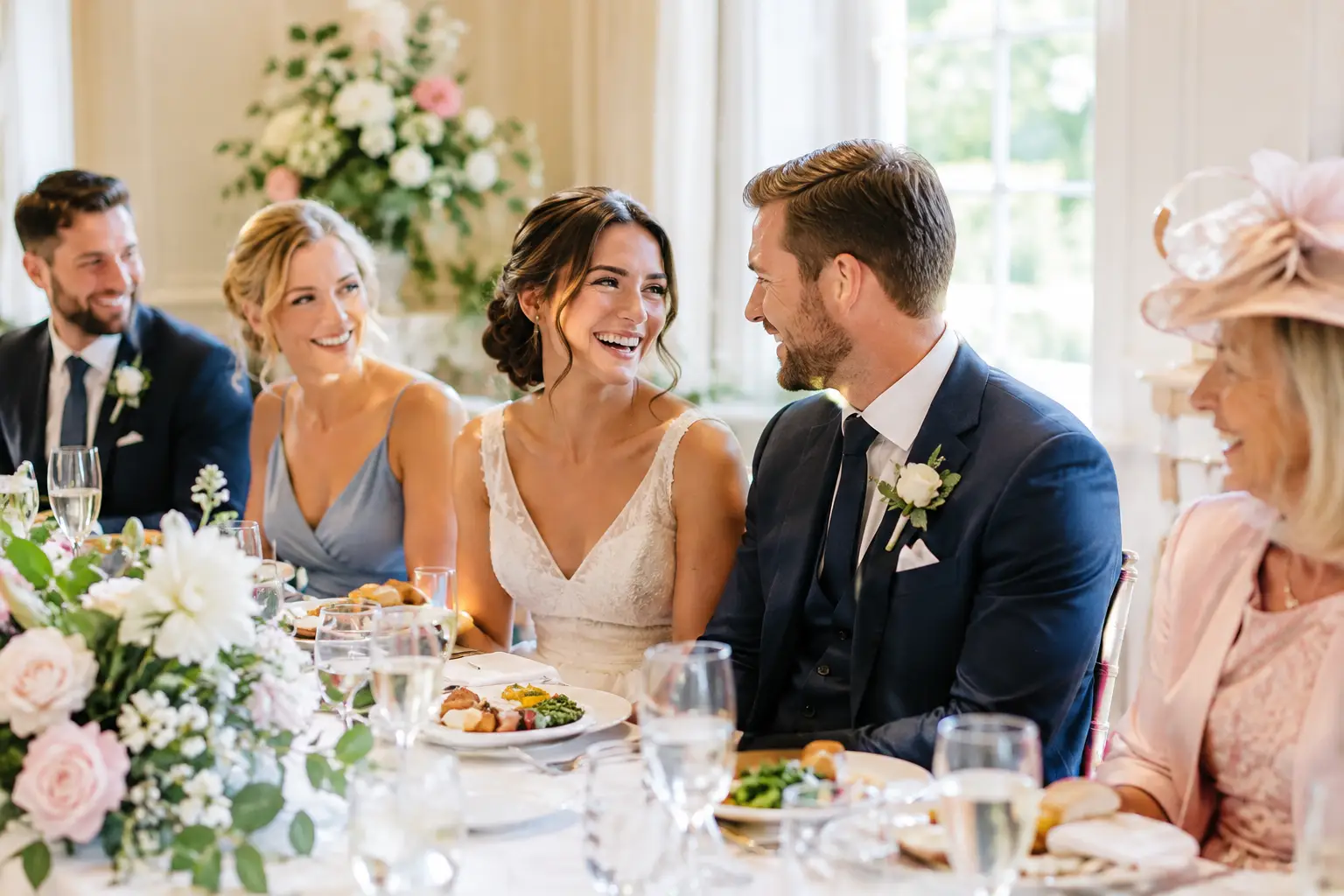
A wedding breakfast is often the moment a beautiful ceremony becomes a true celebration. Despite its name, it is rarely served in the morning. In this British wedding breakfast reception guide, we explain how to shape the meal, timings and atmosphere so every guest feels looked after – whether you are planning a classic English reception, a Nikah followed by dinner, or a multicultural celebration that brings families and traditions together.
The term dates back to the first meal shared by a newly married couple after their ceremony and fast. Today, it usually means the formal seated meal after the ceremony and before evening entertainment. It is also where a reception’s luxury is most keenly felt: in the welcome, the service, the food, the table styling and the unhurried time families have to celebrate together.
What a British wedding breakfast reception includes
A traditional wedding breakfast reception normally begins with a drinks reception, followed by guests taking their seats for a two- or three-course meal. Speeches may take place before the meal, between courses or afterwards. Once the formal dining is complete, the room can shift naturally into cake cutting, dancing and evening food.
There is no need for the format to be rigid. A civil ceremony may lead directly into canapés and a plated meal. For Muslim couples, the wedding breakfast may follow a Nikah, with prayer considerations, separate arrival times or a later start built gracefully into the schedule. At Asian, African and Afro-Caribbean celebrations, the formal meal can be followed by a grand entrance, family presentations, live entertainment or a second food service later in the evening.
The best approach is one that feels generous to your guests and genuinely reflects you as a couple. Tradition should provide confidence, not restrict your plans.
Start with a timeline that gives guests breathing room
An elegant reception feels effortless because the timetable has been considered carefully. Allow enough time after the ceremony for photographs, greetings and refreshments. Rushing guests straight into the dining room can make even the most beautifully dressed space feel hurried.
For a daytime ceremony, a drinks reception of around 60 to 90 minutes is usually comfortable. This gives older relatives time to settle, allows the couple to take their formal photographs, and prevents hungry guests from waiting too long. Canapés, cold drinks and clear direction from the hospitality team make this interval feel like part of the occasion rather than a pause.
Once guests are seated, allow approximately two to two-and-a-half hours for a three-course meal and speeches. This may be longer for 250 or 500 guests, particularly if there are several family speeches, outfit changes or cultural moments to accommodate. A larger celebration needs a service plan that is precise without ever looking rushed.
If your ceremony begins later in the afternoon, consider whether a lighter formal meal followed by a substantial evening buffet will suit your guests better. Families travelling from across London, Essex or further afield will appreciate knowing when they will be fed, especially where children and elderly relatives are involved.
Where should the speeches go?
British tradition often places speeches after the main meal, but there is no single right answer. Speeches before dining work well when the couple wants guests to relax immediately afterwards. Speeches between courses create a formal, theatrical rhythm, although they can lengthen the meal and interrupt service.
For a large family wedding, placing speeches after the main course is often the most practical balance. Guests have eaten, young children are more settled, and the kitchen can prepare dessert without competing with heartfelt words. Keep the number of speakers realistic. A few meaningful speeches will land far better than a long run of unplanned microphones.
Choose food that feels personal and works at scale
The food is not simply one element of the wedding breakfast. It is a statement of welcome. A menu should look beautiful, taste exceptional and arrive at the right temperature for every table.
A classic British menu of seasonal starters, roast meats or fish, and a polished dessert remains a wonderful choice. Yet a wedding breakfast can be much more personal. Couples may choose authentic Pakistani or Bangladeshi halal cuisine, refined Indian dishes, Caribbean-inspired flavours, or a thoughtfully composed fusion menu. The key is not to offer every possible dish. It is to serve a menu with a clear point of view and reliable quality.
For a halal wedding, ask early about ingredient sourcing, kitchen processes and whether every element of the menu, including canapés and desserts, meets your requirements. Vegetarian, vegan and allergen-friendly meals should be planned as complete dishes rather than afterthoughts. Guests should feel equally considered, whichever menu they receive.
A plated three-course meal creates an undeniably formal feel and supports an elegant speech schedule. Family-style sharing dishes can be warmer and more communal, particularly for multicultural receptions where food is central to hospitality. A buffet offers variety and can be excellent for large guest lists, but it requires sensible layout, enough service points and careful timing to avoid long queues.
There is also the question of evening food. If dancing is expected to continue late, a generous late-night option is always appreciated. Think of it as a second welcome: familiar comfort food, a dessert station, tea and coffee, or selected hot dishes that reflect your family’s heritage.
Make the room feel special from the first course to the last dance
A wedding breakfast has two personalities. By day, it should feel refined enough for dining, photographs and speeches. By night, it needs the energy to become a dance floor. Your décor should support both.
Start with the focal point. A beautifully styled stage, top table or sweetheart table gives the room a natural centre for photographs and speeches. Then consider what guests see from their seats: floral arrangements at the right height for conversation, warm lighting, elegant charger plates, place cards and coordinated linens. These details create the sense of occasion people remember.
Tall centrepieces can deliver drama in a grand room, but they must not block faces across the table. Low florals are intimate and photograph beautifully, while a mixture of heights can add depth without making the room feel crowded. Candles bring warmth, though venues may have specific safety requirements, so confirm this before committing to a design.
For a Mehndi-inspired or multicultural reception, colour can be used with confidence: jewel tones, gold detailing, rich florals and meaningful family touches can sit beautifully alongside contemporary styling. A British white-and-green palette, meanwhile, can be elevated with layered textures, candlelight and thoughtful stationery. Luxury is not defined by one colour scheme. It is defined by cohesion and care.
Plan the seating with family dynamics in mind
A table plan is a small document with a large emotional impact. Begin with immediate family, elderly relatives, bridal party members and guests who may need easy access to exits, washrooms or prayer areas. For a Nikah or Muslim wedding reception, discreetly considering prayer timings and space is a simple mark of thoughtful hosting.
Avoid treating seating as an exercise in filling chairs. Place people with those they know where possible, while gently bringing groups together who will enjoy one another’s company. Children may be happiest near their parents rather than at a separate table, depending on their age and the formality of the event.
For big guest lists, clear table names or numbers and a prominent seating plan are essential. The aim is for guests to find their place within moments, not gather uncertainly at the entrance while the meal is ready to begin.
The details guests notice most
Guests may not remember the exact order of every course, but they will remember whether they felt welcomed. Great hospitality is visible in the small moments: a drink offered quickly after arrival, staff who can answer dietary questions confidently, a clean and accessible space, and a coordinator who quietly keeps the day moving.
Consider practical comfort as part of the luxury. Good parking matters for family-heavy celebrations, as does step-free access, a calm place for elderly guests to take a break and enough room for buggies or children. If guests are travelling in traditional outfits, allow time for arrivals and photographs rather than assuming everyone can move quickly from one part of the day to the next.
At The Grove Banqueting, couples can bring these details together through tailored décor, trusted planning support and halal catering designed for celebrations where hospitality means everything. A reception should never force you to choose between cultural authenticity and polished service.
Your wedding breakfast does not need to follow a script. It needs to give the people you love a seat at a table that feels joyful, generous and unmistakably yours. When the food, timing and welcome are thoughtfully arranged, the room will carry the feeling long after the final dance.