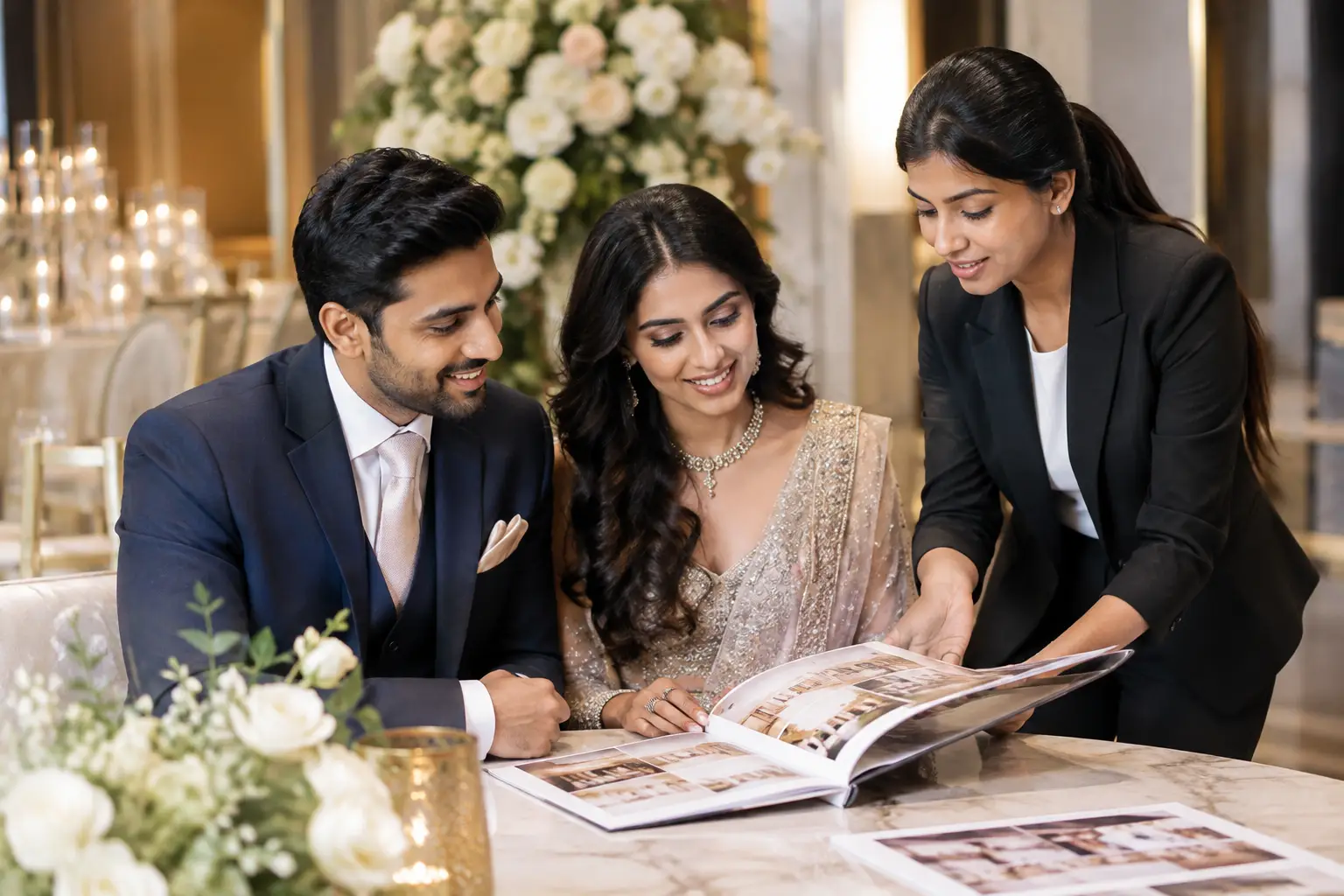
The difference between a beautiful wedding package and a stressful one is rarely the ballroom alone. It is whether the details your family considers essential – from a flawless Nikah set-up and authentic halal cuisine to a grand entrance that runs on time – have been anticipated from the start. A thoughtful wedding package review helps you see beyond the headline price and choose a celebration that feels personal, polished and properly supported.
For couples planning Asian, Muslim, British, African or Afro-Caribbean weddings, a package should never make your traditions feel like an add-on. It should create space for them to be honoured with confidence, care and effortless elegance.
What a wedding package should make easier
A wedding is a masterpiece of moving parts. There are guest lists, menus, timings, outfits, photography, family expectations and the atmosphere you want people to remember long after the final farewell. An all-inclusive package is valuable when it reduces the number of decisions you must manage without reducing your control over the occasion.
At its best, a package brings venue hire, catering, décor, hospitality and planning support into one considered experience. Instead of coordinating several suppliers who may have different priorities and schedules, you have a connected team working to one plan. This can be particularly reassuring for larger celebrations, where a small delay to service or room turnaround can affect hundreds of guests.
Convenience, however, should not mean a fixed formula. Ask where the package can be tailored. The most suitable venues allow room for your chosen colour palette, stage design, menu preferences, cultural rituals and entertainment, while still providing the reliability of established suppliers.
Wedding package review: look beyond the starting price
A package price is only meaningful when you understand exactly what it covers. Two offers may appear similar at first glance, yet one may include a full dining experience, trained front-of-house staff, refined table décor and event coordination, while the other leaves these items to be arranged separately.
Request a clear, itemised outline before making comparisons. It should explain the guest capacity included, food and drink provision, décor elements, staffing, timings and any charges that may apply for upgrades, extended hours or external suppliers. This is not about searching for hidden problems. It is about giving your family the clarity to plan with confidence.
Consider the overall cost of creating the same standard independently. Hiring a venue, arranging a halal caterer, sourcing a stage, booking table settings and coordinating delivery times can sometimes look flexible on paper but become more expensive and demanding in practice. For other couples, dry hire is precisely the right choice because they already have trusted suppliers or a specialist vision. Neither route is automatically better. The right option depends on how much support you want and where you want to retain full control.
Ask what happens on the day
The finest package details are often operational rather than decorative. Who welcomes suppliers? Who directs guests towards the ceremony or reception space? Who ensures meals are served at the agreed point in the programme? Who manages the transition from a colourful Mehndi celebration to an elegant evening reception?
A venue team with clear responsibility can protect the atmosphere you have invested in. When the couple and their closest family are free to enjoy emotional entrances, speeches and photographs, the day feels calmer for everyone.
Catering is part of the welcome
Food is never merely a line on a wedding quotation. For many Pakistani, Bangladeshi and Bengali families, the menu is one of the clearest expressions of generosity, heritage and celebration. For Muslim couples, confidence in halal catering is equally fundamental, not an optional extra.
A strong wedding package should be specific about its catering credentials. Ask whether the cuisine is prepared by chefs experienced in the dishes being served, how halal requirements are managed, and whether menus can reflect your family’s tastes. Authentic Pakistani and Bangladeshi dishes, beautifully presented and served with attentive hospitality, can bring a sense of familiarity and pride to a luxurious setting.
It is also worth discussing dietary needs early. Children, elderly relatives and guests with allergies should be considered with the same care as the main menu. A venue that listens carefully at the planning stage is more likely to make every guest feel genuinely looked after.
Service style matters as much as the menu
Buffet, plated dining and family-style service each create a different rhythm. A lavish buffet may suit a larger reception where guests value variety and sociability. A plated meal can feel more formal and works well when speeches and performances follow a precise schedule. The important point is that the service style fits the occasion, guest numbers and timing of prayer, ceremonies or entertainment.
Décor should reflect your celebration, not replace it
A floral stage, considered lighting and elegantly dressed tables can transform a room. Yet décor earns its place when it supports the feeling of the day rather than competing with it. Your bridal outfit, family photographs, ceremonial moments and guest experience should remain at the heart of the room.
During a wedding package review, establish which decorative elements are included as standard and which can be personalised. This may cover chair styling, centrepieces, aisle arrangements, a statement stage, welcome signage and coordinated linens. Ask to see how a venue approaches different celebrations. A soft ivory and gold Nikah, a jewel-toned Mehndi, a classic white British wedding and a glamorous Afro-Caribbean reception should each feel intentional, not simply the same room with a different colour scheme.
There is a practical balance to strike. Bespoke décor offers creative freedom, but it can increase costs and require more approvals. An experienced in-house décor partnership can offer a polished result with fewer moving parts. The best choice is the one that gives you the look you love without creating unnecessary pressure in the final weeks.
Cultural understanding cannot be copied from a checklist
A culturally informed wedding venue recognises that traditions have their own pace, emotion and significance. A Nikah may need a calm, respectful arrangement for the couple, witnesses and imam. A Mehndi may call for bright colour, music and a joyful, informal energy. A Walima reception may bring together a large guest list and a more formal dining experience.
The details vary between families, communities and generations. Rather than assuming, a good planning team asks thoughtful questions: What moments matter most? Who needs to be involved in decisions? Are there prayer requirements? Will there be separate spaces or particular timings for family photographs? How can the room support a grand entrance without causing congestion for guests?
This conversation is just as valuable for British, African and Afro-Caribbean celebrations. Your wedding should feel like your family gathered at its very best, not an occasion forced into somebody else’s template.
Capacity, access and comfort are luxury details
Luxury is not only visible in the stage design. It is felt when guests arrive easily, find parking, move comfortably through the venue and are welcomed without confusion. For a 300 or 500-guest celebration, these practical features become central to the experience.
Consider where your guests are travelling from, especially if family are coming from across East London, Essex or further afield. Convenient road access and ample free parking can make an enormous difference for elderly relatives, families with children and guests wearing formal attire. Ask about guest flow too: entrance areas, prayer facilities where required, seating arrangements, accessibility and space for entertainment all deserve attention.
A room should feel suitably grand without becoming cramped. Capacity figures are useful, but ask how the venue looks and functions at your expected guest number, with a stage, dancefloor, dining layout and any ceremony seating in place.
Make the viewing work for you
A venue viewing is not just a chance to admire the room. It is the moment to test whether the package feels reassuring. Bring the people who will help make key decisions, and arrive with a provisional guest count, preferred dates and a sense of your must-have traditions.
Ask the team to talk you through a realistic event timeline, rather than only showing the finished space. Notice whether they listen closely and explain options clearly. You should leave knowing what is included, what can change, what requires an additional budget and who will guide you from booking through to the celebration.
At The Grove Banqueting, couples can explore an all-inclusive approach shaped around elegant décor, authentic halal cuisine and culturally informed hospitality, while retaining dry-hire flexibility where a more independent plan is preferred. With capacity for up to 500 guests and approximately 280 free parking spaces, practical ease can sit comfortably alongside a truly memorable setting.
The right package does more than provide a venue for a single day. It gives you the confidence to be present for the moments that matter: a parent’s proud smile, the entrance you have imagined for months, the warmth of a full room and the quiet certainty that every guest has been welcomed with care.