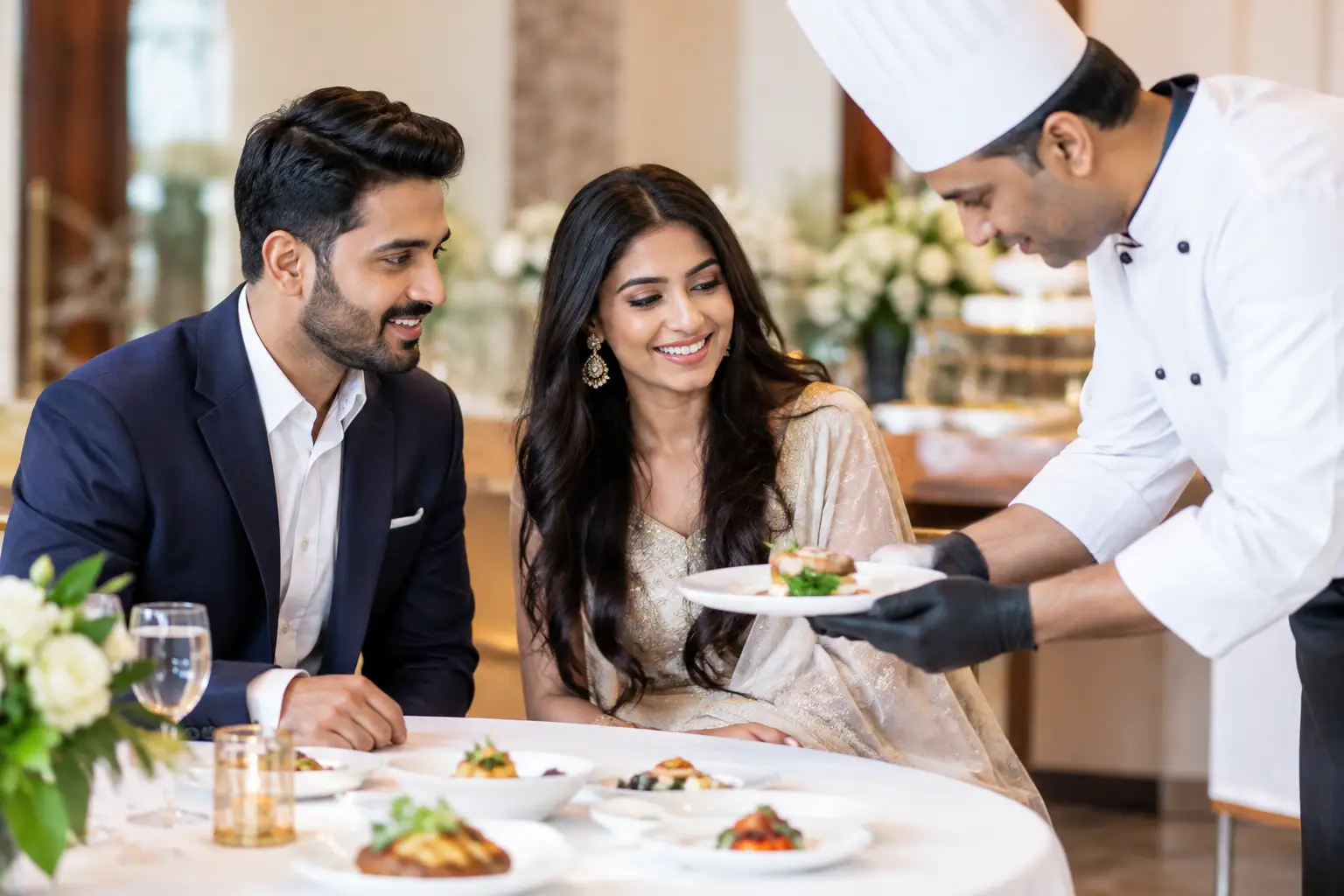
The first plate often settles the question that photographs and brochures cannot: will this food feel worthy of the people you love? When couples ask, “are wedding tasting sessions included?”, the honest answer is that it depends on the venue, caterer and package selected. A tasting may be included within a fully catered wedding package, offered after booking, or available at an additional charge. What matters most is understanding the arrangement before you commit, particularly when the menu is a central part of your celebration.
For Pakistani, Bangladeshi, Bengali, Muslim, African, Afro-Caribbean and multicultural weddings, food is rarely a minor detail. It is hospitality, family tradition and a lasting memory of the day. A properly planned tasting gives you the confidence to serve a menu that feels generous, authentic and beautifully presented.
Are wedding tasting sessions included in all-inclusive packages?
An all-inclusive package may include a menu tasting, but the details vary. Some venues invite the couple to sample a carefully selected set of dishes once the booking is confirmed. Others include a tasting only when a minimum guest number or a particular catering package is chosen. A few may offer it as an optional upgrade, with the fee deducted from the final balance if you proceed.
This is why the word “included” deserves a little more attention. Ask whether the tasting is for two people or whether parents and additional decision-makers can attend. Confirm how many dishes can be sampled, whether drinks are included, and whether you will taste the exact menu proposed for your reception or a representative selection from the caterer’s kitchen.
A tasting is not always a full banquet recreated for a small table. In many cases, it is designed to help you assess flavour, quality, portion style and presentation across the menu. That can be more useful than trying every possible dish, provided the session is organised around your final choices.
What a wedding tasting should help you decide
A well-run tasting has a practical purpose: it turns broad menu ideas into clear decisions. You should leave knowing which dishes belong on your wedding table, which need a small adjustment and how the meal will work for your guest list.
For a halal Asian wedding menu, that may mean comparing the richness of a lamb curry with a lighter chicken dish, deciding whether biryani or pilau rice suits the rest of the meal, and checking that starters remain crisp and flavourful when served at scale. For a British wedding breakfast, it may be about the balance of a plated three-course meal. For an African or Afro-Caribbean celebration, it could mean discussing spice levels, accompaniments and the way cherished family dishes will be presented for a grand reception.
The best tastings also make space for the questions that affect the guest experience. Can the kitchen cater confidently for vegetarian, vegan, gluten-free and allergy-related requirements? How are children’s meals handled? Will dishes be served buffet-style, family-style or plated? Is there a separate arrangement for suppliers, the bridal party or guests arriving after a Nikah ceremony?
These details are not fussy. They are how a beautiful menu becomes effortless hospitality.
Authenticity matters as much as variety
A long menu can look impressive on paper, but authenticity is what guests remember. If your families expect Pakistani or Bangladeshi flavours, ask who prepares the food, how recipes are developed and whether the kitchen regularly caters for celebrations of your size. The same applies to every cultural menu.
At the tasting, be specific rather than polite. If a dish needs more depth, less heat, a different garnish or a more traditional finish, say so. A professional catering team will welcome considered feedback and explain what can reasonably be adapted for several hundred guests. There is a difference between personalising a menu and making last-minute changes that compromise consistency, so agree any amendments in writing once they are approved.
When should you arrange your tasting?
Most couples benefit from arranging a tasting after securing the venue and before final menu deadlines. This gives you enough certainty to discuss a realistic menu while leaving time to refine it. If your wedding includes several events, such as a Mehndi, Nikah and Walima, clarify whether the tasting covers each occasion or only the main reception.
Try not to leave it until the final few weeks. By then, invitations, décor choices, seating plans and family logistics may already be demanding your attention. Booking the tasting earlier creates breathing room, especially if you need to accommodate dietary requirements or want to bring together relatives who live in different parts of London, Essex or further afield.
It is also sensible to ask when the menu must be confirmed and whether guest numbers can be adjusted afterwards. The final headcount influences purchasing, staffing and service, so venues will have a clear deadline. Knowing it early protects both your budget and your peace of mind.
Who should attend the tasting?
The couple should always be at the heart of the decision, but wedding food is often chosen with family in mind. Bringing one or two trusted people can be helpful where parents are closely involved or where cultural expectations shape the menu. Too many voices, however, can turn a focused appointment into an impossible vote.
Choose attendees who understand the vision for your day and can give useful feedback. They should be able to comment on flavour, presentation and suitability for your guests without losing sight of the overall experience. If you expect 300 guests, a tasting cannot reflect every individual preference. It should help you select dishes that feel celebratory, reliable and true to you as a couple.
Before attending, write down any non-negotiables. Perhaps your family wants a particular traditional sweet, perhaps you need every dish to be halal, or perhaps you want a contemporary canapé reception followed by familiar favourites at dinner. A short list keeps the conversation purposeful.
Questions to ask before you book
A clear conversation avoids disappointment later. Ask whether the tasting is included in your chosen package, whether there is a charge for extra guests, and what happens if you need to reschedule. You should also ask whether tasting dishes mirror the reception portions and presentation, as well as how menu changes are priced after the session.
For faith-sensitive celebrations, confirm halal certification or sourcing arrangements, alcohol service options, separate preparation procedures where relevant, and the team’s experience with your preferred style of event. If you are planning dry hire or self-catering, establish whether an external caterer can provide a tasting on site and what kitchen access, insurance and service requirements apply.
Do not overlook service. A delicious meal can lose its impact if guests wait too long between courses or if a buffet is poorly managed. Ask how the catering team will serve your expected numbers, replenish dishes and coordinate with speeches, entrances, prayer times and entertainment.
Included, chargeable or arranged separately?
There is no single model that suits every wedding. A fully catered package often offers the most straightforward route because the venue, kitchen and event team can plan the tasting around one cohesive vision. This can be particularly reassuring for large celebrations, where food service, décor, timings and guest flow need to work together.
Dry hire offers more freedom, but it places more responsibility on the couple or family to coordinate the caterer, tasting, equipment and service plan. It may be ideal if you have a cherished family caterer or a specialist cuisine in mind. Just make sure the flexibility is matched by clear operational planning.
At The Grove Banqueting, couples can discuss catering arrangements alongside their wider wedding plans, from elegant décor and guest capacity to halal dining and culturally meaningful celebrations. The right package should make decision-making feel supported, not restricted.
A wedding tasting is a chance to pause before the pace of planning accelerates. Taste thoughtfully, ask direct questions and choose the dishes that will make your guests feel genuinely welcomed from the first course to the final sweet.