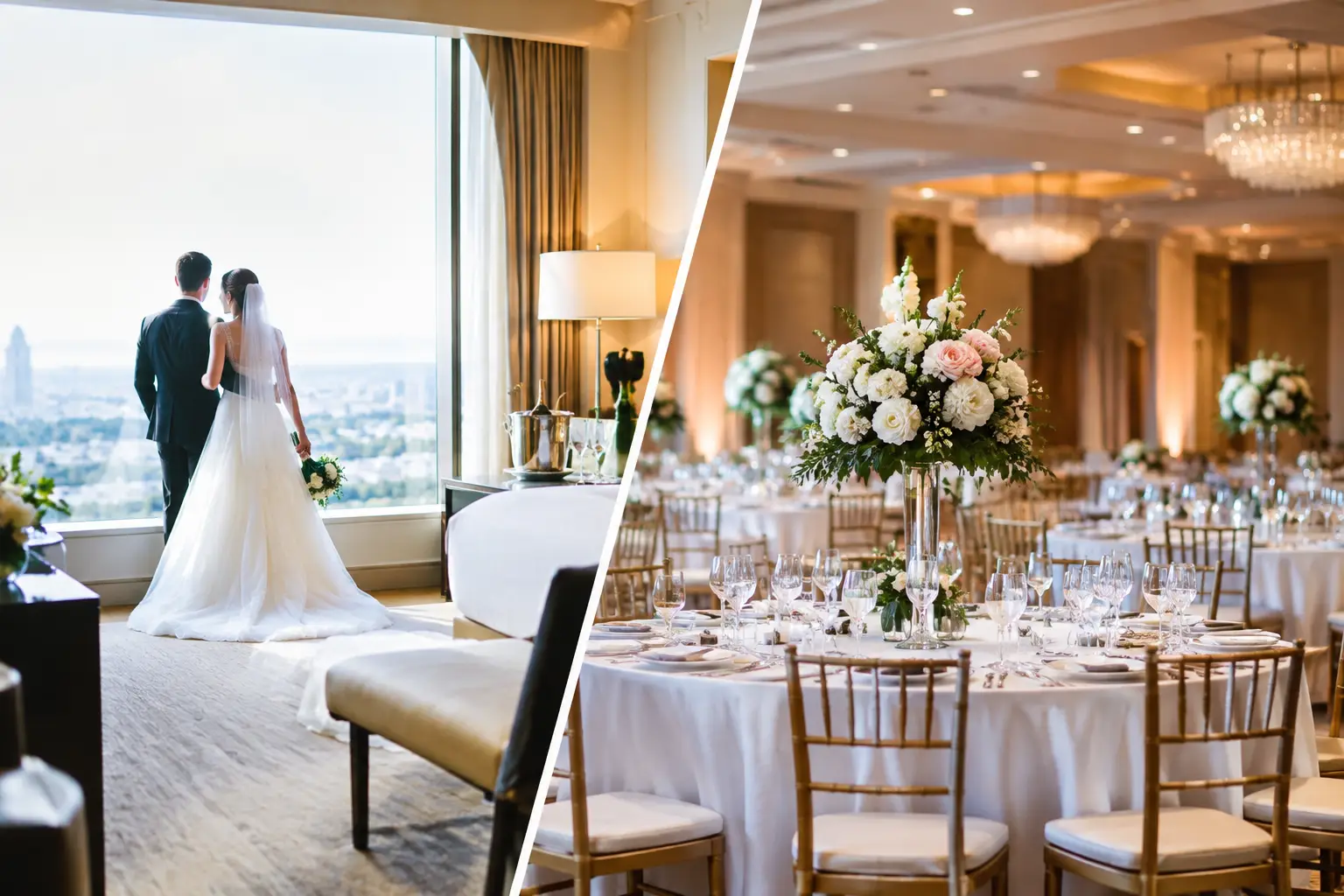
A wedding venue is never just a room with tables and a dancefloor. It shapes how guests arrive, how family traditions are honoured, how dinner is served and how calmly the whole day unfolds. When weighing up a hotel wedding vs banqueting hall, the right choice comes down to more than appearance. It is about finding a setting that reflects your vision while giving every guest the care, comfort and hospitality they deserve.
For couples planning a large, detail-rich celebration in London or Essex, the decision often rests on one question: do you need a venue built around weddings, or a hotel that hosts weddings alongside everything else?
Hotel wedding vs banqueting hall: the essential difference
A hotel wedding usually offers the convenience of bedrooms, an established hospitality team and the option to hold the ceremony, reception and overnight stay in one location. This can be particularly appealing for guests travelling from further afield, older relatives and couples planning a smaller, more traditional celebration.
A banqueting hall, by contrast, is designed around the reception itself. Its spaces tend to offer greater scale, a more dramatic entrance and the freedom to create a celebration with its own distinct personality. For South Asian, Muslim, British and Afro-Caribbean weddings, this matters. A wedding may include a grand entrance, prayer considerations, a formal stage, live entertainment, cultural performances, multiple courses and a dancefloor that remains full long after dinner.
Neither option is automatically better. A hotel can be a beautiful choice when guest accommodation is the priority and the event is intimate. A dedicated banqueting venue can be the stronger fit when your guest list is substantial, your traditions are central to the day and you want the room to feel entirely yours.
Space, privacy and the feeling of occasion
Hotels often operate as busy shared environments. On your wedding day, guests may pass through a lobby used by business travellers, leisure guests or attendees of another event. Your celebration may take place in a function suite that is elegant, but still feels connected to the wider hotel operation.
A premium banqueting hall creates a different sense of arrival. From the first welcome to the final farewell, the venue is arranged around your event. There is more opportunity for a statement décor scheme, a dedicated reception area, a stage with impact and a room layout that suits the natural rhythm of your celebration.
This privacy is especially valuable for families hosting a culturally traditional wedding. It allows the occasion to feel personal and protected, whether you are planning a nikah and reception, a vibrant mehndi-inspired evening, a civil ceremony followed by a formal banquet, or a high-energy Afro-Caribbean celebration. You should not have to reduce the scale of your vision to fit around a venue’s everyday operations.
Consider your guest list honestly
Hotels can work well for weddings of modest size, particularly where many guests will need rooms. Yet capacity can become more complicated once you add a generous stage, photography and videography space, a dessert display, entertainment, a dancefloor and room for guests to move comfortably between tables.
A banqueting hall is often planned with these practicalities in mind. The best venues make a large wedding feel generous rather than crowded. Look beyond the maximum capacity figure and ask how the room will feel once every important part of the celebration is in place.
Catering: flexibility versus cultural confidence
Food is one of the clearest differences in the hotel wedding vs banqueting hall decision. Many hotels require couples to use an in-house kitchen and set menu structure. This may be ideal if you are happy with the hotel’s offering, but it can limit couples who want authentic halal cuisine, familiar family favourites or a menu that speaks directly to their heritage.
For a halal wedding, it is not enough for a menu simply to be labelled halal. Couples and families may want confidence in ingredient sourcing, kitchen procedures, service standards and the team’s understanding of what matters to them. The same is true when planning Pakistani, Bangladeshi, Caribbean or fusion menus where flavour, presentation and abundance form part of the hospitality.
A specialist banqueting venue can offer established halal catering partnerships and culturally informed menu planning, while still allowing room for personal preferences. At The Grove Banqueting, for example, authentic Pakistani and Bangladeshi halal cuisine can sit alongside refined presentation and attentive service, so a celebratory meal feels as memorable as the room itself.
Ask what is truly included
An attractive headline package is only useful if it covers the details you need. With a hotel, examine whether catering, chair covers, table styling, a toast drink, staffing and room hire are included or charged separately. Also ask whether an external cake supplier, specialist caterer or cultural décor team will face restrictions.
With a banqueting hall, all-inclusive packages can remove many of these decisions by bringing venue hire, catering, décor and planning support into one coordinated service. However, flexibility matters too. Couples who have trusted family suppliers, a preferred caterer or a clear styling team in mind may value dry hire or self-catering options. The best choice is a venue that gives you clarity, not one that forces you into a package that does not suit your celebration.
Décor and personalisation without compromise
Hotel ballrooms are often designed to suit conferences, dinners and multiple styles of event. This can mean neutral décor and fixed features that are difficult to transform. There is nothing wrong with understated elegance, but some couples want a room with the presence to carry floral installations, a bespoke backdrop, luxurious draping, coloured lighting or an ornate wedding stage.
Banqueting halls generally offer more creative freedom. A well-designed space can become romantic and softly lit, richly traditional, contemporary and minimalist, or full of colour and spectacle. The key is not adding decoration for its own sake. It is creating a coherent setting where the entrance, top table, centrepieces, lighting and stage all tell the same story.
For multicultural weddings, personalisation can also be practical. You may need space for a mandap-style feature, a prayer area, a sweets table, a live band, cultural dancers or a carefully planned grand entrance. A venue familiar with these requests is more likely to anticipate the requirements behind them, rather than treating them as last-minute additions.
Planning support: who carries the pressure?
A hotel coordinator may be highly experienced, but their role can be focused on the venue’s schedule and operational rules. Couples may still need to coordinate several independent suppliers, chase final timings and explain cultural elements repeatedly.
A dedicated banqueting team is more likely to approach the day as a complete production. That does not mean taking control away from you. It means giving you the reassurance that someone understands the moving parts: the arrival sequence, dining service, supplier access, family expectations, speeches, entertainment and the transition from formal moments to celebration.
This support is often where the greatest value lies. A wedding should feel effortless to the couple and their families, even though the work behind it is detailed. When the venue, caterers, décor specialists and hospitality team are already used to working together, there is less room for mixed messages and missed timings.
Accommodation, parking and accessibility
The strongest argument for a hotel is accommodation on site. If a large number of guests are travelling, have young children or simply want to avoid arranging transport after the reception, bedrooms can be a genuine advantage. Some couples choose a banqueting hall for the celebration and reserve nearby hotel rooms for close family and guests, giving them the best of both worlds.
Do not overlook parking and accessibility. In East London and Essex, convenient access can significantly affect the guest experience, especially for elderly relatives, families arriving in several cars and guests bringing formalwear, gifts or children. Ask about on-site parking, step-free access, toilet facilities, cloakroom arrangements and the ease of collection at the end of the evening.
These details may not appear in your first vision board, but they are remembered. Luxury is not only about how a room photographs. It is about every guest feeling welcomed, comfortable and considered.
How to make the right choice for your wedding
Start with your non-negotiables. If accommodation, a smaller guest list and a familiar hotel environment sit at the top of your list, a hotel may suit you beautifully. If you want privacy, generous capacity, exceptional halal catering, dramatic décor possibilities and a team experienced in culturally meaningful celebrations, a banqueting hall is likely to offer more freedom.
When you visit, picture the full day rather than the empty room. Where will guests gather on arrival? Can your entrance be as special as you imagine? Will dinner be served with confidence and warmth? Is there enough space for your traditions, entertainment and dancefloor? Most importantly, do you feel that the team understands the standard of hospitality your family wants to offer?
The venue you choose should give you more than a beautiful backdrop. It should give you the confidence to be fully present for the moments that matter: the first greeting, the shared meal, the laughter of family and the joy of seeing your celebration become a masterpiece.