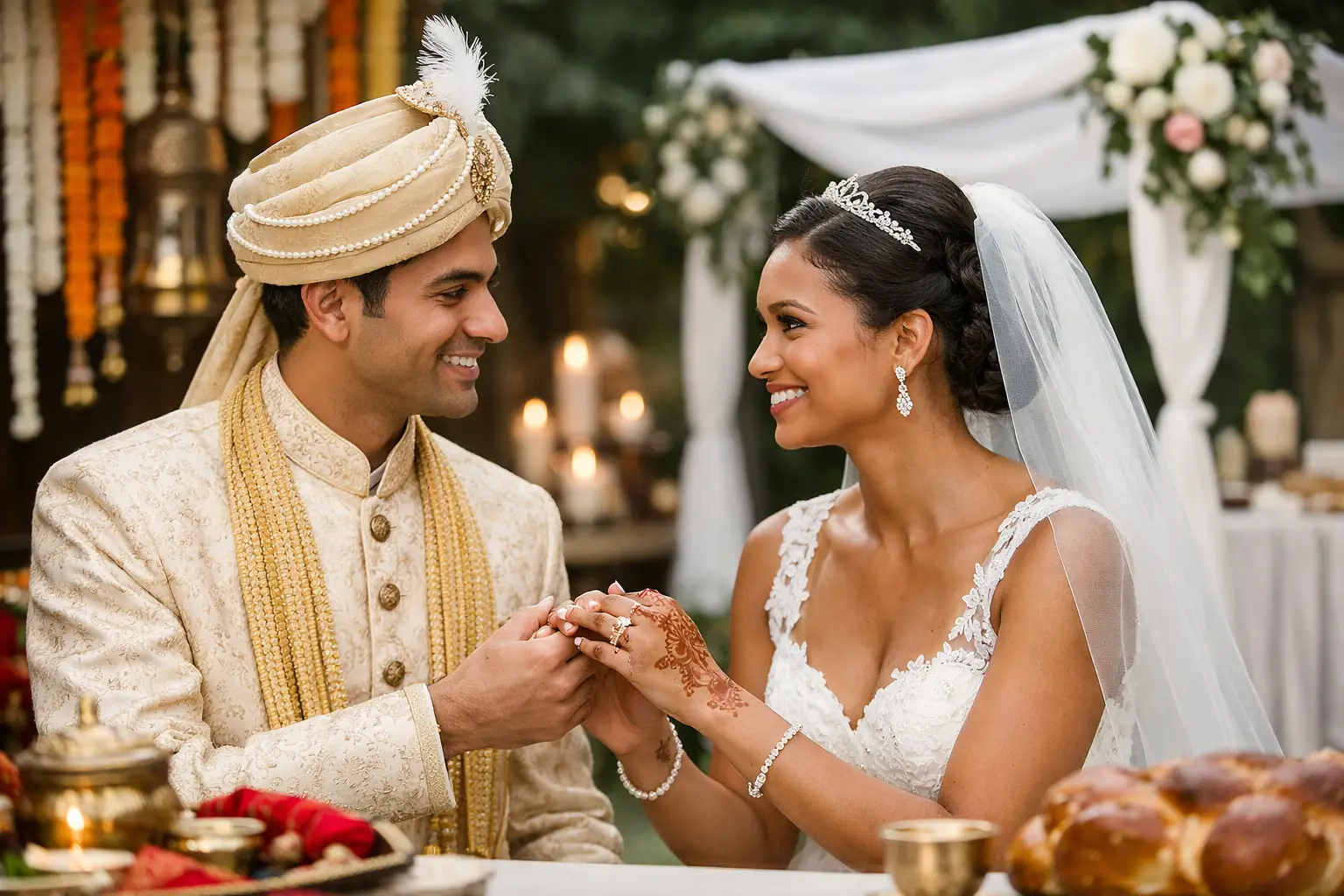
A wedding that brings together two cultures should never feel like one tradition has been squeezed around another. The finest multicultural wedding planning examples begin with a more generous question: what would make both families feel genuinely seen, welcomed and proud? From the first arrival to the final dance, each choice can honour heritage while creating a celebration that feels entirely your own.
For couples planning in London or Essex, this often means balancing meaningful ceremonies, generous hospitality, large guest lists and a room that still feels beautifully considered. The answer is not to include every possible custom. It is to choose the moments that carry the most emotional weight, then give them the time, setting and care they deserve.
Start with the traditions that matter most
Before discussing centrepieces, colours or entertainment, sit down together and identify your non-negotiables. These may be faith-based requirements, a family blessing, traditional dress, a particular dish, separate spaces for pre-wedding gatherings, or simply the expectation that guests will be welcomed with real warmth.
It helps to separate traditions into three groups: those that must happen, those you would love to include, and those that can be represented in a smaller way. This prevents the day becoming over-programmed and gives suppliers clear direction. A six-hour celebration can hold a great deal of meaning, but only when there is room for guests to eat, greet one another and enjoy the atmosphere.
For many Muslim couples, halal catering, prayer considerations and modesty are essential foundations rather than additions. For British, South Asian and Afro-Caribbean families, the order of formalities, the style of hospitality and the energy of the dance floor may all carry equal importance. A venue team with cultural understanding can help you protect these priorities without making the day feel divided.
Multicultural wedding planning examples for real celebrations
A Pakistani Muslim and British wedding reception
A couple may choose a Nikah at a mosque or intimate ceremony space earlier in the day, followed by an elegant evening reception for a wider guest list. The bride can wear traditional bridal dress for the entrance, then change into a white gown or a second formal look after dinner. The groom might mirror this with a sherwani for the first part of the celebration and a dinner jacket later on.
The reception can feel cohesive rather than split in two. Consider a refined ivory and gold scheme with soft florals, paired with a statement stage that reflects South Asian grandeur. Welcome drinks and canapés can introduce familiar British reception elements, while an authentic halal Pakistani or Bangladeshi menu gives the meal the generosity and flavour guests expect. A carefully paced playlist can move from traditional entrance music to contemporary favourites and a full dance floor later in the evening.
The key trade-off is timing. If speeches, cake cutting, a first dance and family photographs are all planned around multiple outfit changes, build a realistic running order. Rushing the bride and groom is rarely worth it.
A Nigerian and Caribbean celebration with a formal civil ceremony
For a couple blending Nigerian and Caribbean heritage, the civil ceremony may be deliberately understated, leaving the reception to become a vivid expression of both families. Guests could arrive to live percussion or a steel pan welcome, while the couple make a grand entrance in coordinated traditional attire before changing for dinner or dancing.
This is an occasion where colour has a powerful role. Rich emerald, coral, burgundy or royal blue can be brought through the stage backdrop, linen details and floral arrangements, then balanced with a polished neutral base to retain a luxurious finish. Rather than treating food as a compromise, couples may create a thoughtfully curated menu that gives equal presence to the cuisines and dietary needs that matter to their guests. The result feels generous, personal and memorable.
Where guest lists are large, practical details protect the experience. Ample parking, a clear arrival plan, accessible facilities and enough time for family photographs make a considerable difference. Grand celebrations need operational precision behind the scenes.
A Bangladeshi and English wedding with two distinct moods
Not every multicultural wedding needs to combine every tradition into one room. Some couples prefer a daytime ceremony with a classic English country-house sensibility, followed by an evening Walima or reception that embraces Bangladeshi hospitality, music and cuisine.
A change in lighting can make this transition feel intentional. Soft, romantic daylight tones for the ceremony can give way to warm uplighting, a floral stage and a more dramatic tablescape for the evening. The couple can include English readings or speeches at the ceremony, then invite elders to offer blessings at the reception. This approach gives each part of the day its own identity while preserving a natural emotional flow.
It depends on the family dynamic. Where both sides value a shared experience, bringing everyone together for the full day can be especially meaningful. Where traditions are best enjoyed in their own setting, two connected celebrations may feel more relaxed and authentic.
Create one visual story, not competing themes
Blending cultures does not require blending every colour, pattern and symbol. In fact, a restrained design often creates greater impact. Choose one visual foundation – perhaps romantic whites and soft gold, contemporary black and champagne, or jewel tones with metallic accents – then layer cultural details through fabrics, stationery, table names, ceremonial seating and floral choices.
A mandap-inspired focal point, ornate stage, aisle florals or personalised backdrop can provide a beautiful centre for photographs without overwhelming the room. Couples hosting a civil ceremony and a traditional reception can use décor to mark the change in mood, while still carrying one signature colour or flower through both spaces.
Ask your décor team how the room will look from the entrance, at the top table and in photographs. Large venues require scale. A detail that appears substantial on a sample board may disappear in a ballroom filled with 300 guests.
Give food the respect it deserves
In multicultural celebrations, the menu is often where family memory, hospitality and identity meet. It should be planned early, especially if halal authenticity, vegetarian choices, allergy management or culturally specific dishes are priorities.
A polished service does not mean abandoning the food your family loves. It means presenting it with confidence, abundance and care. A formal plated starter followed by a generous halal buffet may suit one celebration, while another may favour family-style service or live stations. The right format depends on guest numbers, the pace of the programme and how central the meal is to your families.
Tastings are an opportunity to be exacting. Discuss seasoning, presentation, portion sizes and service style. Also consider older relatives and young children: familiar options and clear dietary information are thoughtful touches that make every guest feel considered.
Build a timetable around hospitality
The most elegant weddings feel unhurried. Guests should know where to go, when dinner will be served and when key moments are happening, without feeling managed from one formality to the next.
Allow sufficient time for arrivals, greetings and photography before the meal. If prayers, a Nikah, outfit changes or traditional entrances are planned, assign realistic time rather than hoping they will fit between courses. A dedicated coordinator or experienced venue team can keep the programme moving discreetly, leaving the couple free to be present with their families.
For larger receptions, communicate the essentials clearly in advance: dress expectations, ceremony timing, parking arrangements and whether children are invited. These small practicalities avoid confusion and set the tone for a calm, polished occasion.
Choose partners who understand the room
Cultural fluency is not simply knowing the names of traditions. It is understanding why a late arrival may matter, why a particular family member should be seated close to the couple, why halal catering must be handled with confidence, and when a dance floor needs to feel celebratory rather than formal.
At The Grove Banqueting, couples can choose an all-inclusive approach that brings catering, décor, hospitality and planning support into one carefully managed experience, or select dry hire flexibility for a more tailored supplier team. Both routes can work beautifully. The best choice is the one that gives you confidence that every meaningful detail is in capable hands.
Your wedding does not need to explain your cultures to every guest. When it is planned with care, it simply lets them feel the joy, generosity and love that brought everyone into the same room.