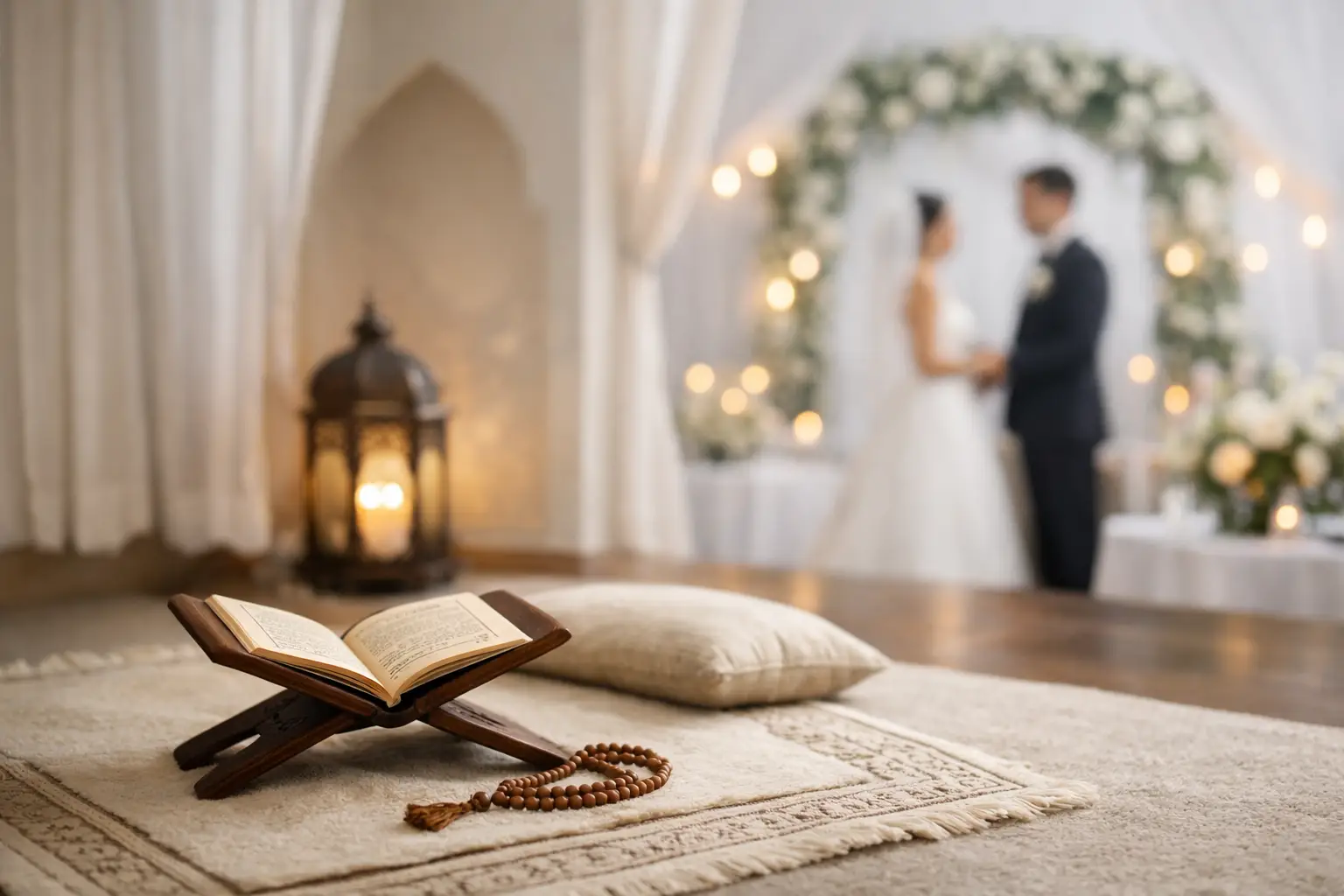
A beautifully dressed ballroom, exceptional food and a full dance floor all matter, but the smallest details often determine how well guests remember a wedding. Prayer room availability is one of those details. For couples planning a Muslim wedding or a multicultural celebration, a calm, appropriate space for prayer allows loved ones to feel genuinely welcomed throughout the day.
It is not simply a practical request to add to a venue checklist. It reflects the care you are taking to honour faith, family and every generation attending your celebration. When this element is considered early, it becomes part of an effortless, elegant guest experience rather than a last-minute concern.
Why prayer room availability matters at a wedding
Wedding days follow their own rhythm. Guests may arrive early, travel from across London or Essex, and remain at the venue from the ceremony through to the final farewell. Prayer times can fall during guest arrivals, formal photographs, the wedding breakfast or evening celebrations. A well-considered arrangement gives guests the reassurance that they will not need to leave the venue or search for a quiet corner at an important moment.
For many families, this is particularly meaningful at a nikah and walima, where faith and celebration sit naturally side by side. It can also matter at a mixed guest-list wedding, where thoughtful planning demonstrates respect without making the day feel overly formal or restricted. The aim is simple: every guest should feel able to take part fully, comfortably and with dignity.
Prayer room availability also supports the people closest to you. Parents, grandparents and guests who may not wish to travel far during the event will appreciate having an accessible place to pray. When families are relaxed, the atmosphere of the whole celebration feels warmer and more joyful.
What to ask about prayer room availability
Not every venue will have a permanent prayer room, and that does not automatically make it unsuitable. Many premium event spaces can allocate a private room or adapt an area for the occasion. What matters is that the arrangement is discussed clearly before you confirm your date, with enough detail to work properly on the day.
Ask whether the room will be exclusively available to your party for the full duration of your event, or only at certain times. A space that is needed for supplier storage, venue operations or another function may not offer the privacy guests need. It is also sensible to establish who will prepare the room and whether it can be set aside before guests arrive.
Privacy, comfort and location
The right space should feel calm and separate from the energy of the reception. A room directly beside loud music, a busy service corridor or a public entrance may be convenient on paper but less comfortable in practice. Consider whether guests can reach it easily without crossing a crowded dance floor or needing to ask staff for directions.
Privacy requirements vary between families. Some may prefer one shared space, while others may require separate arrangements for men and women. Discuss the expectations of your guests openly with your venue team, particularly if you are expecting a large attendance or several older relatives who may need a little extra support.
Timing around the wedding schedule
Prayer arrangements work best when they are considered alongside the running order, rather than treated as an isolated venue requirement. If the nikah, speeches or couple entrance overlaps with a prayer time, your planner can help create breathing room in the schedule. This may mean allowing a little longer for guest arrivals, serving refreshments before a formal moment, or scheduling photographs in a way that does not leave immediate family rushed.
There is no single perfect format. A more traditional family celebration may benefit from a clearly communicated pause, while another couple may prefer guests to use the room quietly at their own convenience. The best decision depends on your guest profile, the season, the event timetable and the religious expectations that matter most to your family.
Ablution and practical facilities
A prayer space itself is only one part of the conversation. Ask about nearby washroom facilities and whether guests will be able to perform wudu comfortably and appropriately. Venues should be able to explain the facilities available, the route to them and any practical limitations before the event.
You may also wish to ask about cleanliness, lighting, ventilation and whether shoes can be left outside the room without obstructing an access route. Small considerations such as these help the space feel respectful and properly prepared. Depending on the room and your preferences, prayer mats, signs indicating the direction of prayer and a discreet seating option for elderly guests may also be useful additions.
Clear communication on the day
Even a perfectly prepared room can be overlooked if guests do not know it exists. Your venue coordinator or master of ceremonies can advise on the most discreet way to communicate the arrangement. For some celebrations, a small sign near the entrance is enough. For others, close family members and key members of the wedding party may simply be informed in advance.
The tone should remain welcoming and understated. This is not an announcement that needs to interrupt the celebration. It is a considered detail that allows guests to move through the day with ease.
Building faith-sensitive details into your venue planning
Prayer room availability is most effective when it forms part of a wider conversation about how your wedding will be hosted. A venue team that understands culturally tailored celebrations will know that this request often sits alongside halal catering, a nikah set-up, separate family considerations, a carefully timed programme and meaningful décor choices.
When viewing a venue such as The Grove Banqueting, use the appointment to talk through the full shape of the day rather than assessing each feature in isolation. Explain your expected guest numbers, the likely start and finish times, whether the ceremony is taking place on site and which traditions are most important to both families. This gives the planning team the context needed to advise with care and accuracy.
It is equally valuable to confirm the details in writing as part of your event plan. The agreed room, access times, any furniture requirements and the responsible point of contact should all be clear. This protects the experience you have imagined and gives parents and relatives the confidence that nothing has been left to chance.
A thoughtful detail with lasting meaning
Luxury is often found in anticipation: the guest who is greeted warmly, the dish that arrives exactly as expected, the room that is ready before anyone needs to ask. A suitable prayer arrangement belongs in that same category of thoughtful hospitality.
By raising the question early and discussing your family’s needs honestly, you can create a wedding day that feels refined, respectful and completely your own. The most memorable celebrations make room for every tradition that matters, allowing every guest to share in your happiness with comfort and confidence.