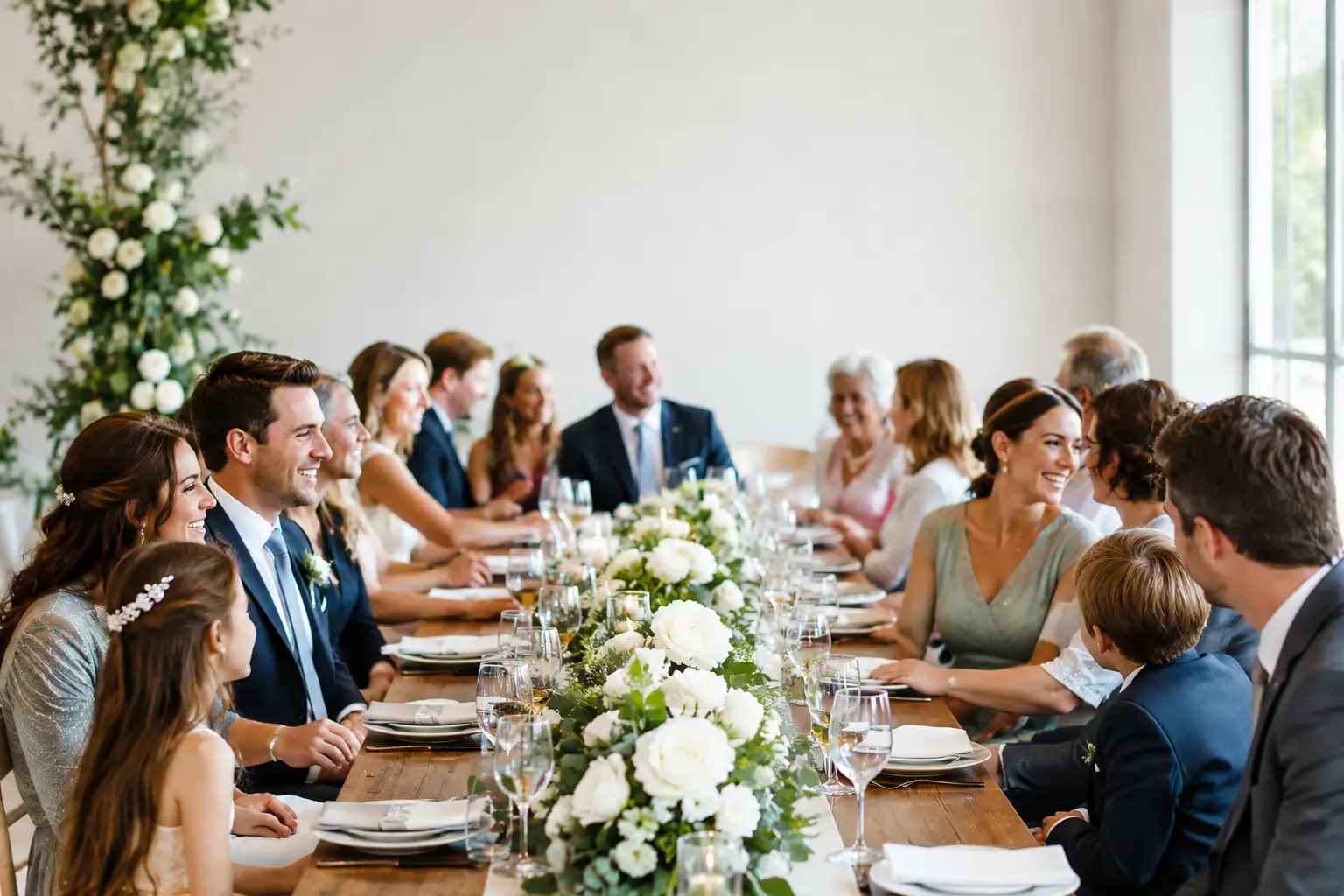
A wedding seating plan becomes far more than a list of names when several generations, close family friends and respected elders are arriving to celebrate. Knowing how to seat large wedding families means balancing relationships, traditions and comfort while preserving the effortless elegance your reception deserves. The aim is not to make every table perfectly equal. It is to ensure every guest feels welcomed, considered and part of the occasion.
For large Asian, Muslim, British and Afro-Caribbean celebrations, the guest list often reflects a beautiful network of relatives and community. With the right structure, a full room can still feel warm, organised and personal.
Start With Family Structure, Not Table Numbers
Before assigning anyone to a table, map the family groups that matter most. Begin with immediate family, grandparents, siblings, aunties and uncles, cousins, godparents, close family friends and any guests with an honorary family role. This first draft should reflect real relationships, not assumptions based on age or surname alone.
Ask both families for a named contact who understands the dynamics of their side. A parent, sibling or trusted auntie may know that two branches of the family are particularly close, that an elder should not be placed near loudspeakers, or that certain guests would appreciate sitting together. Their insight prevents last-minute reshuffles and helps everyone feel respected.
It is equally wise to identify guests who need additional consideration at this stage. This may include elderly relatives, wheelchair users, parents with young children, guests travelling alone, or anyone with a dietary requirement that requires attentive service. A thoughtful plan is a quiet form of hospitality.
How to Seat Large Wedding Families Around the Top Table
The top table sets the tone, but there is no single correct format. Traditional bride-and-groom arrangements can be meaningful, particularly where parents have played a central role in planning the celebration. Yet a large family may make a sweetheart table or a smaller couples’ table the more practical choice, allowing both sets of parents to host their closest relatives nearby.
A sweetheart table creates a refined focal point for the newlyweds and gives you a little breathing space during a busy reception. Parents, grandparents and siblings can then occupy prominent tables close to the front. This can be particularly effective for multicultural weddings where both families have sizeable guest groups and equal visibility matters.
If you choose a traditional top table, consider who will genuinely enjoy sitting there for the full meal. Parents may prefer to be near their own guests, while elderly grandparents may be more comfortable at a nearby table with familiar company. Honour is not measured only by proximity to the couple. A beautiful table position, attentive service and a clear view of the celebrations can be just as considerate.
Give VIP tables purpose and proximity
Reserve the best-positioned tables for immediate family, grandparents and guests playing an important role in the day. Place them near the top table or stage, but avoid creating a congested area where chairs are constantly moved for photographs, speeches or service.
Tables closest to the dance floor can be ideal for younger adults and friends who will enjoy the energy later in the evening. For older guests, choose a position with a comfortable route to the facilities, a clear line of sight and some distance from speakers. Luxury lies in anticipating these details before anyone has to ask.
Build Tables by Connection, Then Balance the Room
Once priority family tables are placed, organise the remaining guests according to genuine connection. Cousins who socialise together should usually remain together, even when their parents are seated elsewhere. University friends, work colleagues and neighbours will also settle more quickly when seated with people they already know.
Avoid treating every table as a mathematical puzzle. It is rarely necessary for each side of the family to have identical table sizes, identical ages or identical numbers of men and women. What matters is that each table has a natural social rhythm. A table of eight close cousins will often feel more comfortable than ten loosely connected relatives assembled simply to fill chairs.
Where space is limited, use a gentle mix rather than forcing unfamiliar groups together. For example, cousins from both sides of the family may enjoy sharing a table if they have met at engagement events or have similar ages. A welcoming, sociable couple can also help bridge a table of guests who do not yet know one another.
Be careful with the temptation to create a so-called singles table. While it may appear practical, it can feel artificial or uncomfortable. Seat guests with people they know through family, friendship, interests or life stage instead.
Respect Cultural and Faith-Sensitive Considerations
For many weddings, seating reflects traditions of respect as much as convenience. Some families may prefer elders seated together, while others value mixed-generation tables that allow grandparents, children and parents to share the meal. There is no universal rule, so agree on the approach early with both families.
At a Muslim wedding, guests may appreciate easy access to prayer facilities or a quieter area for those stepping away briefly. At a lively Afro-Caribbean or South Asian reception, older relatives may welcome tables with a clear view of the dancing and entrances without being directly beside the busiest part of the room. These adjustments allow every guest to enjoy the atmosphere in their own way.
Food service should also shape the layout. If you are offering a halal banquet, family-style dishes or a multi-course menu, leave sufficient space for service staff to move gracefully between tables. Guests with allergies, vegetarian requirements or particular dietary needs should be clearly noted on the final plan so they receive the same polished experience as everyone else.
Choose Table Sizes That Protect Comfort
Large wedding families can make it tempting to add one more chair to every table. Resist this where possible. An overcrowded table affects conversation, place settings, service and the overall look of the room. A generous layout feels far more elegant than a room that appears stretched to capacity.
Round tables encourage conversation and work beautifully for family groups, while long tables can create a striking, communal setting for larger celebrations. The right choice depends on guest numbers, room proportions, décor and the style of meal service. Your venue team should be able to show how different layouts affect aisle space, sightlines and the placement of a dance floor, stage or cake display.
Keep aisles clear for elders, children and service staff. Consider where guests will enter, where the bridal party will make their entrance, and how photographers will move during key moments. A beautiful seating plan is one that looks composed from every angle and functions naturally once the room is full.
Use a Clear, Kind System for Last-Minute Changes
Even the most carefully prepared plan will change. A relative may be unable to travel, an additional guest may be confirmed, or a family member may raise a preference in the final week. Set a sensible deadline for amendments and appoint one person from each family to approve changes after that point.
Keep a master digital plan alongside a printed version, with table numbers, guest names, dietary notes and children’s meals clearly recorded. Give the final copy to your venue coordinator early enough for the team to prepare place cards and service notes with care. If you are using table names rather than numbers, make sure they are easy to read and pronounce.
A seating chart at the entrance should be elegant and uncomplicated. Alphabetical guest lists are useful for larger receptions, while a table plan arranged by name can look especially refined. Place cards remain valuable even with a visible chart, as they remove uncertainty once guests reach their tables.
Let the Room Feel Like One Celebration
The finest large weddings never feel divided into the bride’s side and groom’s side. They feel like two families joining around one joyful occasion. Create opportunities for connection through a shared table style, coordinated décor and a room layout that draws every guest towards the heart of the celebration.
At The Grove Banqueting, thoughtful planning, culturally informed hospitality and an elegant room design can make even the most detailed family seating plan feel calm and beautifully considered. Give yourselves permission to prioritise warmth over perfection: when guests are seated with care, fed generously and welcomed sincerely, the room will carry the joy of your marriage long after the final course is served.