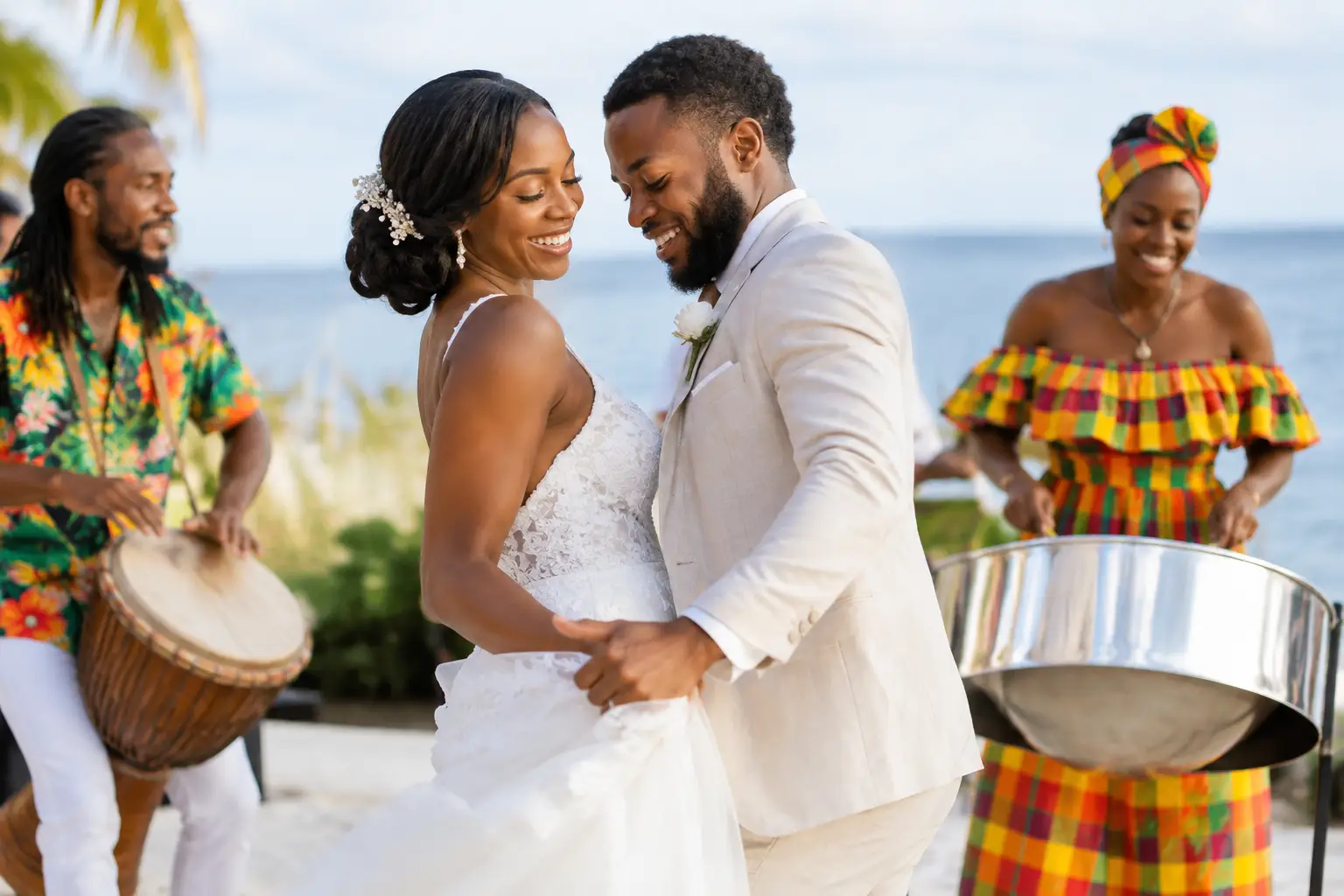
The best Afro-Caribbean wedding music does more than fill a dancefloor. It tells guests who you are before a word is spoken, carries family memories into the room and gives every generation a reason to celebrate together. From a soulful aisle entrance to the first Afrobeats anthem that brings the room alive, the right soundtrack turns a beautiful reception into a celebration with real feeling.
There is no single Afro-Caribbean playlist, and that is precisely its strength. A wedding may weave together Jamaican roots, Nigerian heritage, Ghanaian highlife, Trinidadian soca, Congolese rumba, British R&B and the songs a couple have made their own. The most memorable music choices feel personal rather than performative, with space for both tradition and pure, joyful fun.
Start with the feeling, not the genre
Before choosing individual songs, decide how you want each part of the day to feel. Your ceremony might be intimate and romantic; your reception entrance confident and glamorous; your evening party energetic, nostalgic and full of call-and-response. This approach helps your DJ or live musicians build a journey rather than simply play popular tracks.
It also prevents one common mistake: saving every high-energy song for later. Guests need moments to settle, eat, speak and reconnect. A refined mix of neo-soul, reggae lovers rock, highlife, jazz, gospel and gentle Afrobeats can create warmth during arrivals and dinner, leaving the bigger rhythms to land with even more impact after the formalities.
For multicultural celebrations, agree early on which musical traditions must be represented. If one partner’s family is Jamaican and the other is Ghanaian, for example, both sides should hear music that feels recognisable and celebratory. The balance does not need to be equal by the minute. It needs to feel considered.
Best Afro-Caribbean wedding music by moment
The ceremony and aisle entrance
An aisle song does not have to be slow in the traditional sense. It simply needs enough space for the moment to breathe. Instrumental versions of meaningful reggae, Afrobeats or R&B songs can feel elegant without losing cultural identity. A live saxophonist, strings or acoustic vocalist can soften a favourite track while keeping its emotional connection intact.
For couples who want a faith-centred ceremony, gospel-inspired selections can bring powerful warmth, particularly during the signing of the register or a blessing. Others may prefer classic soul ballads or a restrained lovers rock track. Listen carefully to the lyrics as well as the melody. A beautiful chorus is not always a wedding message.
The newlywed entrance
This is where confidence takes centre stage. A vibrant Afrobeats record, dancehall classic, soca favourite or a highlife anthem can announce the couple with real presence. The best choice has a recognisable opening, a beat that guests can react to immediately and lyrics that suit the occasion.
If you are planning a grand entrance with bridesmaids, groomsmen or family members, speak to your DJ about a short edit or sequence of tracks. Keep it tight. A strong entrance often lasts only a few minutes, but it can set the energy for the whole reception.
Dinner, speeches and the room between moments
Dinner music should support conversation, not compete with it. This is an ideal place for elegant reggae, soulful Caribbean classics, Afroswing, R&B and slower Afrobeat selections. The aim is a polished atmosphere that still feels unmistakably yours.
Ask your DJ to lower the tempo and volume during courses and speeches, then gradually lift the energy as dessert or the cake cutting approaches. At a large wedding, this pacing matters. Guests at the back of the room should be able to enjoy the occasion without having to raise their voices across the table.
The first dance
Your first dance is not an audition. Choose the song that reflects your relationship, whether it is a classic soul record, contemporary R&B, reggae lovers rock or an Afrobeats love song. If dancing alone feels daunting, begin with a short private moment and invite parents, the bridal party or all guests to join after the first verse.
A choreographed routine can be brilliant when it genuinely suits the couple. However, a simple, relaxed dance often photographs more beautifully because it allows the emotion of the moment to lead. If you do plan a surprise change in tempo, rehearse the handover with your DJ so the transition feels effortless.
The dancefloor
The evening party is where a skilled DJ earns their place. The strongest Afro-Caribbean wedding sets move with the crowd: Afrobeats into amapiano, dancehall into reggae, soca into bashment, then perhaps a burst of 90s R&B, UK garage or old-school soul for guests who want a different rhythm.
Do not assume every guest wants the same thing at the same time. Older relatives may light up to reggae classics, highlife, calypso or soul, while younger guests may be waiting for amapiano, Afro house and current Afrobeats. A great set gives each group a moment, then brings them back together with the songs everybody knows.
Give your DJ a brief they can actually use
A list of 150 songs is not a brief. It can make it harder for a DJ to read the room and respond to the atmosphere. Instead, share around 10 to 20 must-play tracks, a short list of songs or artists to avoid, and the musical styles you want for each key moment.
Be clear about family expectations. Perhaps explicit lyrics are not appropriate before midnight, or certain dancehall tracks are reserved for the later party. Perhaps a traditional family dance, money dance or group moment needs a particular song at a particular time. These details allow the DJ to protect the flow while honouring what matters to you.
If you have booked live percussion, a saxophonist or a singer, make sure they have spoken with the DJ before the day. Live elements add theatre and luxury, but timing and sound levels need managing properly. In a large banqueting suite, good production is what makes the experience feel polished rather than overwhelming.
Respect the roots of the music
Afro-Caribbean is a broad description, not one sound. Avoid treating it as a single themed section between generic party tracks. The music is rich because it comes from distinct countries, islands, languages and histories, each with its own dance culture and musical traditions.
Talk with parents, aunties, uncles and close friends while you are planning. They may suggest the song that immediately fills the floor, or remind you of a meaningful artist your guests will love. Their input can create one of the most moving parts of the night: a room full of people singing the same chorus, across generations.
At the same time, this is your wedding. You do not have to include a song simply because it is expected. The right playlist makes space for heritage and for your own story as a couple living, loving and celebrating in Britain.
Make the room work for the music
Music lands differently depending on the room layout. Keep the dancefloor close enough to the action that guests feel invited in, but leave clear routes for service, elderly relatives and photographers. Consider where your cake cutting, first dance and any cultural performances will happen, so guests have a clear view without the room feeling crowded.
For celebrations with several hundred guests, confirm your DJ’s equipment needs, performance timings and microphone requirements well ahead of time. A venue team experienced in grand multicultural occasions can coordinate these details with your suppliers, leaving you free to enjoy the atmosphere rather than troubleshoot it. At The Grove Banqueting, that careful coordination is part of creating a celebration that feels personal from the first guest arrival to the final song.
The perfect track is rarely the one that looks best on a playlist. It is the one that makes your partner reach for your hand, brings your family to their feet and makes the whole room feel, for a few unforgettable minutes, like it belongs entirely to you.