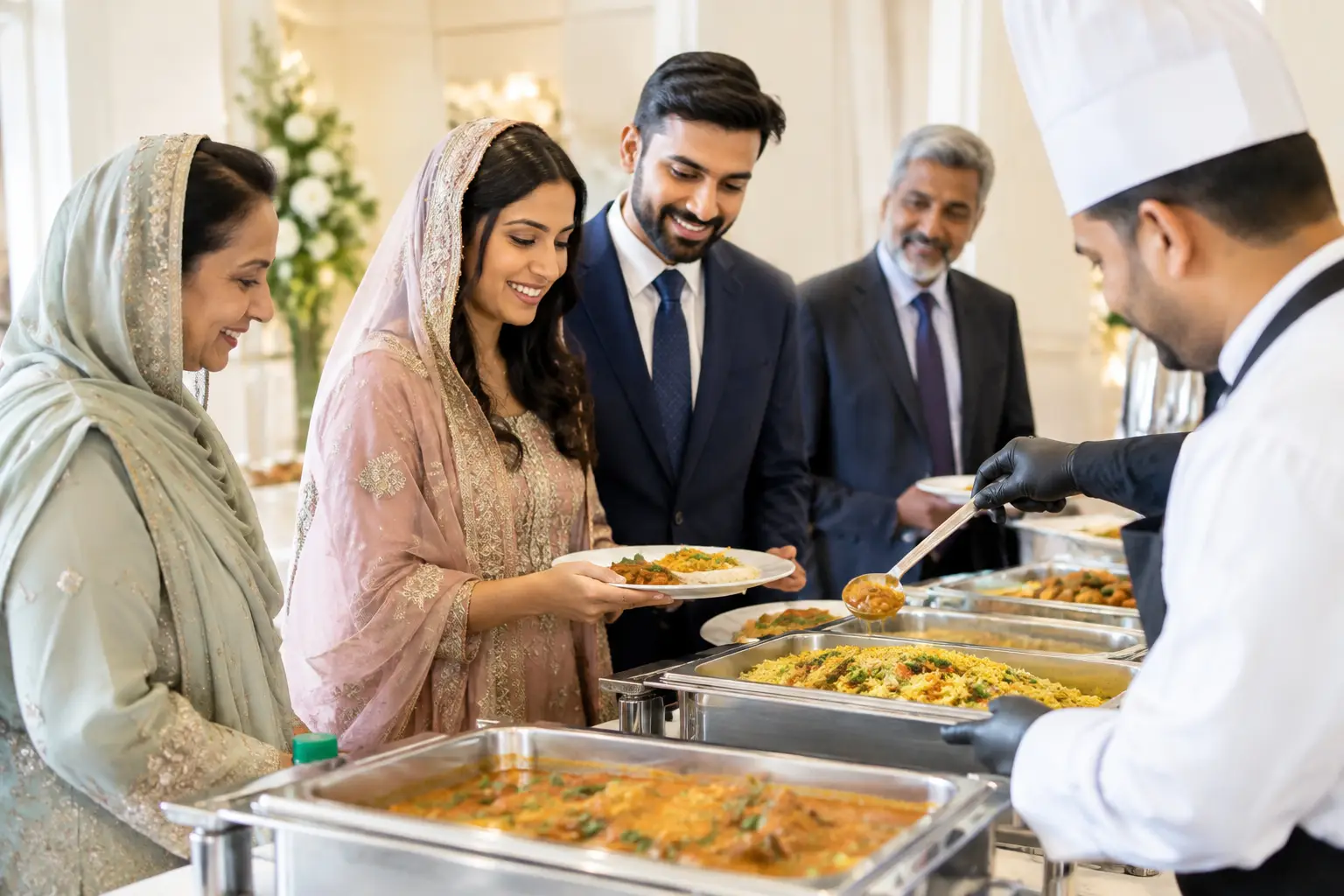
The food is often the moment guests remember most clearly: the aroma of freshly served biryani as they arrive, the care taken with a family recipe, and whether every table is looked after with warmth. A meaningful halal caterer review should go beyond a few photographs of plated dishes or a star rating. For a wedding, it should help you judge whether a caterer can deliver food that feels authentic, generous and impeccably managed for the people who matter most.
For British Pakistani, Bangladeshi and Bengali families in particular, catering is part of the celebration’s identity. It carries tradition, hospitality and pride. The right team understands that a Mehndi menu has its own energy, a Nikah calls for considered service, and a Walima deserves food presented with the elegance of the occasion.
What a Halal Caterer Review Should Really Assess
A useful review starts with the standard of halal assurance, but it should not end there. Ask caterers clearly about their halal sourcing, the suppliers they use and how food is stored and prepared. If your family requires a particular certification, method of preparation or a fully halal kitchen environment, raise this early. A professional caterer will welcome the conversation and provide clear answers rather than vague reassurance.
Then look at the food itself. Authenticity is not simply about putting familiar names on a menu. It is found in balance: fragrant spices that enhance rather than overpower, tender meat, freshly prepared breads and desserts with the right texture and sweetness. A caterer may offer an impressive range, but a focused menu executed beautifully is usually more memorable than an overlong selection that lacks consistency.
Service deserves equal attention. At a celebration of 300 or 500 guests, even exceptional cuisine can lose its impact if courses arrive late, buffet stations are not replenished or elderly relatives need to wait too long. Reviews that mention attentive staff, warm hospitality, timely service and a calm approach under pressure are especially valuable.
Taste Testing Is Where Confidence Begins
A tasting is not merely a pleasant part of wedding planning. It is your opportunity to see whether presentation, flavour and portion size meet the expectations of your household. Bring one or two people whose opinion you trust, ideally including someone familiar with the dishes you are considering. Too many voices can make a clear decision unnecessarily difficult.
Taste each item as a guest would. Is the chicken succulent? Does the lamb hold its flavour? Is the rice separate, aromatic and properly seasoned? Are starters crisp and fresh rather than prepared too far in advance? Notice the details as well: the temperature of the food, the quality of chutneys and salads, and whether the dessert would still feel special after a full wedding meal.
This is also the right moment to discuss regional preferences. Pakistani, Bangladeshi and Bengali menus vary enormously between families. Some may want a rich, traditional curry and biryani service, while others prefer a contemporary menu with live stations, canapés and British favourites alongside South Asian dishes. Neither approach is more correct. The finest catering reflects your celebration, rather than asking your guests to fit a standard package.
Questions Worth Asking at Your Tasting
Ask how dishes are prepared for a large guest count, not just for a small tasting table. Enquire about the number of serving points, the expected service time and how the team plans to keep food at its best throughout the meal. If you are serving guests with allergies, vegetarian preferences or child-friendly requirements, ask how these meals are labelled and handed out.
It is sensible to clarify whether your chosen menu can be adjusted for heat levels, family recipes or particular dishes that carry personal significance. Flexibility is valuable, although it should be matched with realism. A caterer who explains what is possible, what may affect cost, and what is best avoided at scale is often more reliable than one who promises everything without detail.
Look Beyond the Menu Price
A lower per-head figure can appear attractive until the practical details emerge. Your halal caterer review should compare what is actually included: staff, crockery, cutlery, table service, buffet styling, tasting appointments, soft drinks, tea service, late-evening food and menu cards. Ask whether VAT is included and whether there are additional charges for equipment, travel, staffing hours or dietary meals.
For a large wedding, logistics are part of luxury. A caterer needs suitable preparation facilities, enough trained staff and a clear plan for serving hundreds of people without disrupting speeches, entrances or photography. If your reception includes separate arrival times, prayer arrangements or a tightly planned programme, the catering team should be able to work around them respectfully.
Venue familiarity can make a considerable difference. Caterers who understand the kitchen layout, loading access and service flow of a venue can work with greater precision. At a full-service setting, coordination between catering, décor, planning and front-of-house teams can also reduce the number of decisions placed on the couple and their families.
Reading Reviews With a Wedding Planner’s Eye
Do not rely solely on an overall score. Read the detail and look for patterns across several reviews. Comments about beautiful food are encouraging, but repeated praise for communication, punctuality and problem-solving reveals how a caterer performs when a real event is underway.
Be equally alert to vague testimonials. A short comment saying that food was “nice” offers little guidance. More useful feedback describes the guest count, type of occasion, particular dishes, staff attentiveness and how concerns were handled. Wedding catering is a high-pressure service, so a single imperfect review is not automatically a warning sign. What matters is whether the business responds professionally and whether similar issues recur.
Photographs can help, but they should support rather than replace a conversation. Ask to see examples of buffet displays, plated courses and live stations from celebrations close to your own size and style. A caterer may excel at intimate parties yet need a different level of infrastructure for a grand reception.
Catering That Respects the Whole Celebration
The strongest halal caterers understand the rhythm of a multicultural wedding. They recognise that food may need to be served around a Nikah, prayer times, outfit changes, speeches and family photographs. They know that grandparents may value traditional dishes, while younger guests may appreciate contemporary presentation and a late-night bite.
This cultural awareness should never feel like an add-on. It appears in small but important decisions: discreet handling of dietary needs, respectful staff conduct, clearly communicated timings and a willingness to work with your chosen traditions. For African, Afro-Caribbean and British celebrations too, a thoughtful caterer will listen closely rather than make assumptions about what your menu should be.
At The Grove Banqueting, couples can bring together authentic halal cuisine, elegant surroundings and experienced event coordination in one considered setting. For families who prefer greater flexibility, a venue should also be able to discuss dry hire or approved supplier arrangements openly, so the format feels entirely your own.
Choose the Team That Makes Hosting Feel Effortless
The best caterer is not necessarily the one with the longest menu or the loudest marketing. It is the team that listens carefully, proves its standards, understands your guests and delivers with grace when the room is full. When food, service and cultural care are aligned, your wedding meal becomes more than a course between formalities. It becomes part of the memory your family will talk about for years.
Before securing a date, arrange a tasting, ask the practical questions and pay close attention to how the team makes you feel. Reassurance, clarity and genuine hospitality are often the earliest signs that your celebration is in safe hands.