A beautifully timed entrance can set the tone for an entire celebration. Yet when guests are circling unfamiliar roads, arriving late or unsure where to leave their cars, that sense of occasion can quickly feel unsettled. Knowing how to manage wedding guest parking gives your loved ones a calmer welcome and allows your celebration to begin with the effortless elegance it deserves.
For large family weddings in London and Essex, parking is not a small practical detail. It is part of the guest experience. Whether you are welcoming relatives travelling from across the capital, elderly family members, friends arriving in several cars, or suppliers with equipment, a thoughtful plan protects the atmosphere you have worked so hard to create.
Start with an honest picture of guest travel
Before deciding how many parking spaces you need, consider how guests will actually arrive. A guest list of 300 does not necessarily mean 300 cars. Couples, families and friendship groups often travel together, while some guests may use taxis, coaches or public transport. Equally, a celebration with multiple households travelling independently may need considerably more space than expected.
Ask close family members early about the guests they know will be driving. This is especially useful for larger South Asian, Muslim and Afro-Caribbean celebrations, where extended family attendance is central and arrival patterns can be less predictable. It also helps to identify anyone who may need step-free access, extra time to walk from the car park, or a space near the entrance.
Your venue team should be able to explain the practical capacity of its car park, including whether spaces are shared with another event, how late guests can arrive, and where vehicles may be left overnight if needed. Never rely on an advertised number alone. Ask how the spaces are laid out and whether that capacity remains comfortable when supplier vehicles, décor teams and catering deliveries are on site.
How to manage wedding guest parking before the day
The best parking plans are communicated before anyone sets off. Include clear, concise travel information with your invitations, wedding website or final guest message. Guests need the full postcode, the correct entrance, a realistic arrival time and any instructions for using a particular gate or car park area.
Avoid sending a vague note that simply says “parking available”. Instead, tell guests whether parking is on site, whether it is free, whether spaces are limited, and what to do if the main car park is full. If there are local restrictions, permits or controlled parking zones nearby, make these clear well in advance. Nobody wants a wedding memory to include a parking fine.
It is wise to send a reminder three to five days before the event. Keep the tone warm and reassuring, but practical. Mention peak arrival times, particularly if the ceremony, reception and evening party have separate guest groups. A small delay at the entrance can become significant when many cars arrive within the same fifteen-minute window.
Give priority to guests who need it
Reserve the closest spaces for disabled guests, elderly relatives, pregnant guests and anyone travelling with very young children. If possible, set aside a convenient drop-off point directly outside the entrance, even if the vehicle then needs to be parked elsewhere.
This is not merely a courtesy. It allows every generation of your family to arrive comfortably and take part in the day with confidence. Make sure the route from the car park is well lit, level where possible and free from obstructions such as supplier cases or decorative installations.
Plan for the key arrivals
The bridal party, immediate family, photographers, videographers, entertainers and suppliers all have different arrival needs. Their vehicles should not compete with guest parking at the busiest point of the day.
Confirm a separate supplier access plan with your venue and agree delivery windows in advance. Florists, caterers and décor teams may need close access for unloading, but their vehicles should be moved promptly once set-up is complete. The same principle applies to wedding cars: decide where they will wait, where they will be photographed and how they will exit without blocking guests.
Make arrival feel hosted, not confusing
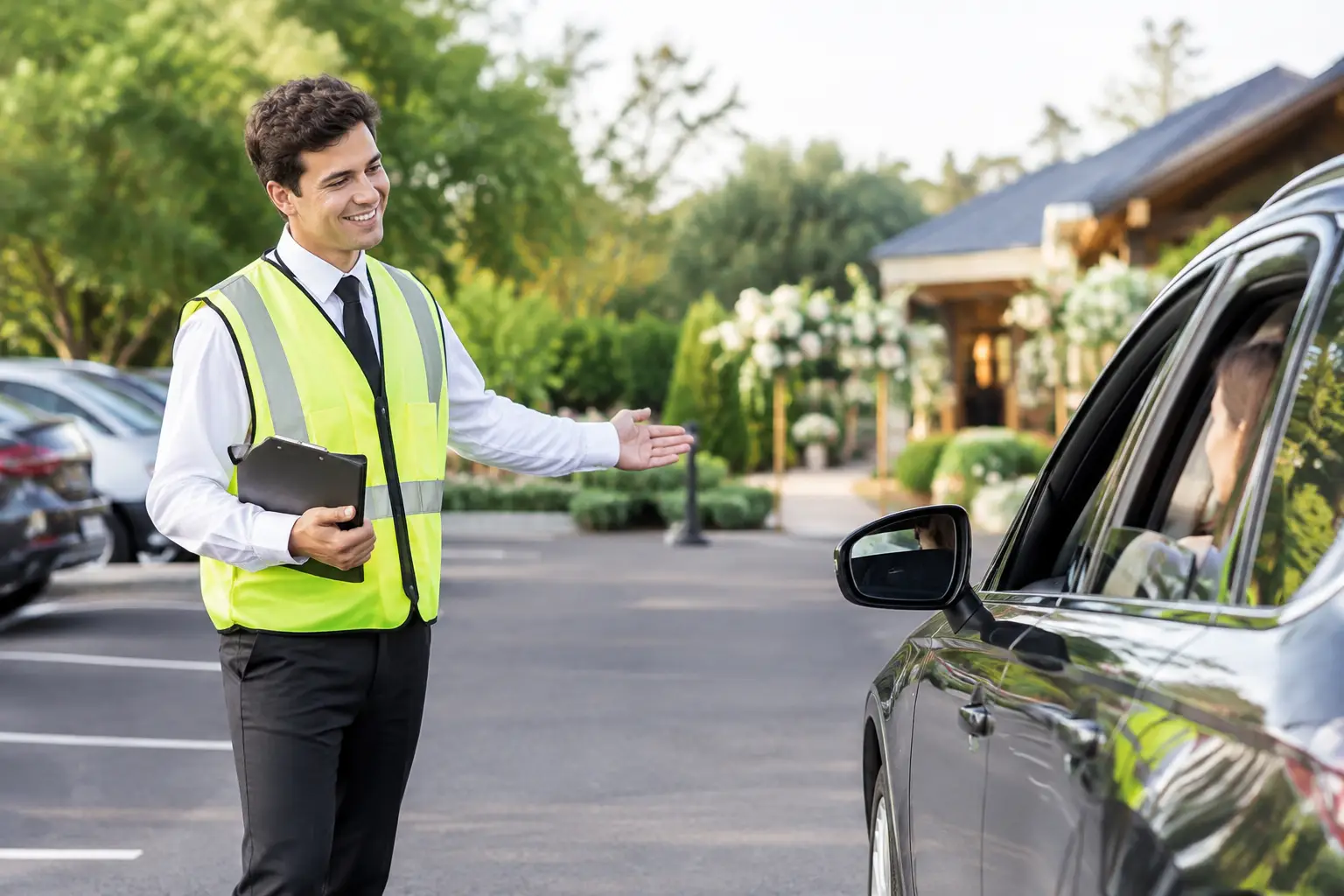
A car park works best when it has a human touch. On the day, appoint a trusted member of the wedding party, venue team or professional parking marshal to welcome arriving vehicles and direct them confidently. For a high-capacity wedding, two or more marshals may be appropriate, especially where there are multiple entrances or separate areas for guest and supplier parking.
They do not need to be formal security staff, although professional support can be worthwhile for very large events. They simply need a clear brief: which spaces are reserved, where overflow parking is located, how to protect accessible bays, and who to contact if an issue arises.
Simple, elegant signage makes an immediate difference. Signs should be easy to read from a moving vehicle and positioned before guests reach the point where they need to make a decision. If the entrance is not obvious from the road, use signs at the turn-in point as well as within the car park. Avoid handwritten notices where possible, as polished signage reflects the care behind the whole occasion.
At The Grove Banqueting, couples can discuss parking and arrival flow as part of the wider venue planning conversation, so the practical details complement the scale and style of the celebration.
Build in a sensible overflow option
Even the most carefully planned guest list can change. Last-minute attendees, separate cars and unexpectedly early arrivals can place pressure on on-site capacity. An overflow plan is therefore essential, but it should be realistic and safe.
If there is additional approved parking nearby, provide the exact location and walking route in your guest information. Consider the experience after dark: is the route well lit, is it suitable for guests in formalwear, and is it manageable for older relatives? If not, arranging a short shuttle service or encouraging taxi travel may be the more considerate choice.
Do not assume that quiet residential streets are a suitable alternative. Restrictions may apply, residents may need access, and parked cars can create unnecessary tension. A luxury wedding should leave guests feeling cared for, not anxious about whether their vehicle is in the wrong place.
For celebrations with many guests travelling from the same area, a minibus or coach can be an excellent solution. It reduces parking pressure, helps family groups arrive together and can be particularly helpful when guests are enjoying the evening reception and would prefer not to drive home.
Think beyond arrival to the end of the night
Parking management should last until the final guest has left. As the evening ends, guests may collect children, call taxis or return to cars in waves. Ensure exits are illuminated and that any barriers or gates remain open for the agreed period. If cars are parked in rows, avoid arrangements that make early departures difficult unless guests have been told in advance.
A designated taxi collection point is valuable, especially after a lively evening of dining and dancing. Ask your coordinator where taxis should wait so they do not block the entrance or interfere with guests leaving the car park. It is also sensible to have a member of the team nearby during the final departure period, ready to guide guests and resolve small issues before they become stressful.
If you expect cars to remain overnight, be clear about collection times and any security arrangements. Guests should know whether the car park is locked, whether vehicles are left at their own risk, and whom to contact if they need access the following morning.
Use your venue viewing to test the journey
When visiting potential wedding venues, do not only look at the ballroom, décor opportunities and menu options. Arrive by car at a similar time to your planned event and assess the full journey from road to reception. Is the entrance easy to find? Is there room for cars to turn safely? Can guests walk comfortably from the parking area to the venue? Does the route still feel welcoming after sunset?
Ask direct questions about capacity, overflow arrangements, accessible parking and the support available on the day. A venue experienced in large, culturally significant celebrations will understand that smooth logistics are part of exceptional hospitality, not an afterthought.
Your wedding should begin with warm greetings, anticipation and the pleasure of seeing the people you love gathered in one place. With clear communication, considerate access and a team that understands the flow of a busy celebration, every guest can step from their car feeling expected, welcomed and ready to share in your masterpiece.