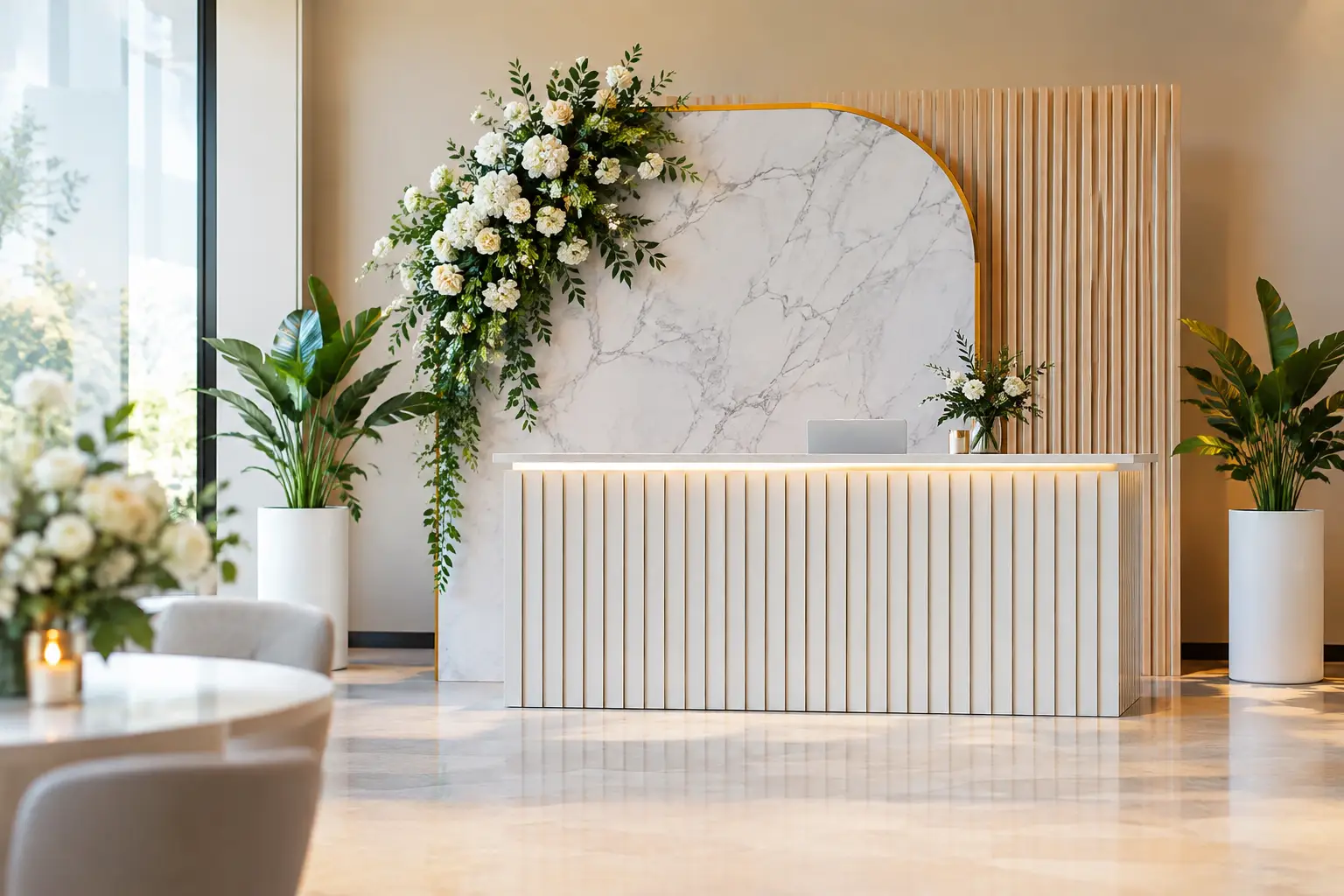
A reception backdrop is far more than a decorative panel behind the top table. It frames the first moments of your entrance, gives your photographs a sense of occasion and helps transform a grand room into a celebration that feels entirely your own. Knowing how to select reception backdrops begins with understanding where they will be seen most – by your guests in the room, by those watching key traditions unfold and in the photographs you will treasure for years.
For a large, detail-rich wedding, the right backdrop brings everything together with effortless elegance. The wrong one can feel disconnected from the room, disappear in photographs or make a carefully planned stage feel unnecessarily crowded. The finest choice balances beauty with scale, cultural meaning and practical event design.
Start with the moments your backdrop will frame
Before choosing flowers, fabrics or a colour palette, consider the moments happening in front of the backdrop. A main stage backdrop may frame the bride and groom throughout dinner, speeches, cake cutting and family photographs. At a South Asian wedding, it can also provide the setting for a grand couple entrance, traditional performances or a portrait session with several generations of family.
This purpose should shape the design. A backdrop behind a sweetheart table can be more intricate and theatrical because it will remain a focal point all evening. A photo backdrop near the entrance needs a different approach: it should look striking from close range, accommodate groups comfortably and remain polished after many photographs.
Some couples choose one statement stage design and a quieter secondary photo moment. Others prefer a single cohesive design repeated in smaller details around the room. There is no fixed rule, but each backdrop should have a clear role rather than competing for attention.
Choose a scale that complements the room
A lavish reception deserves a backdrop with presence. In a spacious banqueting suite, a small arch or narrow floral wall can look lost, particularly when surrounded by large guest tables, generous ceiling heights and a full dance floor. Equally, a design that is too deep or heavily layered may reduce valuable stage space and make movement difficult for photographers, performers and family members.
Begin with the width and height of the stage, then look beyond it. Consider the ceiling height, the distance from the nearest tables and the route you will take for your entrance. A backdrop should feel proportionate from the back of the room as well as beautiful up close.
For larger celebrations, layered draping, elevated floral installations, architectural arches and soft lighting often create the visual weight required. A cleaner, more contemporary setting may call for sculptural panels, mirrored finishes or a tailored fabric treatment. The goal is not simply to make the backdrop bigger. It is to give it enough presence to hold the room gracefully.
Leave space for people, not just decoration
The stage is a working part of the reception. You may need space for two ceremonial chairs, a cake display, musicians, speeches, parents joining you for photographs or a changing flow of guests. If the backdrop projects too far forward, the stage can feel restrictive during the very moments it is meant to elevate.
Ask your venue or décor team to map out the full stage footprint, including furniture, floral plinths and lighting. This allows you to retain the grandeur of the design without compromising comfort or access.
Let your palette lead, but do not chase every trend
Your backdrop should belong to the wider design story. Take cues from your table styling, stationery, bridal attire and floral choices, then decide whether the backdrop should blend in or provide contrast. Ivory and soft gold remain timeless for a formal ballroom celebration, while rich jewel tones can create an exceptional setting for a vibrant mehndi, walima or Afro-Caribbean wedding reception.
The key is restraint. If your stage features abundant flowers, ornate furniture and layered drapery, a calm colour palette will keep it refined. If you favour a simpler structure, bolder colour or texture can supply the drama. A monochrome flower wall may feel luxurious in person, but it can appear flat under evening lighting unless texture, shadows and tonal variation are built in.
Trend-led designs can be inspiring, especially on social media, but they should not override your own style. A backdrop is most memorable when it reflects the atmosphere you want guests to feel: romantic, celebratory, regal, modern or warmly traditional.
How to select reception backdrops around tradition
For multicultural weddings, a backdrop has an opportunity to honour heritage with sophistication. This does not mean every celebration needs a literal interpretation of tradition. It means choosing colours, materials, motifs and styling that feel meaningful to you and respectful to the occasions you are bringing together.
A Pakistani or Bangladeshi celebration may be enhanced by marigold-inspired florals, intricate latticework, jewel-toned draping or a richly layered mandap-style aesthetic adapted for the reception stage. For a Muslim wedding, the design can be elegantly faith-sensitive while remaining personal, perhaps through refined geometric detailing, florals or subtle calligraphy chosen with care. British and Afro-Caribbean couples may favour a glamorous floral statement, a black-and-gold palette, vivid tropical blooms or a sleek modern installation with dramatic lighting.
Where two cultures or family traditions meet, the backdrop can act as a beautiful point of connection. It may combine a shared neutral base with distinctive colours from each side, or pair contemporary styling with cherished traditional elements. An experienced venue and décor team can help ensure these choices feel considered rather than crowded.
Design for photography and lighting
A backdrop can look perfect during a daytime viewing and behave very differently once the room lights dim and the photographer begins working. Lighting is what gives depth to draping, sparkle to metallic details and dimension to flowers. It also determines whether faces are flattering in photographs.
Avoid highly reflective surfaces directly behind the couple if they are likely to catch flash or create distracting glare. Very dark backdrops can look magnificent but may need carefully planned lighting so they do not swallow detail in portraits. Pale florals and fabrics usually photograph beautifully, although they benefit from contrast in their texture and surrounding furniture.
Discuss the lighting plan early. Warm uplighters can create a romantic glow, while pin spots may define the stage and cake table. If you are including an LED sign, initials or a custom monogram, make sure it is bright enough to read without overpowering the people in front of it. Your photographer should still be able to capture natural skin tones and the detail of your clothing.
Consider materials, comfort and event logistics
Fresh flowers offer fragrance, movement and an unmistakably luxurious finish, but they can be more costly and require careful installation. Silk or preserved florals may be more flexible for elaborate structures and can be an excellent option when you want a particular flower out of season. Draping creates softness and scale, while hard panels, plinths and arches provide clean structure.
There are practical questions worth asking before you commit. How long will installation take? Will the design be assembled before guests arrive? Is it stable enough for a busy reception with children, dancing and close family photographs? Are candles permitted, and are all materials appropriate for the venue? A beautiful plan becomes far more reassuring when these details are managed in advance.
If you are choosing dry hire or bringing your own décor supplier, share the venue measurements, access arrangements and set-up schedule at the earliest stage. This helps avoid last-minute compromises and gives your supplier the information needed to create the finish you expect.
Set a budget around impact, not individual pieces
Backdrops can range from a simple draped frame to a fully bespoke floral installation. Rather than choosing purely by price, consider what will have the greatest visual impact for your guest count, room size and photography priorities. A well-designed focal stage often makes more of an impression than spreading smaller decorative features across every corner of the room.
Ask whether your décor package includes delivery, installation, lighting, furniture, florals and removal. Comparing like for like matters, particularly with elaborate designs where the structure and labour are a meaningful part of the investment. A venue with established décor partners can also make coordination more straightforward, while still leaving room for your individual vision.
At The Grove Banqueting, the most striking reception backdrops are never selected in isolation. They are planned as part of the full guest experience – from the entrance and catering to the lighting, traditions and final photograph. Choose a design that feels true to your celebration, then give it the space, support and thoughtful finishing touches it deserves.