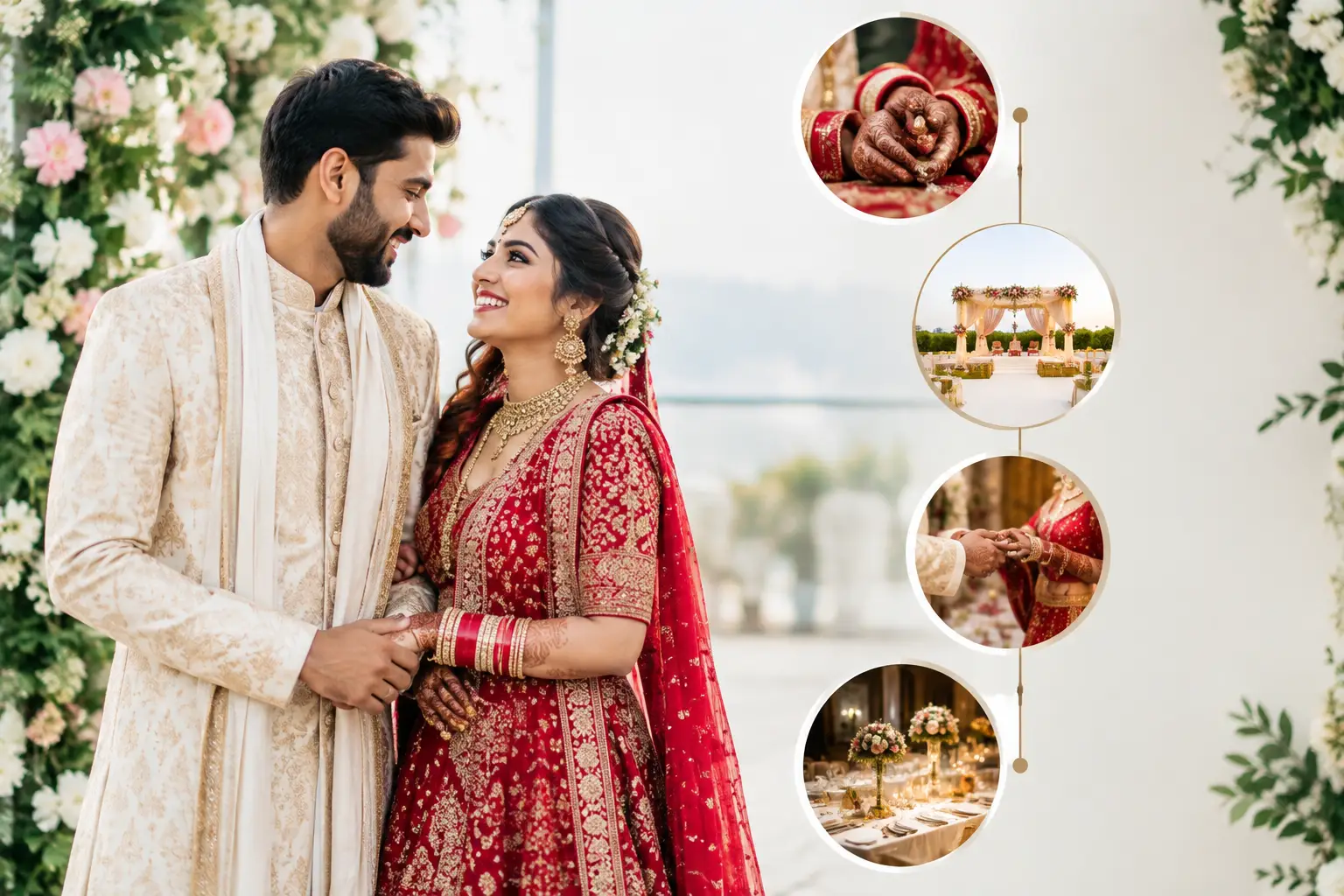
A beautifully paced wedding feels effortless to every guest, yet behind that ease sits a carefully considered plan. This Asian wedding timeline guide is designed for couples and families planning a meaningful, high-energy celebration where tradition, hospitality and impeccable presentation all have their place.
Asian weddings are rarely one-size-fits-all. A Pakistani, Bangladeshi, Indian, Sri Lankan or mixed-heritage celebration may include different ceremonies, family expectations and guest arrangements. A Muslim wedding may centre on the nikah, while another couple may host civil proceedings earlier in the day before a grand reception. The most successful timeline is not the busiest one. It gives each important moment the time, privacy and attention it deserves.
Start with the shape of your celebration
Before setting times, decide what your wedding day needs to hold. Is the legal or religious ceremony happening at the venue? Will there be a separate entrance for the bride and groom? Are you planning a formal seated meal, a generous buffet, live entertainment, a cake cutting and a late-night dance floor? Each decision affects the pace of the day.
For larger London and Essex guest lists, allow more time than you first expect. Guests may arrive in waves, particularly when families are travelling separately or changing outfits between events. A spacious arrival period also allows elderly relatives, young children and close family members to settle comfortably before the formal programme begins.
If you are combining cultural traditions, resist the pressure to include every possible element in one day. Choose the rituals that feel personal to you and give them room to shine. A shorter, well-timed programme will always feel more luxurious than a packed schedule that leaves no space to breathe.
The Asian wedding timeline guide: a reception-day plan
The following example suits a reception beginning in the late afternoon and continuing into the evening. It can be adapted for a nikah, civil ceremony, walima, wedding reception or a celebration following earlier festivities such as a mehndi or sangeet.
10:00am to 12:00pm: Supplier access and styling
While the couple prepares elsewhere, the venue team, decorators, caterers, photographers and entertainment providers begin their work. This is when your room transforms from an elegant blank canvas into the setting for your celebration.
Allow time for stage décor, floral arrangements, table styling, signage, sweet tables and any cultural details that matter to your family. If your décor includes a statement mandap-style structure, floral backdrop, custom initials or a grand bridal stage, confirm access and installation times well in advance. Your coordinator should also know when photographers need a clear room for detail shots before guests arrive.
A full-service venue can make this part considerably calmer by coordinating trusted décor and catering partners under one plan. Where you are using dry hire, appoint one family representative or professional planner to be the single point of contact for suppliers. The bride and groom should not be answering calls about chair covers or cake stands while getting ready.
12:00pm to 2:30pm: Preparation, portraits and travel
Hair, make-up and dressing should be scheduled with generous contingency. Bridal preparation often takes longer than anticipated, especially where outfit changes, intricate jewellery, dupatta placement or multiple family photographs are involved.
Aim to have the bride ready at least 45 minutes before she must leave. This creates time for relaxed portraits and allows for the unexpected: a delayed make-up artist, traffic, a missing pin or a family member who needs help with their outfit. The groom and groomsmen should also have a clear readiness time, particularly if they are travelling separately or arriving with a formal entrance.
If your ceremony is at a different location, build realistic London travel time into the plan. It is wise to treat the journey as part of the event, not a small gap between appointments.
3:00pm to 4:00pm: Ceremony or private family moment
For couples holding a nikah or intimate blessing at the venue, this is a natural time to welcome immediate family and ensure the setting feels calm and respectful. Speak with your imam, registrar or officiant beforehand about seating, microphones, signing arrangements and photography expectations.
A nikah can be wonderfully concise, but the moments around it need consideration. Guests may wish to offer congratulations, relatives may gather for photographs, and the newly married couple may need a few quiet minutes together before joining the wider reception. Plan for this rather than moving immediately into the next part of the day.
Where the legal or religious ceremony took place earlier, use this period for couple portraits and family group photographs. Completing key images before the main guest arrival means you can enjoy more of your reception without being called away repeatedly.
4:30pm to 5:30pm: Guest arrival and welcome refreshments
This is the first impression of your celebration. Soft lighting, beautiful décor, attentive hosts and carefully chosen refreshments set the tone before the doors to the main hall even open.
For a halal wedding, welcome drinks and canapés can be both refined and faith-sensitive, with alcohol-free options that still feel celebratory. Consider the practicalities too: clear signage, cloakroom arrangements, accessible entrances and sufficient seating for older guests all contribute to a warm welcome.
Keep this window long enough for late arrivals, but not so long that guests become restless. If the couple is making a grand entrance, ensure the DJ, host, photographer and videographer are ready before guests are invited into the ballroom.
5:30pm to 6:00pm: The couple’s entrance
A bridal and groom entrance is often one of the most memorable parts of an Asian wedding reception. Whether you choose a traditional walk-in, a choreographed entrance or something understated and elegant, it should feel true to your personalities.
Keep announcements concise. A strong entrance, followed by a welcome from your host and a brief acknowledgement of both families, is usually enough. Lengthy introductions can affect the energy before dinner, especially with a large guest count.
6:00pm to 7:30pm: Dining with generous timing
Food is more than a course in many Asian celebrations. It is an expression of welcome, family pride and care for every guest in the room. Give it the prominence it deserves.
A seated service can feel particularly formal and polished, while a buffet offers variety and allows guests to enjoy familiar favourites at their own pace. For an authentic Pakistani or Bangladeshi halal menu, consider how service will work for a large room: table releases, clearly labelled dishes, children’s portions and space for guests to move comfortably.
Avoid placing major speeches in the middle of dinner service. Guests should be able to enjoy their meal while it is fresh, and catering teams need a clear service window. If you would like background entertainment, keep it gentle enough for families to talk.
7:30pm to 8:15pm: Speeches, duas and family tributes
This is often the emotional heart of the reception. A father’s words, a sibling’s tribute, a short dua or a message from the couple can bring the room together in a way that no décor detail can replicate.
Choose speakers in advance and agree on a time limit. Three thoughtful speeches are often more powerful than seven unplanned ones. Check microphones and ensure any video message is tested before guests are seated.
For a Muslim celebration, a dua may be offered at this point or before the meal, depending on family preference. The right timing is the one that feels respectful and unhurried.
8:15pm to 9:00pm: Cake cutting and photographs
The cake cutting creates a natural transition from the formal meal to the evening celebration. It is also an ideal opportunity for photographs with extended family, particularly guests who may leave before the dancing begins.
Prepare a short list of essential groupings in advance. Your photographer can work efficiently when they know who must be present, rather than trying to locate relatives among several hundred guests. Keep the list focused: parents, siblings, grandparents, bridal party and any significant elders.
9:00pm onwards: Celebration, dessert and dancing
Once formalities are complete, the atmosphere can become more relaxed. This is the time for a first dance, traditional performances, a dance floor filled with family and friends, or simply music that keeps every generation engaged.
Dessert stations, chai and coffee service work especially well later in the evening, giving guests a reason to linger and reconnect. If your venue has a planned finish time, ask your coordinator to structure final announcements so that transport, gifts and personal belongings are managed without a rushed ending.
Build in the moments nobody sees
The finest wedding timelines include quiet allowances that guests may never notice. Schedule ten minutes for the couple to eat privately if needed. Allow a pause after the ceremony. Have a designated person hold envelopes, gifts and phones. Confirm who will collect personal items and décor at the end of the night.
These details protect the experience you have spent months planning. They also give your families confidence that hospitality will remain graceful from the first welcome to the final farewell.
At The Grove Banqueting, culturally informed planning, halal hospitality and elegant event coordination can bring these moving parts together with care. Your wedding should feel like a masterpiece of your own traditions, not a race against the clock. Leave space in the day for laughter, embraces and the small moments you will remember long after the music ends.