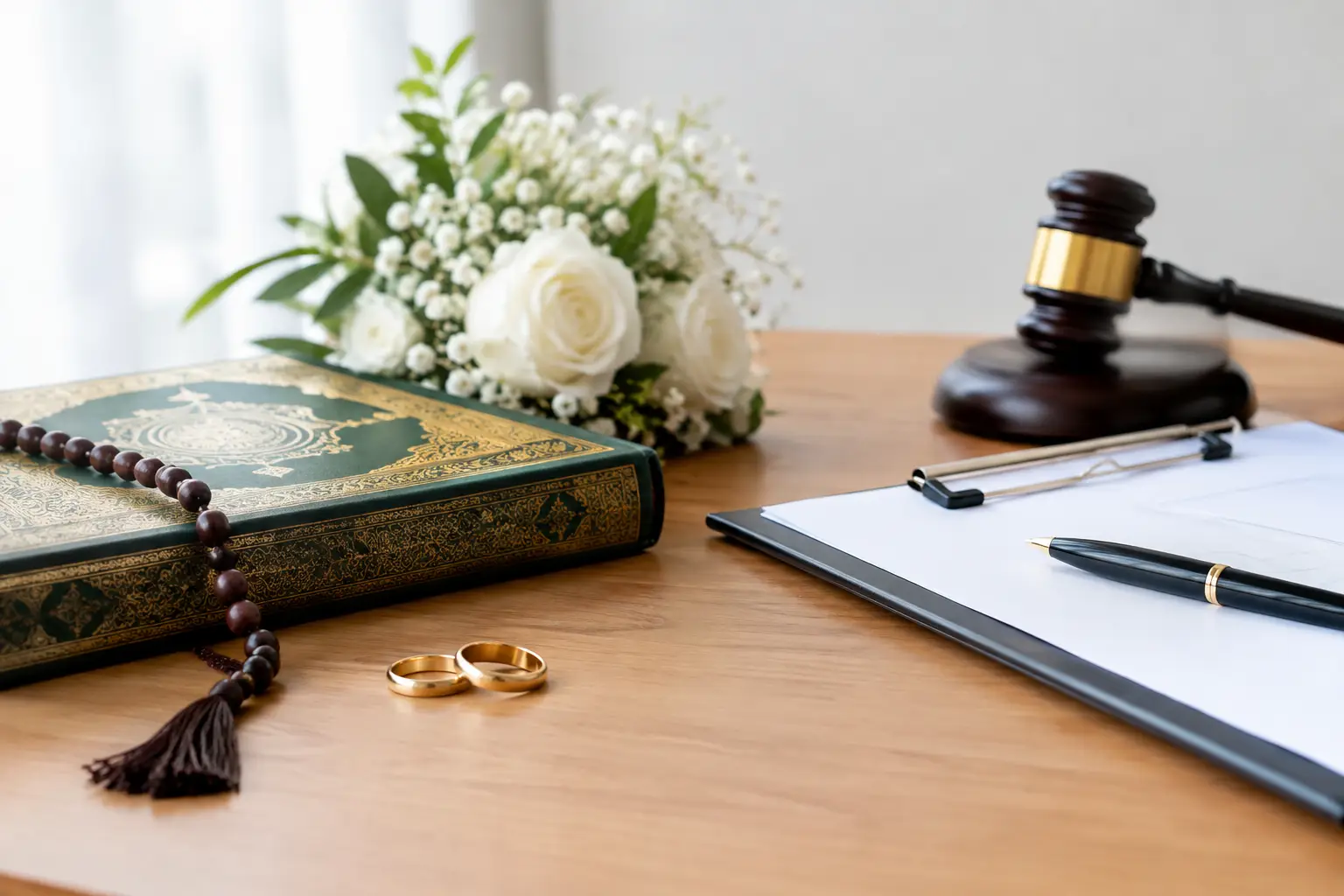
For many Muslim couples, the question of nikah versus civil ceremony is not simply about paperwork or timing. It is about honouring faith, respecting family expectations and beginning married life in a way that feels true to both people. The most beautiful weddings make room for all three, with thoughtful planning behind every meaningful moment.
A nikah and a civil ceremony can take place on the same day, on separate dates or as part of a wider celebration that includes a Mehndi, reception or Walima. There is no single perfect order. The right choice depends on your legal requirements, religious priorities, family arrangements and the kind of experience you want to create for your guests.
Nikah versus civil ceremony: the essential difference
A nikah is the Islamic marriage contract. It is a sacred agreement between a couple, entered into with consent and witnessed according to Islamic requirements. The details can vary with family tradition and scholarly guidance, but the heart of the occasion is clear: the bride and groom agree to the marriage, the mahr is established and the union is blessed.
A civil ceremony is the legal marriage process recognised by the state. In England and Wales, this is completed through an authorised registrar or an authorised person at a registered place of worship, provided the required legal formalities have been met. It is the civil process that gives a marriage its legal status for matters such as tax, inheritance, pensions and next-of-kin rights.
For many British Muslim couples, a nikah held at home, in a banqueting suite or at a mosque is spiritually central but does not, by itself, create a legally recognised marriage in England and Wales. That is why couples often arrange a separate register office appointment or a civil ceremony at an approved venue. Requirements differ elsewhere in the UK, so it is wise to confirm your circumstances directly with your local register office well before setting a date.
Neither element needs to overshadow the other. One provides the legal framework; the other carries profound religious meaning. Treating both with care allows the day to feel complete rather than divided.
Which should come first?
There are three popular ways to arrange a nikah and civil ceremony, and each can work beautifully.
Some couples complete the civil ceremony first, often quietly at a register office with immediate family, then hold their nikah and celebration later. This gives them legal certainty before the larger occasion and can take pressure away from a busy wedding day. It is particularly practical where a wedding has several events across a week or where relatives are travelling from abroad.
Others begin with the nikah, followed by the civil ceremony on the same day or shortly afterwards. This can feel more natural for families who regard the nikah as the true beginning of married life. If the legal ceremony is held on the same day, allow generous time between each part. Rushed transitions, late arrivals and a bride trying to change outfit in twenty minutes are rarely the ingredients of effortless elegance.
A third approach is to hold both ceremonies in sequence at one venue, where permitted and properly arranged. The civil ceremony may take place first, followed by the nikah, photographs and a formal reception. For guests, it creates one coherent story. For the couple, it means fewer journeys, fewer supplier handovers and more time to enjoy the people who have gathered to celebrate them.
The best order is the one that gives you peace of mind. If being legally married before your nikah matters to you, lead with the civil ceremony. If religious tradition is the priority, plan the nikah first while ensuring the legal process is clearly scheduled. Discuss it openly as a couple before family opinions begin filling the calendar.
Planning the legal side without last-minute stress
Legal arrangements deserve attention early, especially for couples planning a large Asian or multicultural wedding. In England and Wales, you will normally need to give notice at your local register office at least 29 days before the civil ceremony. In some circumstances, including certain immigration cases, the waiting period can be longer. Dates, documents and appointment availability should be checked early rather than assumed.
Think carefully about where the civil ceremony will happen. A register office is often a straightforward and intimate choice. An approved wedding venue can offer a more formal, guest-facing experience, but availability, registrar fees and capacity all need to be confirmed. A venue may host a beautiful nikah without being licensed for civil ceremonies, so never assume that a grand setting automatically fulfils the legal requirement.
Keep the legal and religious plans in one shared timeline. Your registrar booking, imam or officiant, witnesses, photographer, caterer, décor team and family transport should all be working from the same version. This is especially valuable when the bride and groom are balancing a nikah, a large reception and an outfit change across one day.
Speak with your imam or religious adviser early
Your imam or religious adviser can clarify the expectations for the nikah, including witnesses, mahr, wali arrangements where relevant and any documentation they would like prepared. Families may follow Pakistani, Bangladeshi, Bengali, Arab or other traditions with slightly different customs around the ceremony. A respectful conversation early on avoids uncertainty later.
It can also help to decide which elements you want guests to witness. Some couples prefer an intimate nikah with only close family, then make a grand entrance to the reception together. Others want every guest present for the contract and prayers, creating a ceremony that feels communal and deeply emotional. Neither choice is more meaningful. It is about the atmosphere you want to remember.
Creating one celebration rather than two separate events
When a nikah and civil ceremony are held close together, design can bring them into one elegant experience. Your ceremony space might feel serene and refined, with soft florals, a considered signing table and seating that gives parents and elders a clear view. The reception can then open into a more dramatic setting, with a floral stage, warm lighting and the energy of a full family celebration.
Timing is the detail guests notice most, even if they never mention it. Build in pauses for prayers, photographs, refreshments and outfit changes. A well-planned schedule means elders are not left waiting, children are not restless before dinner and the couple are not pulled away for photographs at the very moment they should be greeting loved ones.
Food also plays a central role in bringing people together. For a large Muslim wedding, authentic halal catering should feel generous, beautifully presented and familiar in the right ways. A menu that honours family favourites while offering variety for British, African or Afro-Caribbean guests is often a quiet sign of exceptional hosting. Consider when food will be served too: light refreshments after the ceremony can transform a wait between formalities into a relaxed, sociable moment.
At The Grove Banqueting, couples can shape these transitions with culturally informed planning, elegant décor and halal dining under one roof. For celebrations with hundreds of guests, practical comforts such as accessible travel routes and plentiful free parking are not minor details. They allow families to arrive calmly and focus on the occasion itself.
Family expectations and your own wishes
The nikah versus civil ceremony conversation can become sensitive when relatives have strong views. Parents may be focused on religious propriety, legal security, guest numbers or the practicalities of hosting extended family. Listen with generosity, but remember that the marriage belongs to the two of you.
It helps to separate decisions that are essential from those that are simply preferred. Legal registration is essential if you want a legally recognised marriage in England and Wales. The sequence of events, guest list for the nikah, style of décor and scale of the reception are choices that can be tailored. Once this distinction is clear, compromises become much easier to find.
If you are bringing together different faiths, cultures or family traditions, explain the order of the day to guests in advance. A simple itinerary can help everyone understand when to arrive, what the nikah involves and when the celebration begins. Clarity is a form of hospitality, particularly for guests unfamiliar with Muslim wedding customs.
Give each moment the significance it deserves
A civil ceremony may be brief, but it can still be moving. The nikah may be intimate, but it can still feel utterly luxurious. There is no need to make either part perform for the other. The goal is a wedding day that reflects your commitments, your families and the life you are choosing together.
Choose a plan that leaves space for a quiet breath after the vows, a heartfelt embrace with your parents and a room full of loved ones ready to celebrate. Those are the moments that turn careful wedding planning into a memory with lasting meaning.