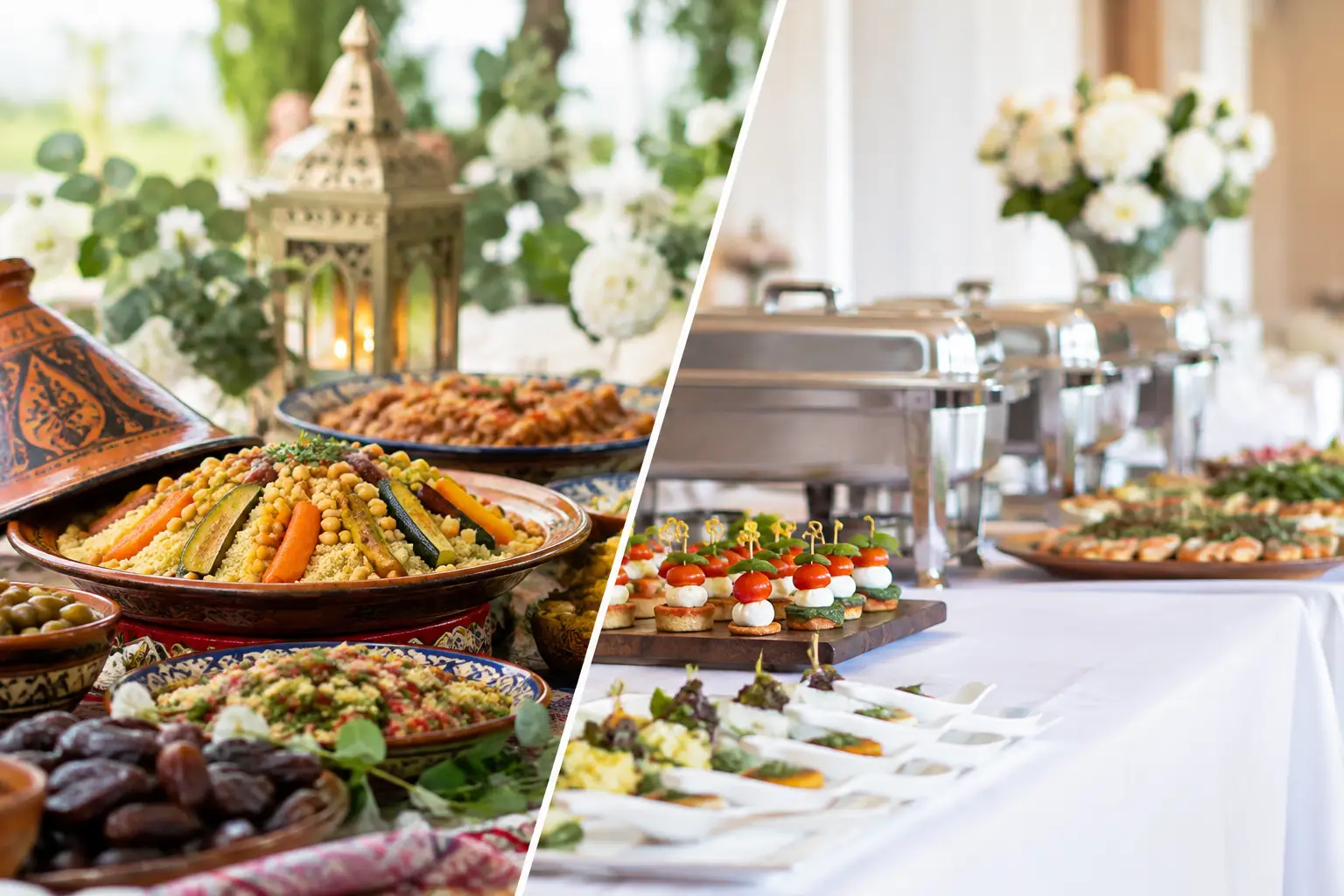
A wedding meal is rarely just a meal. It is the moment an aunt recognises the flavours of home, a grandparent feels considered, and guests gather around a table with something to talk about long after the final dance. That is why cultural catering versus generic menus is a meaningful decision for couples planning a celebration with family, faith and heritage at its heart.
A polished generic menu may appear safe on paper: familiar canapés, a standard main course and a dessert designed to suit everyone broadly. Yet a menu that is culturally thoughtful can do far more. It can honour a Bangladeshi family’s love of fragrant curries, reflect the generous hospitality of a Pakistani Walima, respect halal requirements without compromise, or bring the warmth and vibrancy of Afro-Caribbean dishes to a grand reception.
The difference is not simply what appears on the plate. It is the care, knowledge and confidence behind the entire dining experience.
Cultural Catering Versus Generic Menus: The Real Difference
Generic menus are designed for broad appeal. They can be suitable for some celebrations, particularly intimate occasions where guests share similar preferences or where food is not a central part of the day. The advantage is simplicity: a straightforward offering can feel familiar, controlled and easy to price.
For a large, multicultural wedding, however, broad appeal can become a limitation. Guests may find the food acceptable, but not memorable. More importantly, families can feel that a vital part of their celebration has been reduced to an afterthought. When food carries emotional, religious and cultural significance, a standard chicken dish and a plated dessert may not reflect the occasion you have spent months creating.
Cultural catering begins from a different place. It considers the dishes your guests genuinely enjoy, the way food is served within your traditions, and the standards expected by your family. It also acknowledges that authenticity matters. A dish can share a name with a beloved family recipe while still feeling entirely different in flavour, spice, texture and presentation.
For couples, this is not an argument against elegant presentation or modern dining. It is an opportunity to bring both together. A luxurious banquet can feature beautifully presented halal Pakistani and Bangladeshi cuisine, refined British favourites or vibrant African and Afro-Caribbean dishes, all served with the hospitality expected at a special occasion.
Food Is Part of the Welcome
At many Asian, Muslim and Afro-Caribbean weddings, feeding guests well is an expression of respect. It says, without needing a speech, that every person who has travelled, dressed beautifully and joined the celebration is valued.
This is especially important at high-capacity receptions. If hundreds of guests are arriving after a Nikah ceremony, Mehndi, church service or civil ceremony, the meal needs to feel generous as well as organised. Portions, timing and service style matter. So does the confidence that the kitchen understands how to prepare food at scale without losing the depth of flavour that made the menu special in the first place.
A culturally attuned caterer will also appreciate the rhythm of the day. Some families may want a substantial meal after the ceremony, while others may prefer refreshments on arrival and a later banquet after photographs and formalities. A Mehndi may call for colourful sharing dishes and a relaxed atmosphere; a Walima can require a more formal, abundant dining experience. These details affect more than the menu – they shape how guests experience the whole celebration.
Authenticity Cannot Be Added at the Last Minute
There is a difference between offering a token cultural dish and creating a menu with genuine understanding. Authentic catering requires experienced chefs, trusted sourcing, tested recipes and a service team who know what the dishes are meant to be.
For example, halal catering should never be treated as a small amendment to a standard menu. Couples and families deserve clarity around ingredients, preparation and handling, alongside food that is exciting and beautifully made. The same consideration applies to vegetarian guests, guests avoiding particular allergens, and elders who may have specific dietary needs.
It is worth asking direct questions during venue viewings and tastings. Who prepares the food? Is the kitchen experienced in the cuisine you want? Can dishes be adapted thoughtfully, rather than simply made milder or substituted? How will dietary requirements be communicated to the service team? Clear answers create reassurance well before the wedding day.
When a Generic Menu May Be the Right Choice
Cultural catering is powerful, but it is not a rule that every couple must follow in the same way. Some couples want a contemporary British menu with one or two heritage dishes. Others are hosting guests from several backgrounds and prefer a balanced menu that gives everyone a familiar option. A dry-hire celebration may also involve a caterer with a special connection to the family.
The strongest choice is the one that feels true to you. A generic menu becomes a problem only when it is chosen by default, because it is assumed to be easier, or because a venue cannot accommodate what matters to your guests.
A thoughtful middle ground can work beautifully. You might welcome guests with traditional refreshments, serve a main banquet rooted in your heritage, and finish with contemporary desserts. Or you may combine classic British canapés with a halal Asian feast, creating a reception that reflects both sides of the couple’s story. The goal is not to satisfy a trend. It is to make every element feel intentional.
The Planning Advantages of Cultural Expertise
The practical value of culturally informed catering is often underestimated. Weddings already involve decisions about décor, guest lists, timings, outfits, music and ceremony arrangements. When a venue team understands the traditions around your day, you spend less time explaining the basics and more time personalising the details.
That knowledge can influence the entire plan: when food should be served, how a buffet or table service should flow, where prayer needs can fit into the schedule, and how to accommodate a large family arrival without losing the sense of occasion. It supports effortless elegance because the arrangements are built around your celebration rather than adapted reluctantly afterwards.
At The Grove Banqueting, this understanding is central to creating refined celebrations for couples and families across East London and Essex. Established catering and décor partnerships, flexible package options and experience with Pakistani, Bangladeshi, Bengali, Muslim, British, African and Afro-Caribbean weddings allow couples to choose a celebration that feels personal, not pre-set.
Practical details matter here too. A beautiful meal loses some of its magic if guests are left waiting without guidance, if dishes arrive at the wrong time, or if older relatives find the venue difficult to access. For large guest lists, sufficient parking, clear hospitality and an experienced events team protect the atmosphere you have worked so hard to create.
How to Choose a Menu That Feels Like You
Begin with the people who will be in the room. Think about the dishes that bring your closest family together and the flavours your guests would be delighted to see. Then consider the formality, timing and style of your celebration. A formal evening reception may call for an elegant plated approach, while a generous buffet can create warmth and choice for a large gathering.
Do not choose solely from photographs or menu descriptions. A tasting is where quality becomes clear. Notice the flavour, freshness, temperature and presentation, but also consider whether you would be proud to serve that food to the people whose opinions matter most. Ask whether the caterer can deliver the same standard for your full guest count.
Finally, give yourselves permission to combine tradition and individuality. Your wedding menu does not need to copy anyone else’s. It can honour beloved family dishes while making room for your own tastes, whether that means a modern dessert table, a late-night snack station or a beautifully presented banquet that becomes one of the defining memories of the evening.
The best wedding meal leaves guests feeling more than fed. It leaves them welcomed, understood and included – exactly as every celebration of love should.