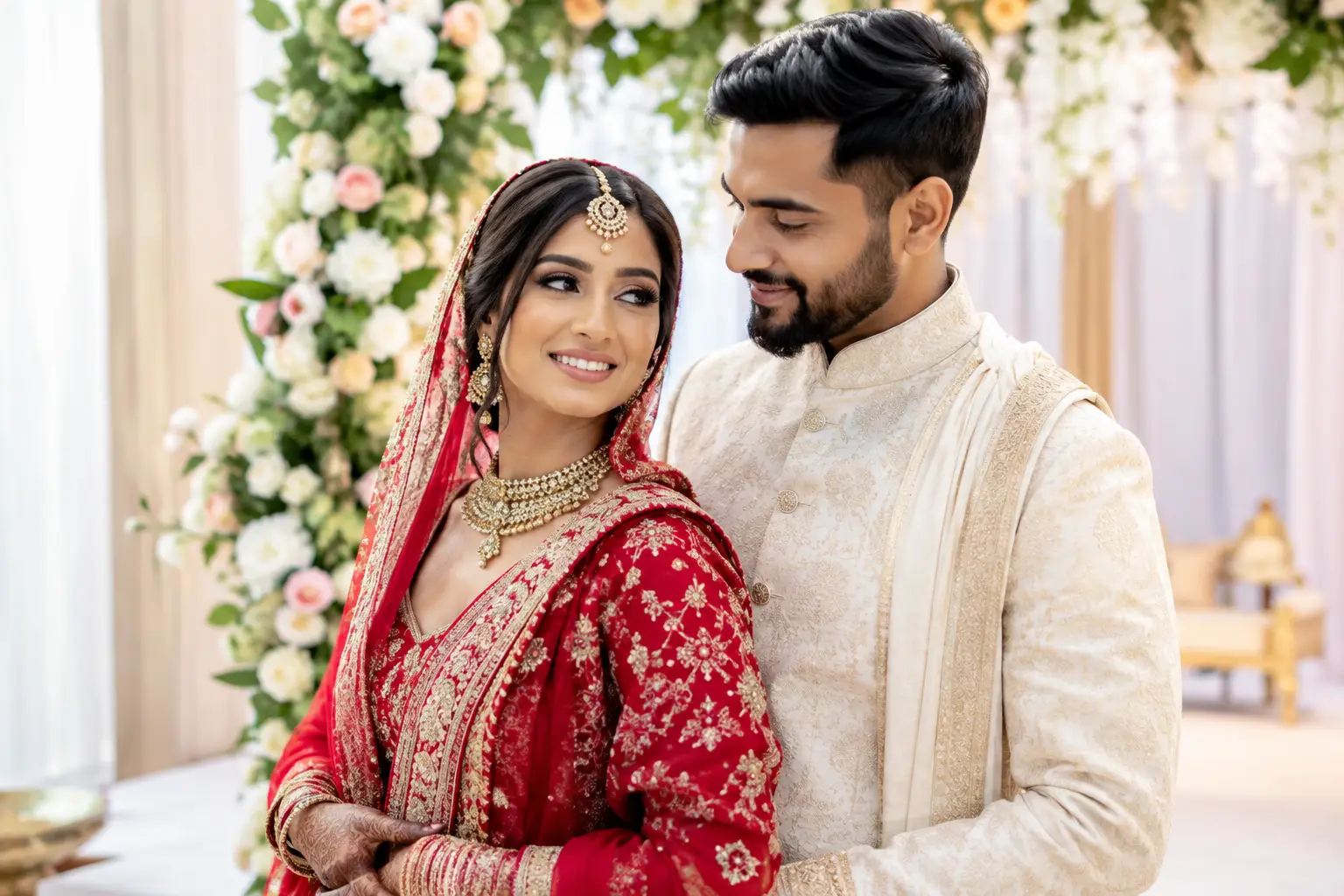
A wedding timetable can look perfect on paper, yet the real magic happens when every generation feels considered. This British Asian wedding example follows a couple planning a three-part celebration that feels polished, joyful and unmistakably personal, without asking their families to compromise on the traditions that matter most.
For many British Pakistani, Bangladeshi and Bengali couples, the occasion is not one event but a series of meaningful gatherings. There may be a colourful Mehndi, a faith-centred Nikah and a glamorous Walima or wedding reception, each with its own atmosphere, guest list and expectations. The challenge is creating continuity between them while giving each celebration its own identity.
A British Asian Wedding Example: Three Days, One Story
Imagine Amina and Zayn, a couple bringing together a large Bangladeshi family from East London and a Pakistani family from Essex. They expect around 350 guests for their main reception, alongside more intimate family gatherings. Their priority is simple: they want spectacular photographs, authentic halal food, time for prayer and family, and a celebration that feels effortless for their guests.
Rather than trying to fit every custom into one very long day, they give each part of the wedding room to breathe. This approach can add to the budget, of course, but it often creates a calmer experience than rushing a Mehndi, ceremony and reception into a single schedule. The right choice depends on family traditions, guest numbers and how much time the couple genuinely wants in the spotlight.
The Mehndi: Colour, music and welcome
The first evening is a Mehndi with a brighter, more relaxed mood. Amina wears a yellow and green outfit adorned with delicate embroidery, while Zayn arrives in a complementary kurta. The décor is built around marigold-inspired florals, colourful draping, low lounge seating and a stage designed for group photographs rather than formality.
Guests enter to music, are greeted with refreshing drinks and can immediately see where the couple will make their entrance. This sounds like a small detail, but clear guest flow is essential at a busy event. It avoids the feeling that everyone is waiting in the wrong place and allows the family to enjoy the atmosphere from the very beginning.
Food is served as a generous halal buffet, with familiar favourites presented beautifully. A live chaat station brings theatre and fragrance to the room, while children and older relatives can choose from comforting dishes without queuing for too long. A well-planned Mehndi is energetic, but it should never feel chaotic. Comfortable seating, attentive hospitality and a clear programme allow the celebration to stay lively without becoming overwhelming.
The Nikah: A moment of stillness
The following day begins with a private Nikah ceremony. The couple chooses a soft ivory and blush colour palette, with a floral backdrop and elegant seating for the signing. Their closest family members are positioned where they can see and hear the ceremony clearly, while photography is arranged discreetly so the solemnity of the moment is protected.
This is where cultural understanding makes a genuine difference. Some families prefer gender-separated areas; others want a fully mixed ceremony. Some want recitation and a short address, while others prefer to keep the Nikah concise before welcoming more guests for lunch. Neither approach is more correct. What matters is that the layout, timing and hospitality respect the couple’s faith and family preferences.
A light post-Nikah meal gives relatives the chance to congratulate the newlyweds before the evening preparations begin. It also creates valuable breathing space. Couples regularly underestimate how much time greetings, photographs and outfit changes take, particularly when parents and elders understandably want their own photographs with the bride and groom.
The Grand Reception: Modern Luxury With Meaning
For their Walima, Amina and Zayn choose a dramatic entrance beneath a floral arch, arriving to a song that has meaning for both families. The room has been transformed from the previous evening: ivory linen, candlelight, soft gold detailing and a statement stage give the reception a refined, contemporary feel.
The bride’s red and gold lehenga becomes the visual centrepiece, while Zayn wears a tailored sherwani that complements rather than matches it exactly. This balance is worth considering. Coordinated styling photographs beautifully, but couples do not need every detail to follow one strict colour scheme. Personal style often creates a more memorable result than perfection for its own sake.
Their reception programme is carefully paced. A short welcome is followed by the couple’s entrance, family photographs, dinner, speeches and a cake-cutting moment before the dance floor opens. The order can change according to the family, but the important principle is to protect the couple’s time. If photographs are left until the end, many key guests may have already departed. If speeches run too late, older relatives may miss them.
At a large celebration, good service is almost invisible. Tables are cleared efficiently, drinks are replenished, guests who need assistance are noticed, and suppliers are coordinated behind the scenes. That is what allows a luxurious room to feel welcoming rather than impersonal.
Catering that feels familiar and exceptional
For Amina and Zayn, the meal is not an afterthought. It is one of the clearest expressions of hospitality. Their menu includes fragrant biryani, slow-cooked curries, grilled starters, fresh salads and desserts that bring together South Asian favourites with a modern presentation.
Authenticity matters here. Families know the difference between food that simply carries a familiar name and food prepared with real understanding of flavour, texture and occasion. At the same time, a mixed guest list may call for a considered range of dishes, including milder options and vegetarian choices. The best menu does not try to please everyone by becoming generic. It offers quality, clarity and enough variety for guests to feel cared for.
What Makes This British Asian Wedding Example Work
The beauty of this celebration is not just in the florals or the outfits. It works because every decision answers a practical question as well as an emotional one. The Mehndi allows the families to relax together. The Nikah is given the dignity and calm it deserves. The Walima delivers the scale and glamour that a major celebration calls for.
It also recognises that British Asian weddings are wonderfully varied. A Bengali couple may include customs and music that differ from a Pakistani celebration. A bride and groom may combine Muslim traditions with a civil ceremony, or honour two cultural backgrounds in one reception. Some will want a formal, traditional programme; others will prefer a modern party with only a few ceremonial moments. A good venue and planning team should listen first, then shape the occasion around those choices.
Guest comfort deserves equal attention. For a wedding with several hundred people, accessibility, space for buggies and elderly relatives, prayer considerations, reliable parking and smooth arrival times are part of the luxury experience. They may not be the details that appear in the album, but they are the details guests remember when they say the day felt easy.
Planning the Details Without Losing the Joy
Begin by agreeing which moments are non-negotiable for each family. This may include the Nikah, a particular entrance, traditional sweets, a family prayer, live music or a specific dish. Once those priorities are clear, it becomes easier to decide where to simplify.
It is also wise to appoint one trusted person from each side of the family to make small decisions on the day. They can approve supplier questions, guide relatives to photographs and protect the couple from constant interruptions. A detailed schedule helps, but someone must have the authority to keep it moving kindly.
For couples hosting guests from across London and Essex, the venue location can make a meaningful difference. A setting with generous parking and convenient road access reduces pressure before the first guest has even arrived. The Grove Banqueting in Romford offers approximately 280 free parking spaces and capacity for celebrations of up to 500 guests, making it particularly suited to large family occasions where comfort and grandeur need to sit together.
Finally, leave room for the unscripted moments: a grandmother adjusting the bride’s dupatta, cousins filling the dance floor, a quiet glance between the newlyweds before they enter the room. The most beautiful British Asian wedding is not one that copies somebody else’s celebration perfectly. It is one where your traditions, your guests and your future together are given the care they deserve.