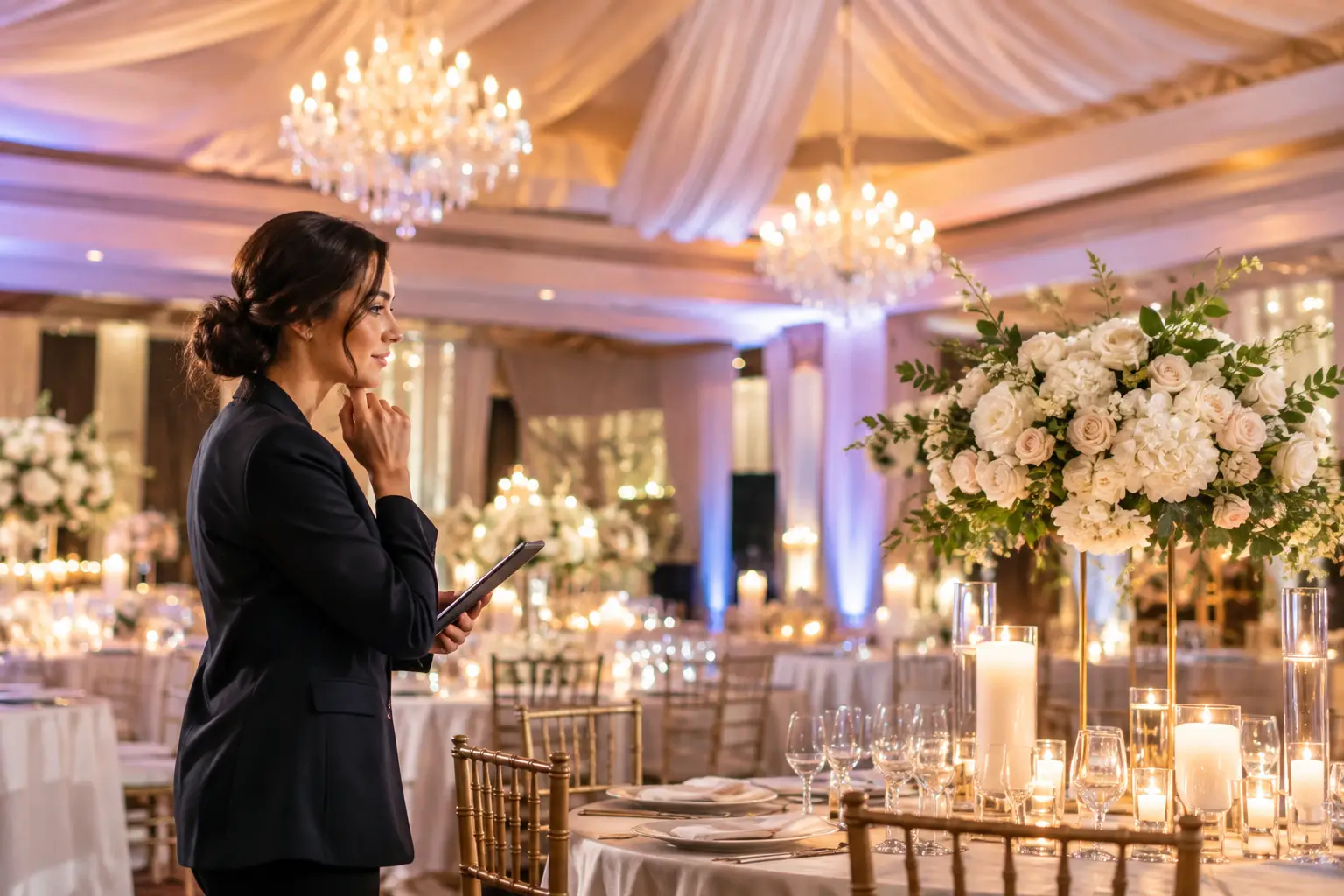
The moment your guests enter the room, lighting tells them what kind of celebration awaits. When you choose wedding lighting with care, even the finest florals, table settings and stage décor gain a new level of depth, warmth and drama. For a grand reception, it is not simply a finishing touch. It is the element that brings every carefully chosen detail together.
For couples planning a large Asian, Muslim, British or Afro-Caribbean wedding, lighting also needs to work hard across a full day of traditions, photographs, dining, speeches and dancing. The right scheme should feel luxurious on arrival, flattering in photographs and practical enough for guests of every generation to enjoy comfortably.
Choose Wedding Lighting Around the Feeling You Want
Begin with the atmosphere, rather than the equipment. A room filled with cool white light can look crisp and contemporary, but it may not create the softness many couples want for an evening celebration. Warm, golden tones tend to flatter skin tones, enhance rich fabrics and give a reception the welcoming glow associated with exceptional hospitality.
Think about how you would like the room to feel during each chapter of the day. A graceful entrance may call for a well-lit walkway and a statement backdrop. The wedding breakfast needs enough light for guests to see their meal, greet one another and enjoy the details on the table. Later, the dance floor may benefit from deeper colour, movement and a little more theatre.
This does not mean every moment needs a different lighting effect. A considered base of warm ambient light, complemented by feature lighting at the stage, dance floor and key décor areas, often feels more elegant than an overly busy display. Luxury is usually found in restraint and precision.
Let the Venue Lead the Design
Every venue has its own proportions, finishes and natural light, so a lighting plan should be created for the room rather than copied from a photograph online. High ceilings can carry chandeliers, draping or suspended installations beautifully, while a more intimate room may need carefully placed uplighters to create height and dimension without making the space feel crowded.
Visit your venue at a similar time of day to your reception where possible. Notice where daylight enters, whether existing ceiling fittings are visible, and how the room changes after sunset. Large windows can make an afternoon ceremony feel bright and airy, but as evening arrives, the transition needs to be managed so the room never feels abruptly dark.
The colour and finish of the space matter too. Neutral walls are a versatile canvas for soft ivory, blush, champagne and gold tones. Strongly coloured lighting can transform a room for a lively party, but it may alter the appearance of cream florals, white bridalwear or carefully selected outfits. Ask to see lighting tests against your chosen linen, stage design and backdrop materials before committing.
At The Grove Banqueting, this conversation can be part of the wider event design, allowing décor, catering presentation and lighting to feel like one coherent masterpiece rather than separate decisions made at the last minute.
Prioritise Faces, Photography and Video
Your photographs will preserve the emotion of the day long after the flowers have been taken down. Yet lighting that looks striking to the eye is not always the most flattering on camera. Very dark rooms, intensely coloured uplighting and harsh spotlights can create unflattering shadows or cast blue, green and red tones across faces.
A skilled lighting supplier will work with your photographer and videographer, particularly around the ceremony area, top table, stage and first dance. These are the spaces where expressions matter most. Gentle front lighting and soft, warm ambient illumination can preserve the romance of the setting while helping your photographer capture clear, natural images.
For couples wearing detailed lehengas, sherwanis, embroidered gowns, traditional jewellery or richly coloured formalwear, this consideration becomes even more valuable. The right lighting should reveal sparkle, texture and craftsmanship without bleaching out delicate details. If you are including a dramatic entrance or performance, ask for a rehearsal or at least a walk-through of the lighting cues beforehand.
Create Focal Points Without Lighting Every Corner
A large reception room can feel spectacular without every surface competing for attention. Decide which features deserve to be highlighted. Usually, these include the couple’s stage or sweetheart table, ceremony backdrop, cake display, entrance, dance floor and perhaps a statement floral installation.
Uplighters around the perimeter can add colour and depth to the room, while pin spotting can draw the eye to centrepieces and make glassware shimmer. A soft wash of light on draping gives it movement and richness. For a mandap, nikah setting or cultural stage, layered lighting can define the space beautifully while keeping it respectful and serene.
It is worth being selective with personalised monograms, projected patterns and moving lights. They can bring real personality to a party, especially later in the evening, but may feel out of place during a formal ceremony or refined meal. One well-positioned monogram can feel polished. Several competing projections can distract from the people and décor that should remain at the heart of the room.
Match the Lighting to Your Traditions and Timeline
Multicultural weddings often include several meaningful moments, each with a different energy. A nikah may require calm, clear lighting that supports the significance of the ceremony and allows family members to see and participate with ease. A grand couple entrance, cake cutting or first dance may invite a more theatrical transition. Later, a DJ set, live band or cultural performance can carry bolder colours and movement.
Discuss the full running order with your venue coordinator and lighting team early. They need to understand not only when each event happens, but where. If family speeches take place at the stage, make sure speakers are visible. If you are changing outfits, consider how the new colours will look under the evening lighting. If elders will remain seated through a lively dance set, retain enough ambient light around dining tables for their comfort and safety.
For faith-sensitive celebrations, the plan should also respect the tone of each part of the day. There is no single formula. The best result is one that honours your traditions while still feeling personal, celebratory and unmistakably yours.
Balance Colour, Comfort and Practicality
Colour is powerful, but it should be used with intention. Warm white and soft gold are timeless choices for dining and formal moments. Blush, lavender, deep blue or emerald can complement a colour palette when used sparingly. Rich jewel tones can look magnificent at a winter reception, while lighter tones may suit a spring or summer celebration.
Avoid relying on highly saturated colour for the entire evening. It can make food less appealing, strain the eye over a long reception and make guests look unlike themselves in photographs. A better approach is to keep the main room flattering and neutral, then introduce stronger colour around the dance floor or during selected high-energy moments.
Practical details deserve the same attention as aesthetics. Walkways, steps, exits and service areas must remain safely lit. Guests need clear routes to prayer spaces, washrooms and seating areas, while catering teams need suitable working light to deliver polished service. The most successful lighting is felt more than noticed because it makes every part of the occasion easy to enjoy.
Ask the Right Questions Before You Book
Before confirming a lighting package, make sure the supplier, planner and venue are aligned on the essentials. Four questions can prevent costly surprises:
- What is included in the quote, including installation, programming, technician time and removal?
- Which areas will be lit for the ceremony, dining, speeches, stage and dance floor?
- Can the colours and brightness change during the reception without disrupting guests or photography?
- Does the venue have any restrictions relating to rigging, candles, power access, haze effects or installation times?
Also ask who will operate the lighting on the day. Automated settings can work for a straightforward event, but a celebration with multiple entrances, performances and cultural moments may benefit from an experienced technician who can respond in real time.
Invest Where Guests Will Feel the Difference
If your budget requires choices, prioritise ambient room lighting, the main stage or backdrop, and lighting that supports photography. These elements influence the full guest experience and appear in the majority of your images. Decorative extras can then be added where they will have the greatest visual impact.
A trusted venue team can help you avoid spending on effects that will be lost in the scale of the room or clash with your existing décor. That guidance is particularly valuable for large guest lists, where a beautiful visual concept must also function smoothly from the first arrival to the final farewell.
When you stand in your reception room before the guests arrive, the lighting should make you feel that the space has been prepared specifically for your story. Choose a design that lets your traditions shine, your loved ones feel welcome and every joyful photograph reflect the elegance of the celebration you imagined.