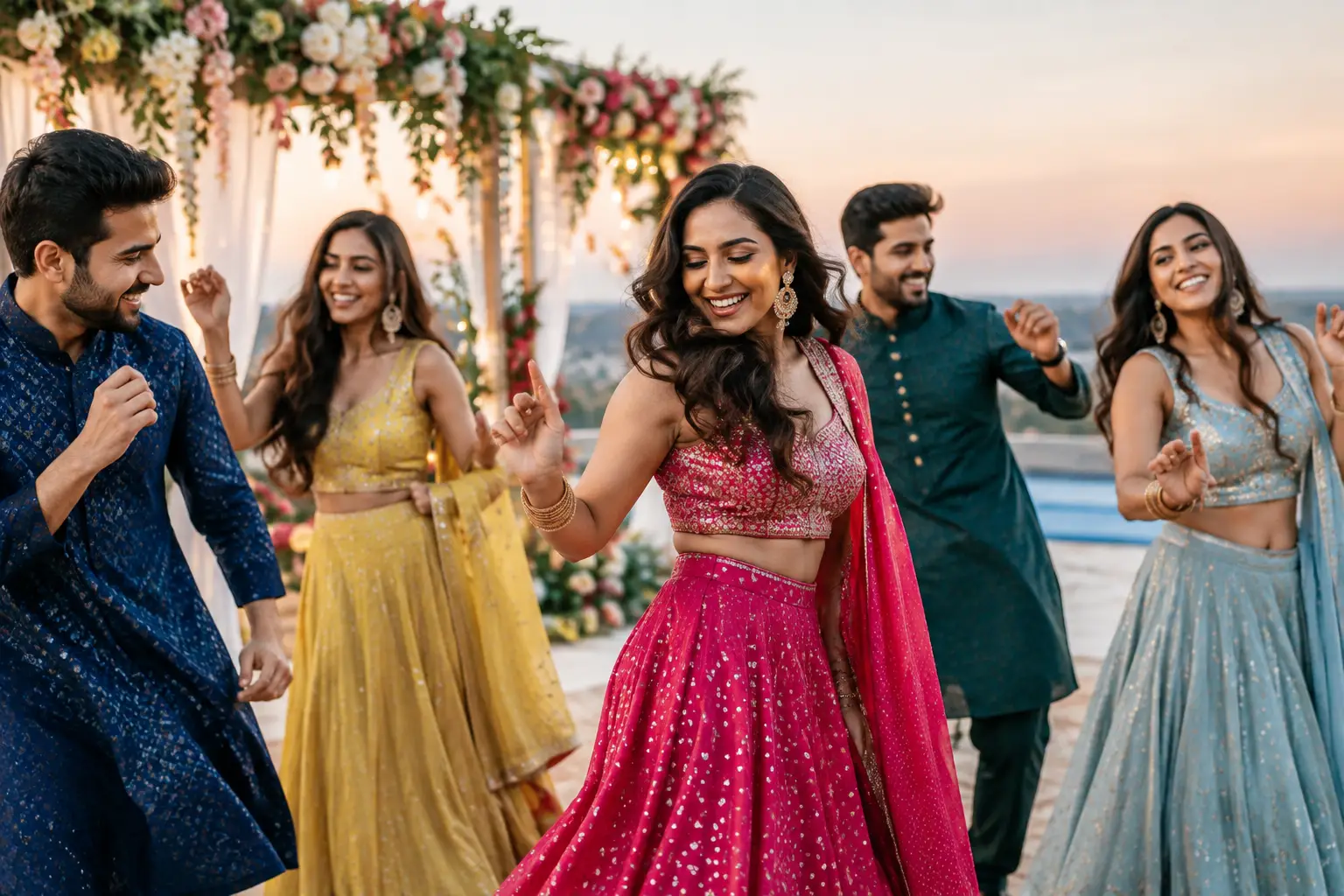
A memorable sangeet is never simply a party before the wedding. It is the evening when families meet properly, cousins take over the dancefloor, treasured songs bring generations together, and the couple’s story is celebrated with real warmth. This sangeet planning guide is designed to help you shape that energy into an occasion that feels polished, personal and effortless for every guest.
The most successful celebrations balance high-spirited performance with thoughtful hospitality. From a grand entrance and a beautifully dressed stage to authentic halal dining, family-friendly timings and space for prayer, the details should support the joy rather than compete with it.
Start With the Feeling You Want to Create
Before choosing playlists, performers or décor, decide how you want the evening to feel. Some couples want a full-scale show with choreographed family dances, a DJ, live dhol players and a dramatic couple entrance. Others prefer a refined evening of dinner, speeches and a few meaningful performances, allowing guests more time to mingle.
Neither approach is more special. The right choice depends on your families, your guest count and the wider wedding schedule. If the nikah, civil ceremony or reception follows early the next day, an elegant programme with a clear finish time may serve everyone better than a celebration that runs late. If the sangeet is your principal gathering before a smaller wedding day, it may deserve a larger production and longer dancefloor set.
Agree on three priorities at the outset. They might be outstanding food, a show-stopping stage and plenty of time for dancing. These decisions make every later choice clearer and prevent the occasion becoming overcrowded with ideas.
Choose a Venue That Can Carry the Celebration
A sangeet needs more than a beautiful room. It needs a venue with enough capacity for dining, performances, dancing and family movement without making the evening feel disjointed. A large guest list can quickly become uncomfortable if the stage blocks sightlines, the dancefloor is too small or tables are set so tightly that guests cannot move freely.
When viewing venues, ask to see the room set for an event similar in scale to yours. Consider where the couple will enter, where performers can wait before their turn, how guests will reach the dining area and whether older relatives can comfortably access their tables. Convenient parking, step-free access and well-managed arrival areas matter greatly when several generations are attending.
The stage is often the visual heart of the room, but it should not overwhelm it. A raised stage provides a natural focus for dances, speeches and photographs, while a carefully planned backdrop can carry your chosen colour palette across the room. For a more contemporary celebration, couples may favour sculptural florals, soft draping and considered lighting. For a traditional feel, rich fabrics, floral garlands and ornate seating can create a more ceremonial setting.
A venue team with experience of South Asian and multicultural weddings will understand that the room may need to change character during the evening. It must feel elegant for guest arrivals and dining, then vibrant and open for performances and dancing.
Build a Running Order With Breathing Space
A polished sangeet should feel lively, not rushed. The common mistake is planning too many performances back to back, leaving no time for late arrivals, food service, outfit changes or spontaneous family moments. A clear running order protects the atmosphere while giving the hosts confidence that the evening is moving forward.
Begin with a welcoming arrival period. This is the ideal time for photographs, drinks or mocktails, and background music while guests settle. If you are planning a formal couple entrance, allow enough time for key family members to be in place before it begins.
After the entrance, a brief welcome or opening performance creates momentum. Then alternate high-energy moments with pauses: a dance set, dinner service, speeches or a video montage, followed by more performances. This pacing gives caterers room to serve efficiently and prevents guests from missing important dances while away from their tables.
Keep the final hour flexible. Once formal performances are complete, invite everyone to the dancefloor with a DJ set, dhol performance or a favourite family song. It is often the unplanned dancing, rather than the rehearsed routine, that becomes the memory people talk about for years.
Give Every Performer a Simple Brief
Create one shared schedule showing arrival times, rehearsal slots, performance order and the person responsible for cueing each group. Your DJ, master of ceremonies, venue coordinator and lead family organiser should all have the same version.
Ask dance groups to provide their tracks in advance, clearly labelled and in the correct order. Keep a backup copy with the organiser as well. This small piece of preparation avoids the last-minute search for a phone, cable or missing audio file just as the room is waiting.
Plan Food as Part of the Experience
At a sangeet, food is a central expression of hospitality. Guests may remember the dance performances, but they will also remember whether they were welcomed with generous, beautifully presented food that reflected the family’s tastes.
For larger celebrations, a buffet can offer variety and keep service flowing, particularly where guests enjoy returning for different dishes. A plated meal may feel more formal and can work beautifully for a tightly timed programme, although it requires careful coordination around performances. There is also a middle ground: elegant sharing platters or live food stations that bring theatre to the dining experience while giving guests choice.
For Muslim families, confirm halal credentials early and discuss menu details openly. Authentic Pakistani and Bangladeshi cuisine can bring depth, familiarity and genuine warmth to the occasion, whether you choose fragrant biryanis, grilled kebabs, rich curries or a carefully curated dessert table. At the same time, make sure vegetarian, vegan and allergy-conscious guests are catered for with the same care as the main menu.
Consider the timing of prayer when planning service and performances. A quiet, appropriate space and a programme that does not force guests to miss key moments are thoughtful touches that communicate real respect.
Make Décor Work Harder Than One Photograph
A strong sangeet design does more than create a beautiful backdrop for the couple. It sets the mood from the moment guests arrive and ensures every area, from the welcome table to the dancefloor, feels part of one celebration.
Choose a focused palette rather than trying to include every colour you love. Jewel tones can deliver drama and tradition, while ivory, blush, champagne and metallic accents create softer luxury. Couples often achieve the most elegant result by selecting one dominant colour, one supporting shade and one metallic finish, then repeating them through florals, linen, stationery and stage styling.
Lighting deserves early attention. Warm uplighting makes a banqueting suite feel inviting during dinner, while intelligent dancefloor lighting can transform the room once the party begins. Ensure photographers and videographers have sufficient light for entrances and performances without the room feeling harsh or overexposed.
If several events are taking place across a wedding weekend, ask whether elements of the décor can be adapted rather than recreated. This can be more cost-effective, but only if the design still feels fresh and appropriate for each occasion.
Protect the Couple’s Enjoyment
It is easy for the bride and groom to spend the entire evening greeting guests, checking timings and answering supplier questions. Put trusted people in charge of those responsibilities so you can be present for your own celebration.
Nominate one family representative for guest queries and one decision-maker for suppliers. Give them the final schedule, key contact numbers and authority to make small decisions without interrupting you. A venue coordinator can then manage the practical rhythm of the event, from catering transitions to performance cues.
Think practically about your own comfort as well. If you are changing outfits, schedule this between programme sections rather than during an important dance. Keep water and light refreshments available in a private area, particularly if you have been taking photographs before guests arrive. A beautiful evening is far easier to enjoy when you are not trying to solve logistics in formalwear.
A Sangeet Planning Guide for Every Family
Tradition should be honoured, but it does not need to be performed in one fixed way. A sangeet can bring together Punjabi, Gujarati, Bengali, Pakistani, Muslim, British and Afro-Caribbean influences with confidence when the choices feel meaningful to the couple. The aim is not to include every possible custom. It is to create a celebration where both families recognise themselves in the music, food, welcome and warmth of the room.
At The Grove Banqueting, culturally informed planning and elegant event delivery can bring those moving parts together in one considered setting, from halal catering and customised décor to the practical support needed for a large family celebration.
The finest sangeets leave guests feeling that every detail was generous, joyful and entirely natural. Give the evening a clear plan, then leave room for the laughter, dancing and family pride that no timetable can manufacture.